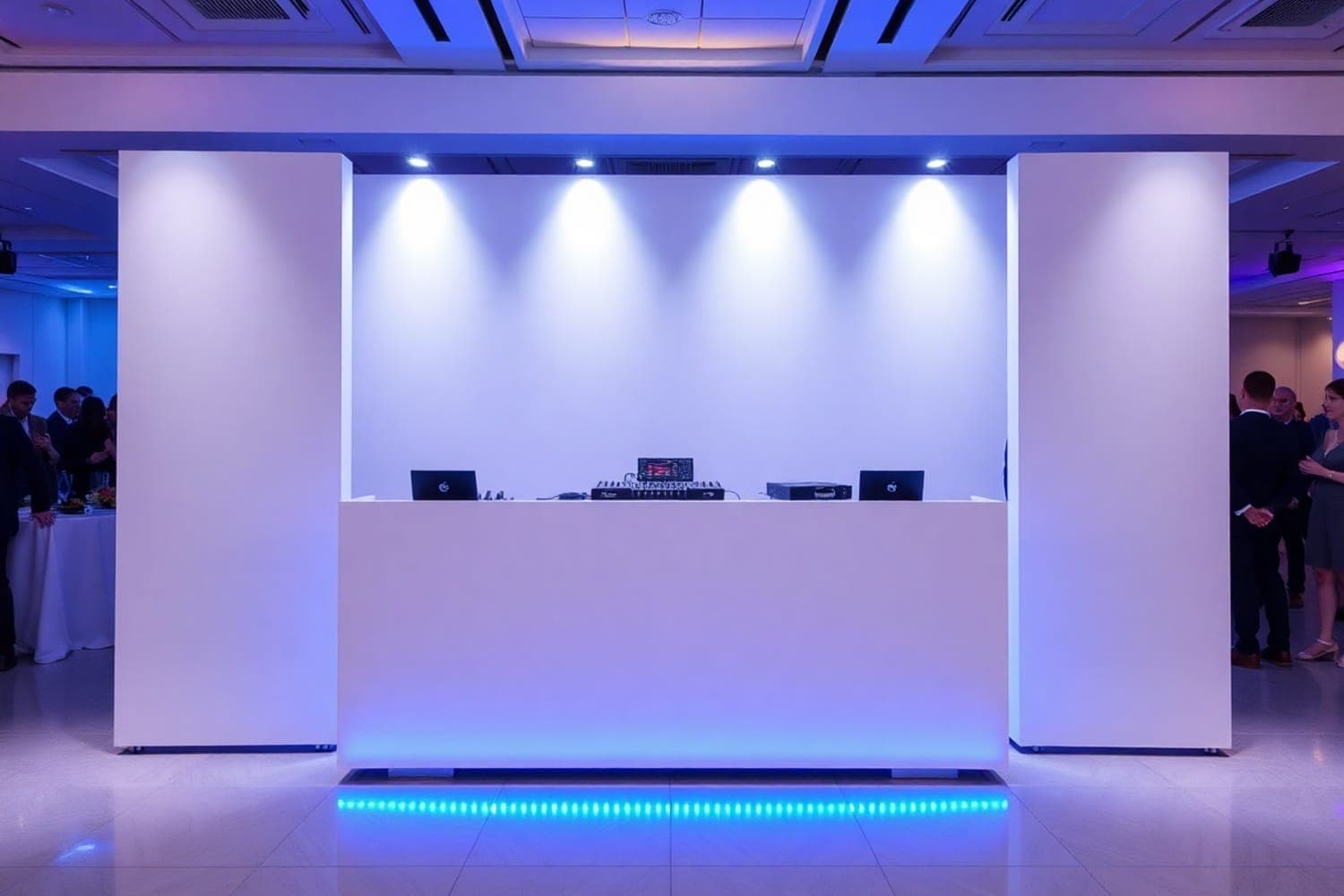
A DJ booth is the part of a venue where the DJ plays: a counter or riser holding the players and mixer, usually with booth monitors that face the DJ so they hear the mix without the delay of the main speakers. What is in it varies by venue, so ask before a gig which players, mixer and monitors it has, and bring your own headphones and music.
What is in a club booth
- Media players or turntables. MusicRadar called Pioneer DJ's CDJ-3000 a staple of DJ booths worldwide, after nine years of the CDJ-2000 series as the industry standard. Linked by PRO DJ LINK, Pioneer DJ players share the music on one USB stick or SD card across up to six players and sync their beats, per AlphaTheta's PRO DJ LINK guide. Some booths keep turntables too, for records or for a digital vinyl system.
- A DJ mixer. The players or turntables plug into it, and its master output feeds the venue's sound system. See what a CDJ is and the best DJ mixers for the gear itself.
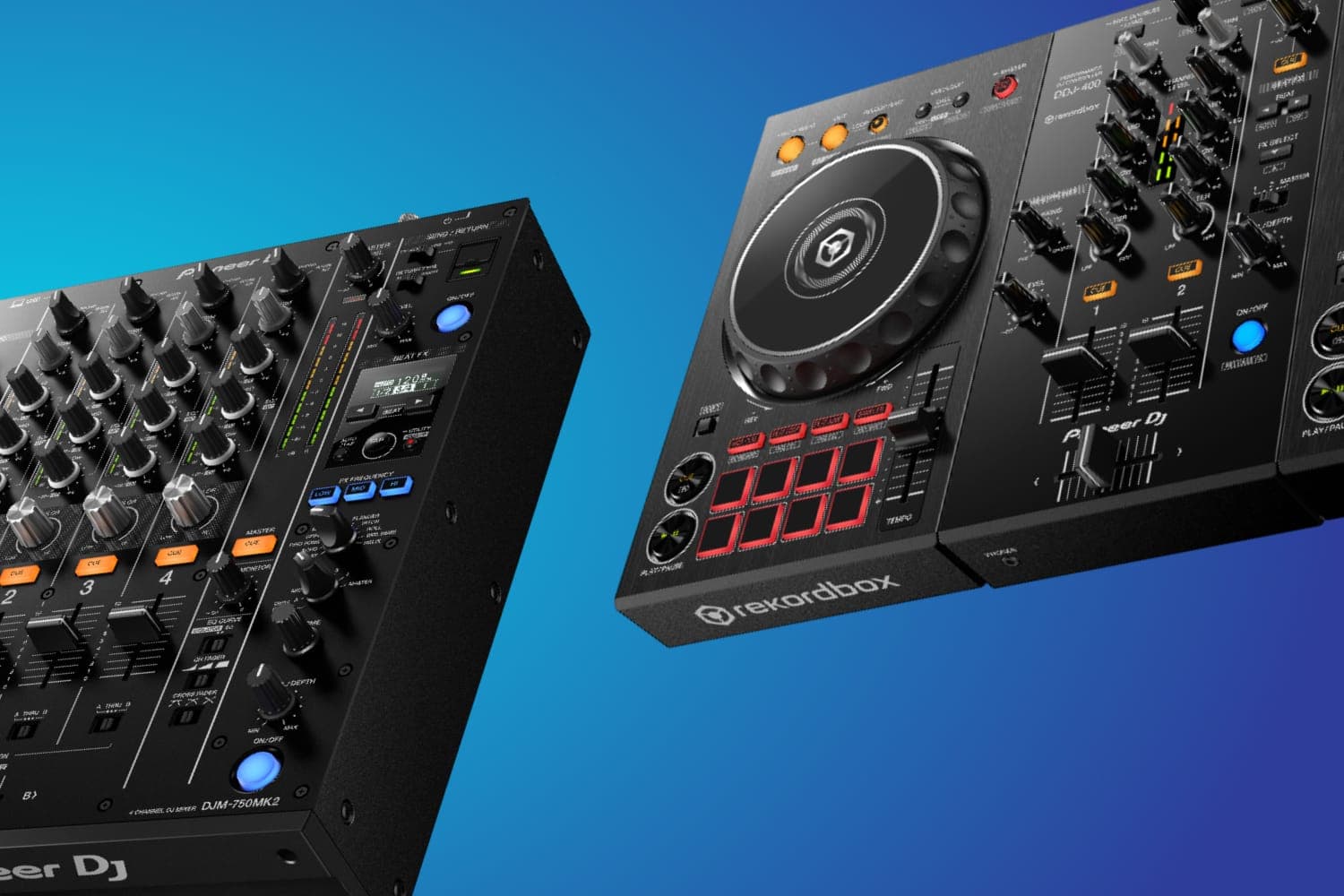
- Booth monitors. Speakers close to the DJ and facing them, fed from the mixer's booth output, with a volume control separate from the main speakers, as Digital DJ Tips explains. Club mixers such as the DJM-750MK2 have a booth output with its own level knob; some smaller mixers, such as the DJM-450, have none.
- Somewhere to work. Room beside the decks for a laptop or controller, and power for it.
What a booth doesn't have is your headphones. You cue the next track in your own pair while the crowd hears the current one; the best DJ headphones covers which to buy.
Why booth monitors matter
The main speakers face the crowd, often some distance from the booth. Their sound reaches the DJ late and less clearly, and the bigger the room, the later it arrives, Digital DJ Tips notes in a second piece. Mixing to that late sound puts your beatmatching behind. Booth monitors are close and face the DJ, so their sound arrives with little delay. The delay is in the room, not in your headphones.
Digital DJ Tips' advice is to treat the booth monitors as what the crowd hears and to ignore the main speakers while mixing. Many DJs turn the monitors down while cueing, to hear the headphones better, and turn them back up to mix.
Not every booth has monitors, and some have monitors that don't work. Then you mix in headphones alone: blend the master output into your headphones with the cue/master knob, or use a split cue setting that puts the master in one ear and the cued track in the other, where the mixer has one.
Hearing in the booth
Booths are loud. In the UK Health and Safety Executive's guidance for music venues, Sound advice, representative exposure for DJs in clubs runs from 93 to 99 dB, above the 85 dB daily exposure that the HSE sets as the upper action value. In one club case study the HSE describes, DJs were encouraged to avoid using the monitor speakers and to wear earmuffs with sound restoration or in-ear monitors. Digital DJ Tips adds that turning the monitors off when you aren't mixing saves your ears from fatigue. See the best DJ earplugs and best in-ear monitors.
Before you play a booth
- Ask what is in it. Which players and mixer, whether there are booth monitors, and whether there is a spare input if you bring a controller or turntables.
- Bring music the players can read. For Pioneer DJ players that means a USB stick exported from rekordbox, and a spare; the best USB sticks for DJing covers formatting and export, and what rekordbox is covers the software.
- Bring cables for your own gear. If you plug a controller into the booth mixer, check which outputs it has; the best XLR cables explains which cable each kind of output needs.
- Set the monitors before you start, at a level you can mix to without leaving them loud all night.
A booth of your own
Mobile DJs bring the booth with them: a table or fold-out stand and their own speakers. The best DJ tables compares tables and fold-out stands by size, height and load rating, and what a mobile DJ is covers the rest of a mobile rig. At home, the same table guide helps you set a height to play standing up.
How this page is made
The facts on this page come from the manufacturer documents, reviews, industry guides and HSE guidance linked above, read on 12 October 2026. We haven't tested any booth for this page. The methodology explains how the site works.