Your DJ software is the engine behind every mix. It manages your music library, analyses tracks, syncs beats, and processes effects — all in real time. Choosing the right platform shapes your entire workflow, from preparation to performance.
The landscape has consolidated around a handful of serious contenders. Each has a distinct philosophy: Serato prioritises simplicity and reliability, Rekordbox is built around Pioneer's ecosystem, Traktor focuses on creative flexibility, and VirtualDJ casts the widest net. Your choice depends on your hardware, your genre, and how you like to work.
What to Consider
Before committing to a platform, think about these factors.
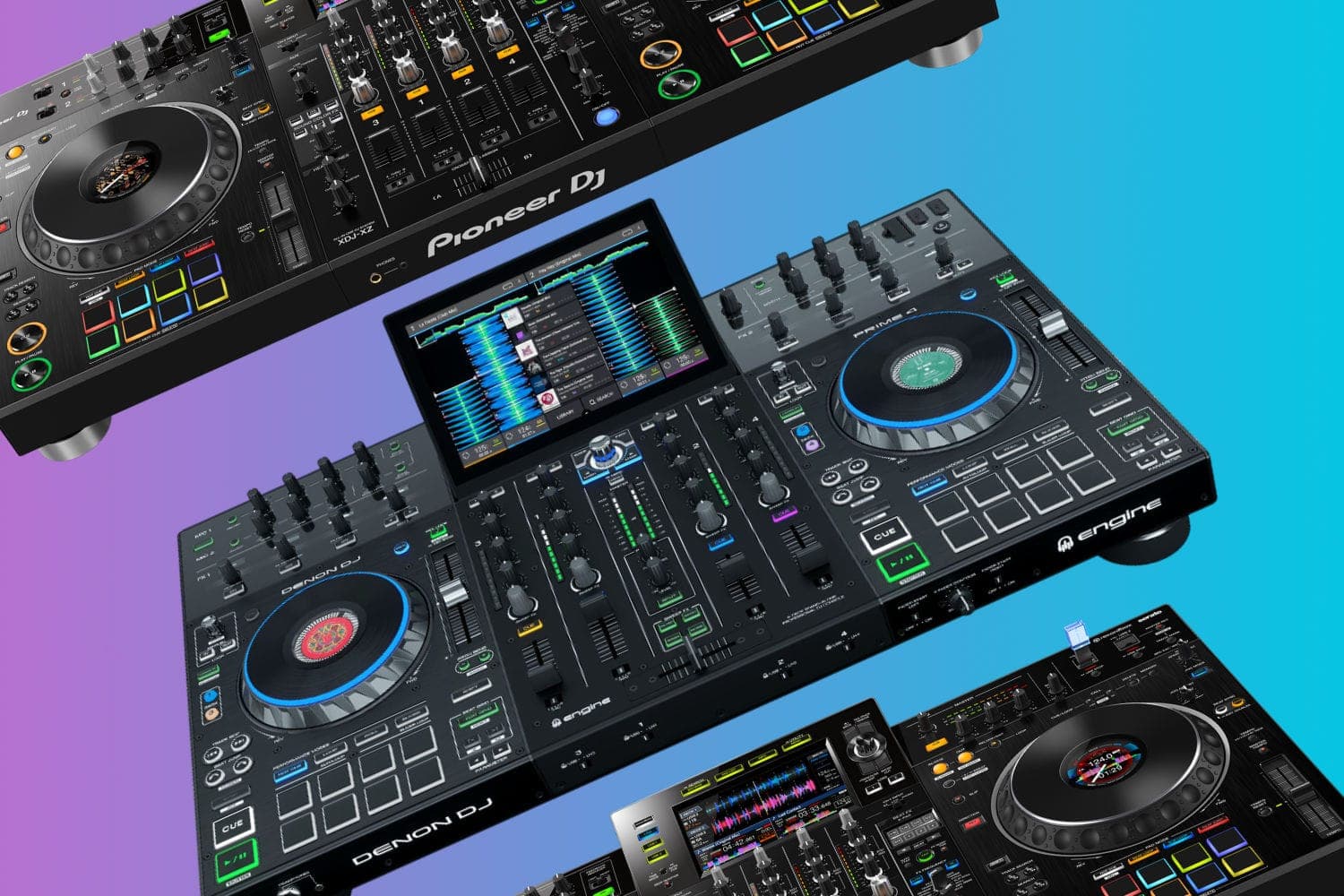
Hardware compatibility. This is the single most important factor. Most DJ controllers are designed to work with one or two specific software platforms. Pioneer gear works best with Rekordbox. Numark, Rane, and many Roland controllers are built for Serato. Native Instruments hardware integrates deepest with Traktor. Check your controller's compatibility before choosing software.
Workflow style. Traditional DJ software (Serato, Rekordbox, Traktor) uses a deck-based layout that mirrors physical turntables and a mixer. Ableton Live uses a clip-launching, loop-based workflow that suits producers who DJ. VirtualDJ blends both approaches. Choose what matches how you think about mixing.
Library management. You'll spend more time organising music than performing. Strong library tools — smart crates, key detection, BPM analysis, playlist management — save hours of prep time. Rekordbox and Serato have the most mature library features. Your library format also matters if you play on CDJs at clubs.
Price and licensing. Some platforms charge one-off fees, others use subscriptions. Free tiers exist but have limitations. Factor in the long-term cost, not just the entry price.
1. Serato DJ Pro
Industry Standard
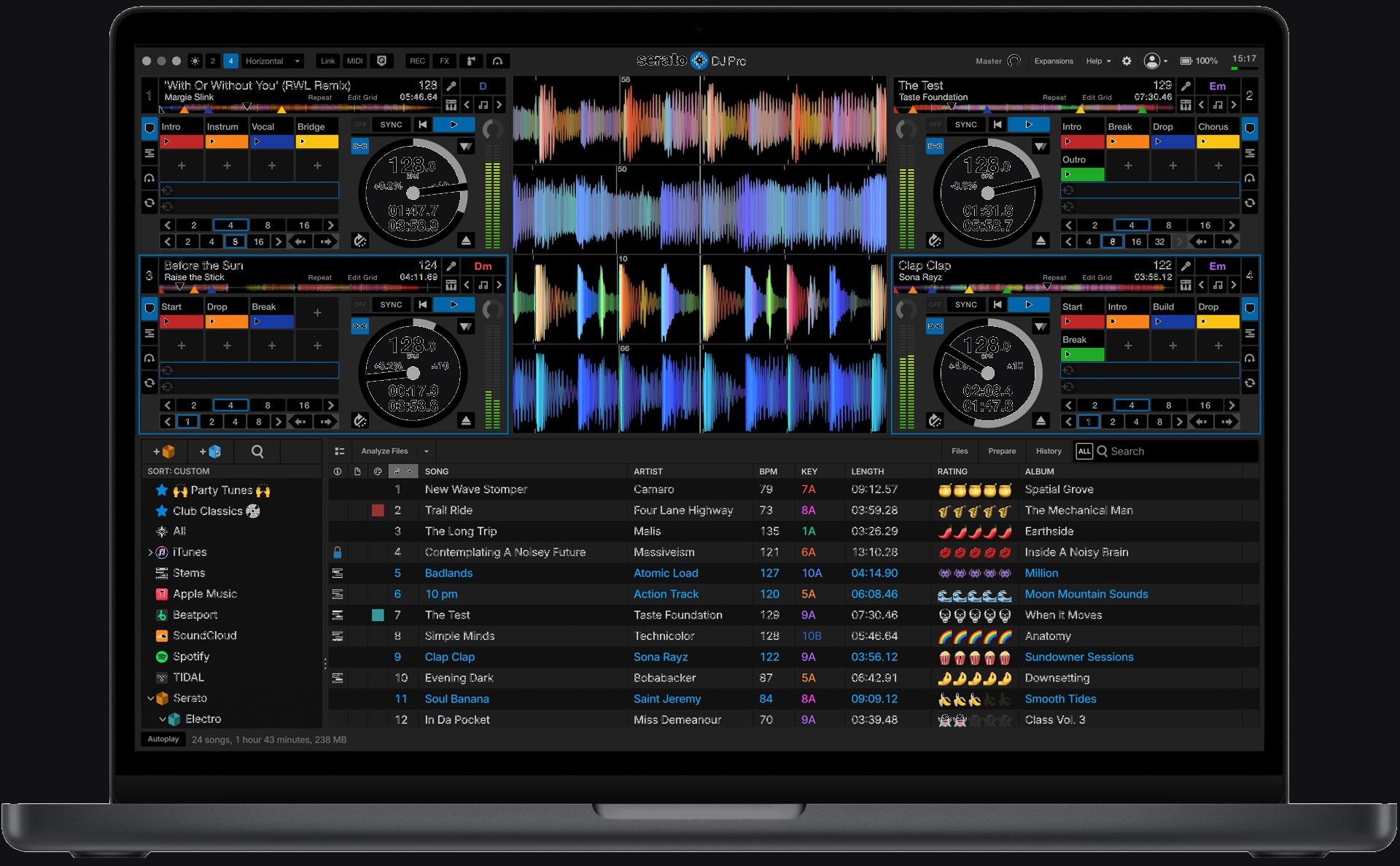
Image: Serato
| Feature | Detail |
|---|---|
| Price | Free with supported hardware / $9.99/mo |
| Platforms | macOS, Windows |
| Decks | Up to 4 |
| Key Feature | Hardware unlock, Stems, DVS |
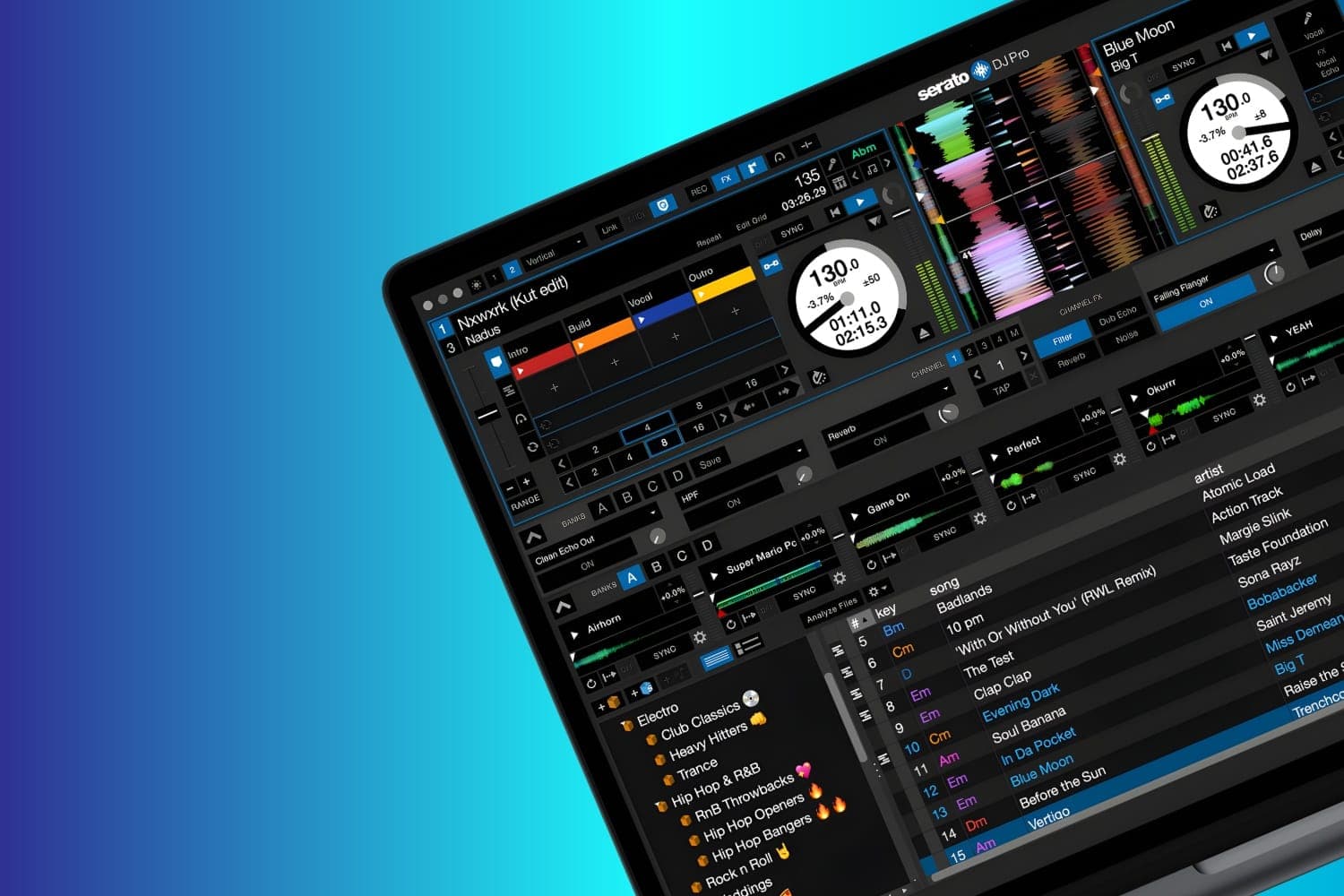
Serato DJ Pro is the most widely used professional DJ software in the world. Its strength is simplicity — the interface is clean, the performance is rock-solid, and the learning curve is gentle. If reliability during a live set is your priority, Serato is the safest choice.
The hardware integration model is Serato's defining feature. Connect a supported controller and the software unlocks automatically — no licence keys, no activation. This plug-and-play approach means you can walk into any booth with a Rane mixer or a compatible Pioneer controller and be mixing in seconds.
Serato's Stems feature uses AI to separate tracks into vocals, drums, bass, and melody in real time. Practice Mode lets you rehearse sets with instant track loading. The library management is excellent, with smart crates, history tracking, and deep metadata support.
The trade-off is creative flexibility. Serato's effects are functional but not as deep as Traktor's. The software doesn't support clip launching or non-linear performance. And the hardware-lock model means you can't use Serato with just any MIDI controller — it needs to be on the supported list.
Serato DJ 4.0
2. Pioneer DJ Rekordbox
Best for Club DJs
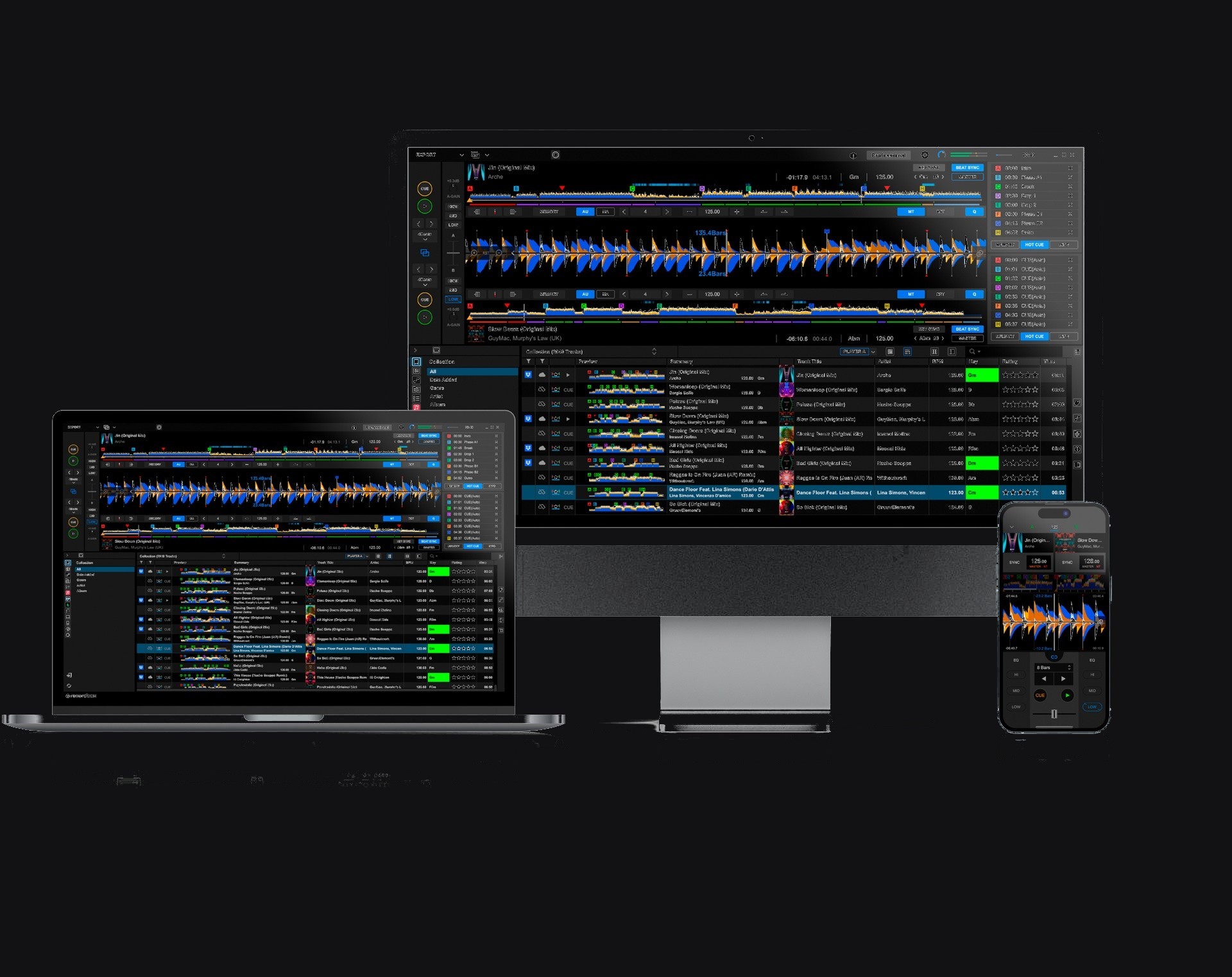
Image: Pioneer DJ / AlphaTheta
| Feature | Detail |
|---|---|
| Price | Free tier / $9.99–$14.99/mo |
| Platforms | macOS, Windows, iOS, Android |
| Decks | Up to 4 |
| Key Feature | CDJ export, Cloud Library |
Rekordbox is the software you need if you play on Pioneer CDJs — which means most clubs worldwide. Its library management and export workflow is purpose-built for the CDJ ecosystem. Prepare your tracks in Rekordbox, export to USB, and your cue points, loops, and playlists transfer perfectly to club equipment.
Beyond CDJ preparation, Rekordbox is a capable performance platform in its own right. Performance mode supports up to four decks with a clean, well-organised interface. Cloud Library syncs your collection across devices. The mobile app lets you manage your library on the go.
The subscription model can add up. The free tier is limited to library management and basic export. Performance mode, DVS, and advanced features require a monthly subscription. But for DJs who regularly play club gigs on Pioneer equipment, Rekordbox isn't optional — it's essential infrastructure.
3. Native Instruments Traktor Pro 4
Best for Creative Performance
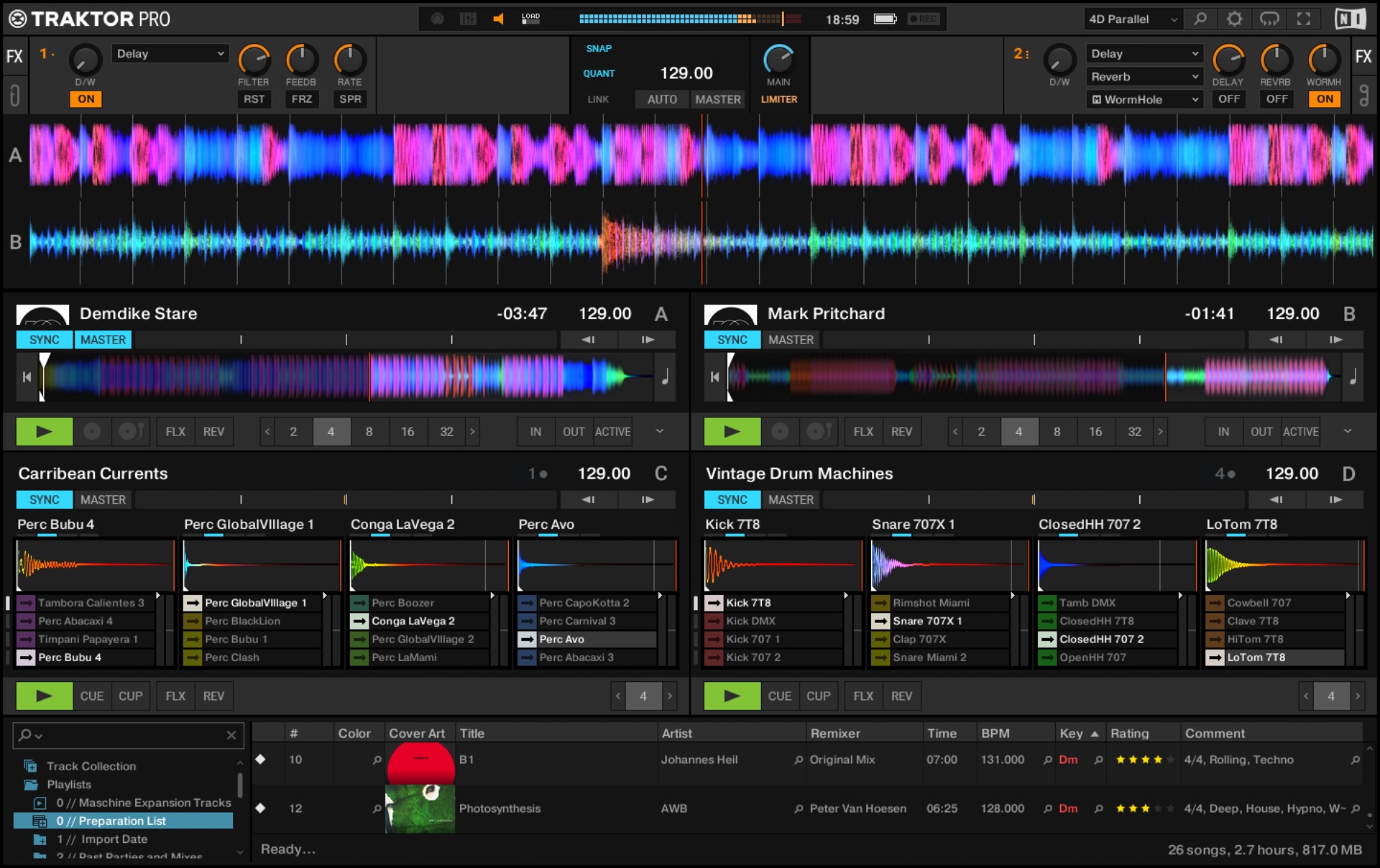
Image: Native Instruments
| Feature | Detail |
|---|---|
| Price | $99 one-time |
| Platforms | macOS, Windows |
| Decks | Up to 4 + Remix Decks |
| Key Feature | Remix Decks, Stems, deep FX |
Traktor Pro has been a mainstay of DJ software for nearly two decades. Its appeal is creative depth — Remix Decks for live remixing, the deepest effects engine of any DJ software, Stems support for isolating track elements, and granular control over every parameter.
Flux Mode lets you scratch and loop while the track continues playing underneath — snap back to the original timeline at any point. Step Sequencer adds rhythm programming to live sets. The effects chains are unmatched: chain up to four FX per deck with macro controls, and the quality of the built-in effects rivals dedicated hardware.
Traktor's weakness is ecosystem support. Native Instruments hardware (Kontrol S2, S3, S4) integrates beautifully, but third-party controller support requires manual MIDI mapping. Club adoption is lower than Serato or Rekordbox, which can be a barrier if you play multi-DJ events. Library management is functional but less polished than competitors.
The one-time $99 price with no subscription is a significant advantage.
Native Instruments Traktor Pro 4
4. VirtualDJ
Best for Beginners
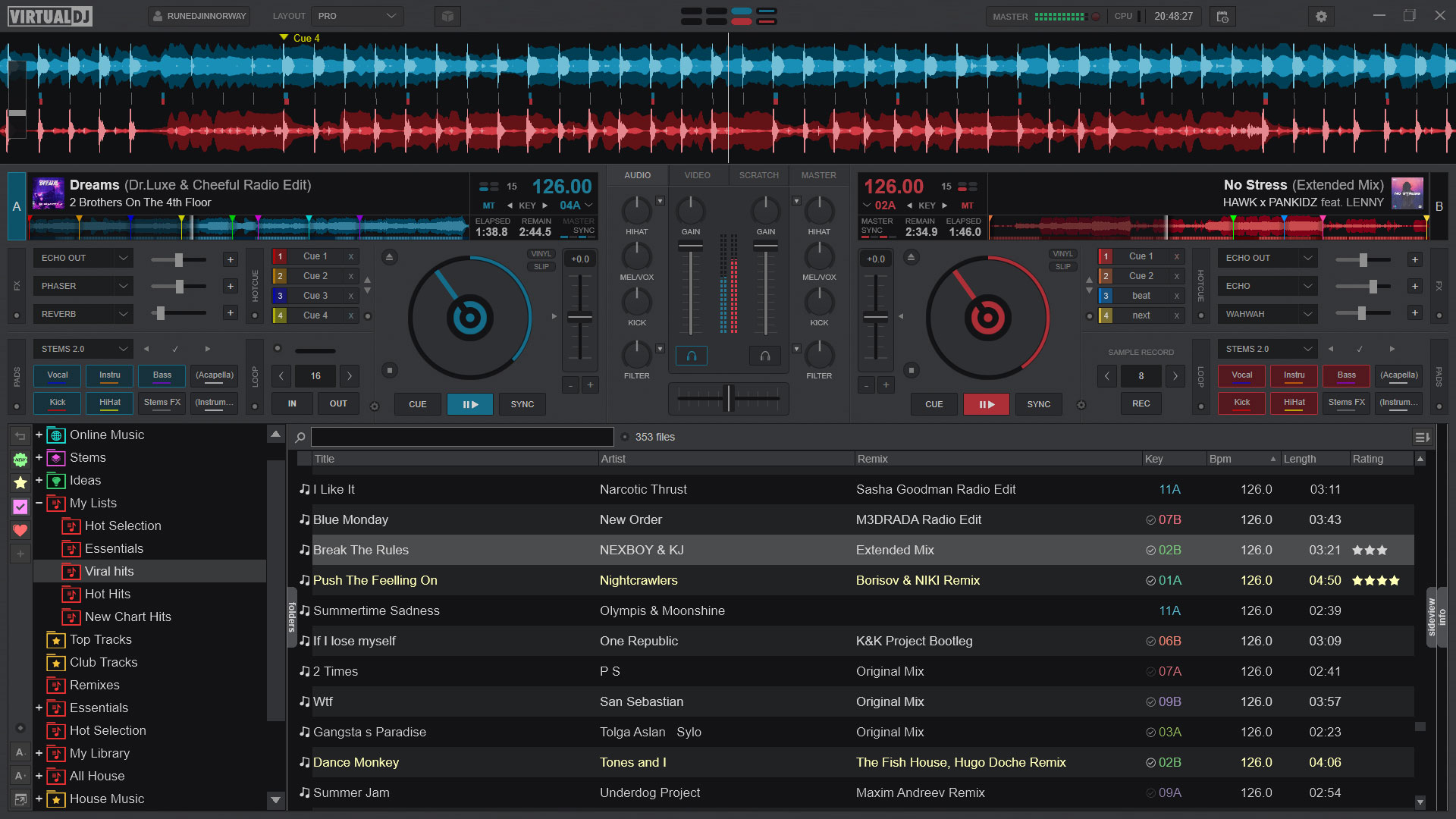
Image: Atomix Productions
| Feature | Detail |
|---|---|
| Price | Free (home use) / $19/mo (Pro) |
| Platforms | macOS, Windows |
| Decks | Up to 99 |
| Key Feature | Video mixing, widest controller support |
VirtualDJ supports more controllers out of the box than any other DJ software — hundreds of devices have pre-built mappings. This makes it the most flexible choice if you switch between hardware frequently or use less common controllers.
The interface is intuitive with clear visual feedback, making it accessible for beginners learning to mix. The free Home version is generous — full feature access for non-commercial use. Video mixing support is built-in, not an add-on. The Sandbox feature lets you preview your next mix in headphones without affecting the live output.
VirtualDJ's modular skin system lets you completely redesign the interface. The scripting engine allows deep customisation for power users. Auto-mix and AI suggestion features help less experienced DJs keep sets flowing.
The perception gap is VirtualDJ's main challenge. Despite strong technical capabilities, it carries a reputation as "not professional" among some DJs — largely a holdover from earlier versions. Modern VirtualDJ is a capable professional tool, though club adoption remains limited compared to Serato and Rekordbox.
5. Ableton Live
Best for Production Crossover
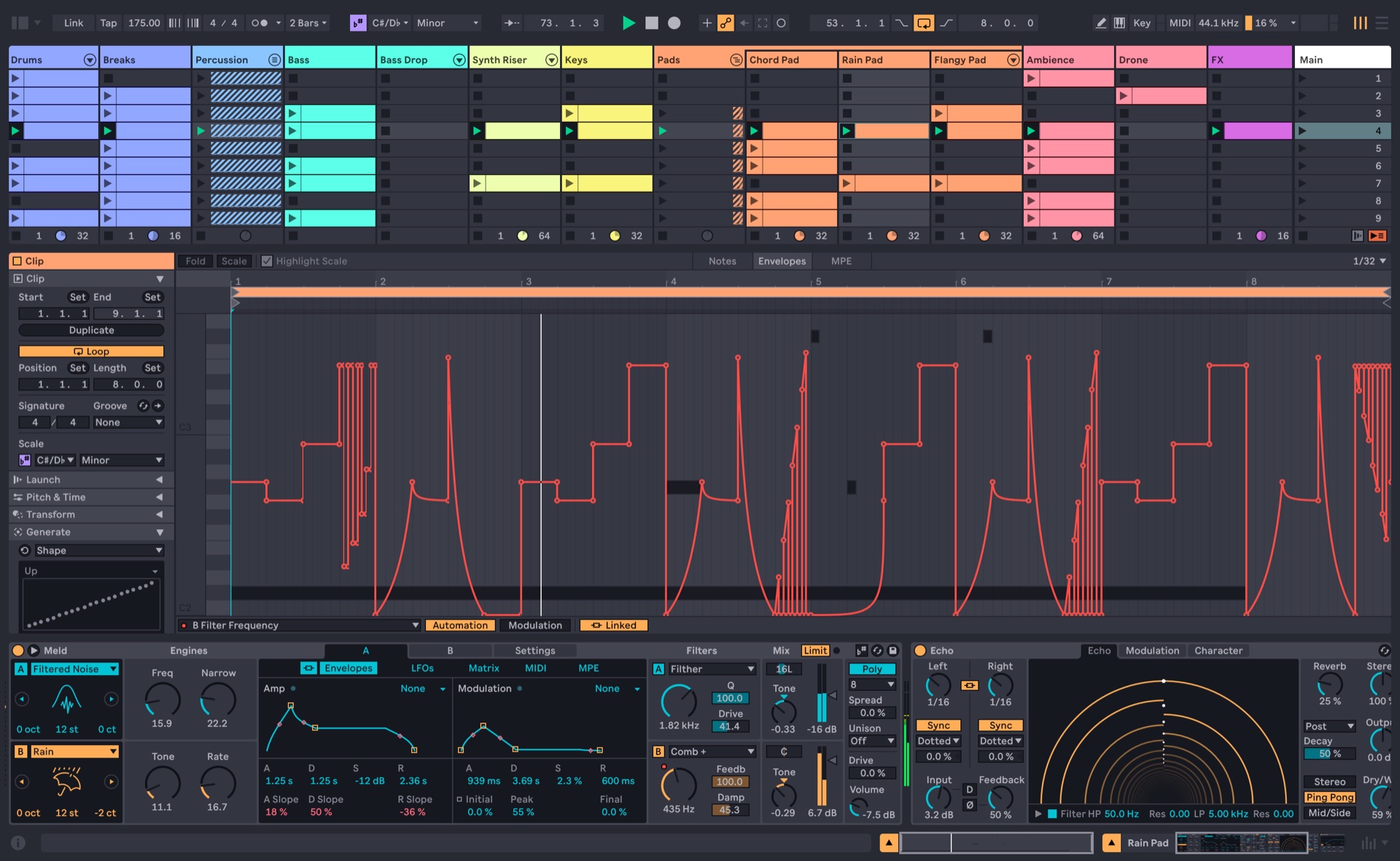
Image: Ableton
| Feature | Detail |
|---|---|
| Price | $99–$749 one-time |
| Platforms | macOS, Windows |
| Workflow | Clip-based, non-linear |
| Key Feature | Session View, Max for Live |
Ableton Live isn't traditional DJ software — it's a full production DAW that happens to be exceptional for live performance. Session View lets you launch clips, loops, and samples in a freeform grid, building sets dynamically rather than mixing track-to-track.
This approach suits DJs who create mashups, play original productions, or want to blend production with performance. You can warp any track to your tempo, layer multiple elements simultaneously, and process audio through production-grade effects and instruments. Max for Live extends the software with community-built devices.
Ableton Link wirelessly syncs tempo across devices and apps, enabling collaborative performance setups. The Push controller is designed specifically for hands-on Live performance.
The learning curve is steep compared to dedicated DJ software. There's no automatic beatmatching, no traditional deck view, and library management requires external organisation. Ableton Live is the choice for DJs who think of themselves as performers and producers first.
6. Algoriddim djay Pro AI
Best for Modern Features
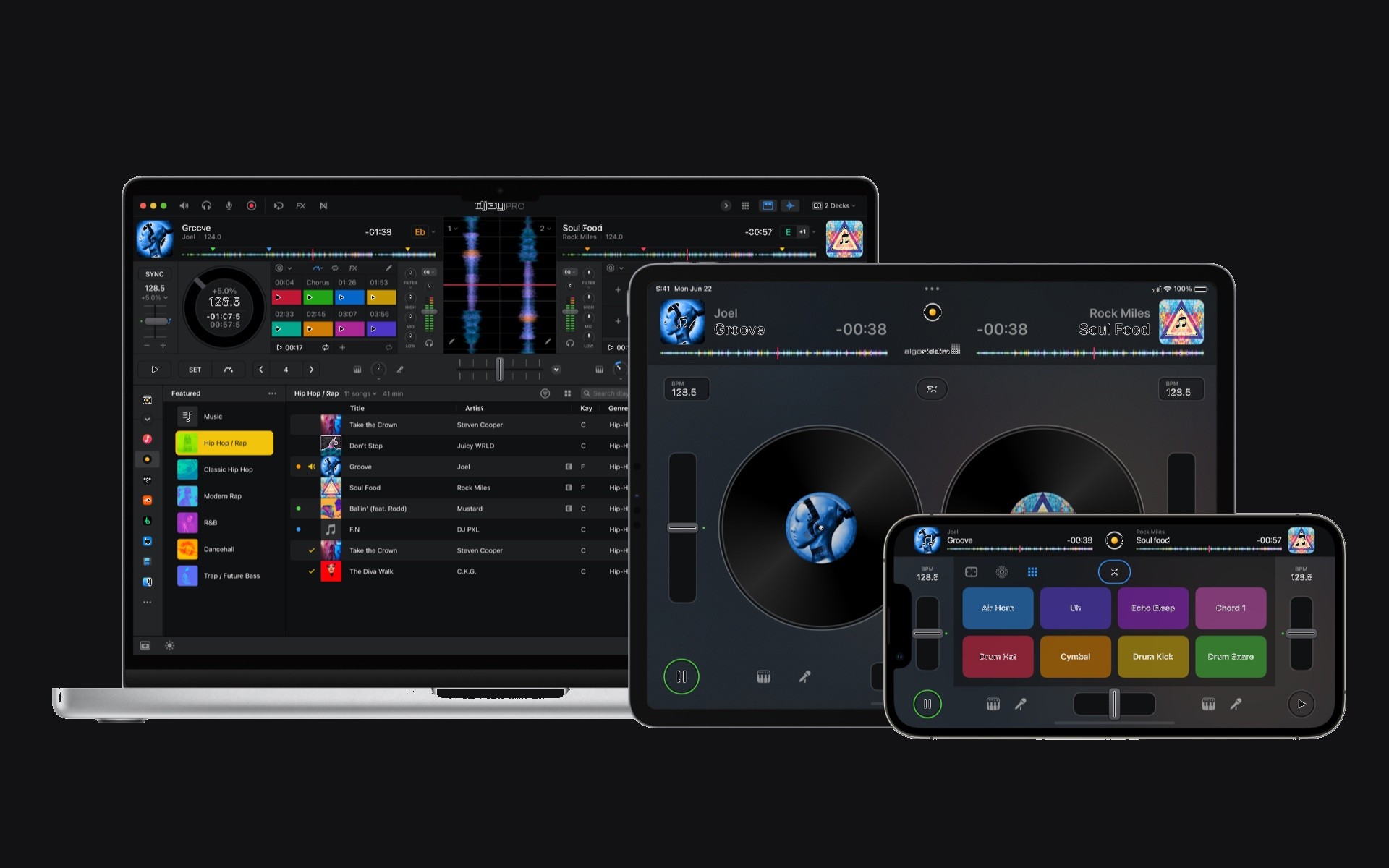
Image: Algoriddim
| Feature | Detail |
|---|---|
| Price | $6.99/mo or $49.99/year |
| Platforms | macOS, Windows, iOS, Android |
| Decks | Up to 4 |
| Key Feature | Neural Mix AI, Apple integration |
djay Pro AI brought machine learning to DJing before anyone else. Neural Mix uses AI to separate any track into stems — vocals, drums, instruments — in real time, enabling live mashups and acapella mixes from your existing library without pre-processed files.
The cross-platform support is the widest of any DJ software. Full-featured versions run on Mac, Windows, iPad, iPhone, and Android. iCloud syncing keeps your library consistent across devices. Native Apple Silicon optimisation means the Mac version runs efficiently on modern hardware.
Automix AI builds intelligent playlists based on your music library, matching key, energy, and genre. The interface is modern and touch-optimised, particularly strong on iPad where it rivals desktop software for usability.
The limitation is professional ecosystem support. Controller compatibility is narrower than Serato or VirtualDJ, though it has grown significantly. There's no DVS support for vinyl DJs. But for DJs who value innovation and multi-device flexibility, djay Pro AI leads the field.
Algoriddim djay Pro AI
7. Mixxx
Best Free Option
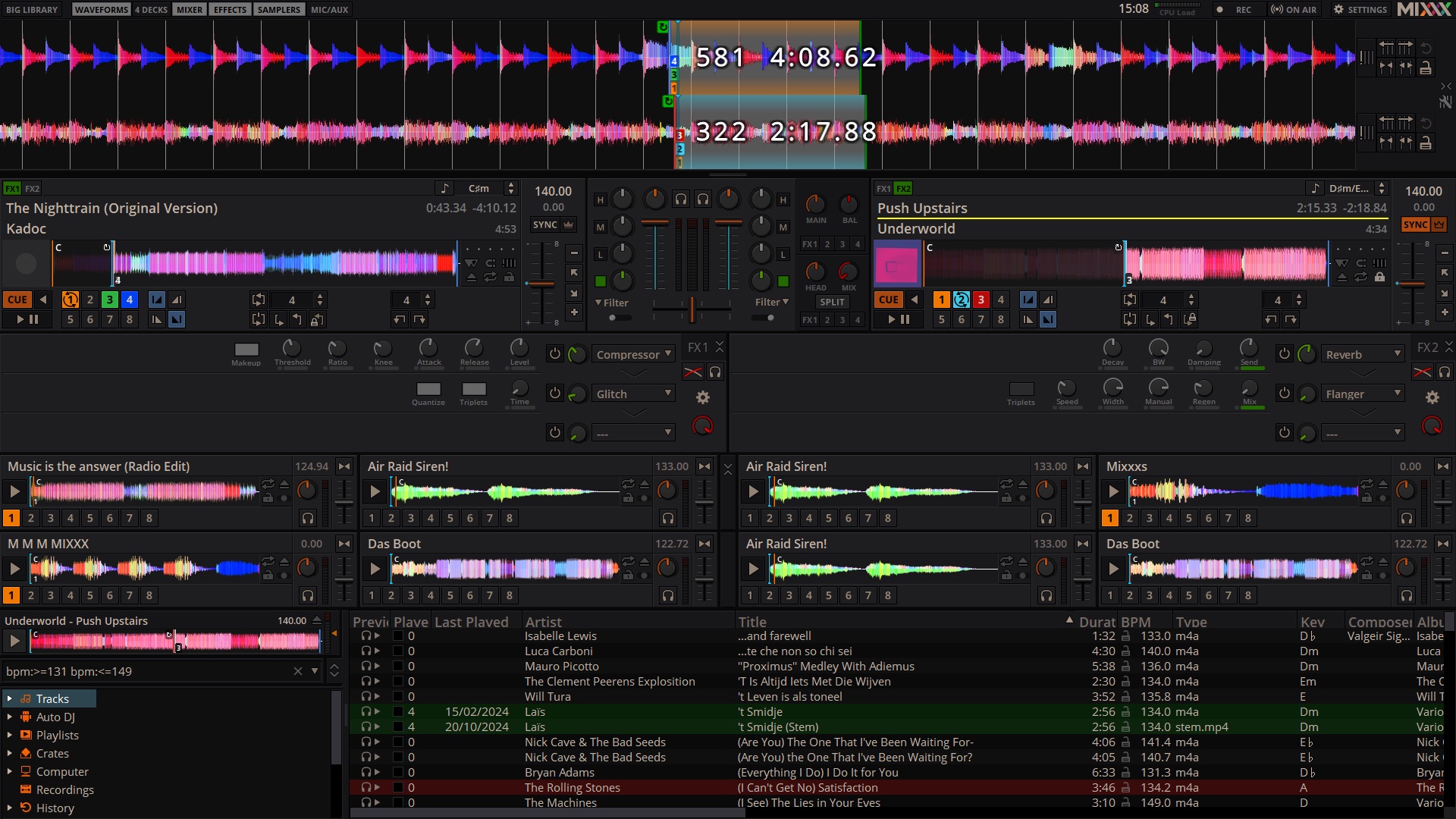
Image: Mixxx
| Feature | Detail |
|---|---|
| Price | Free (open-source) |
| Platforms | macOS, Windows, Linux |
| Decks | Up to 4 |
| Key Feature | Completely free, no restrictions |
Mixxx is the only completely free, open-source DJ software with no feature restrictions. No premium tier, no subscription, no hardware lock. Everything — four decks, effects, DVS support, controller mapping — is available from day one.
The community maintains mappings for a wide range of controllers. BPM detection, key analysis, and library management are solid. The effects engine covers the essentials. For DJs who want to learn without any financial commitment, Mixxx removes every barrier.
The trade-off is polish. The interface is functional but not as refined as commercial alternatives. Updates come from volunteer contributors, so development pace varies. Some advanced features like AI stems aren't available. But as a learning platform and a capable performance tool for working DJs on a budget, Mixxx is genuinely impressive for free software.
Companion Software Worth Pairing
Alongside your main DJ software, these companion tools handle production, sourcing, and lighter-weight performance setups:
Serato Studio
Splice Sounds
Beatport LINK
Native Instruments Traktor Play
FAQs
What is the best DJ software for beginners?
VirtualDJ and Mixxx are the best starting points. VirtualDJ has a free version with an intuitive interface and built-in tutorials. Mixxx is completely free and open-source with no feature restrictions. If you already own a Pioneer controller, Rekordbox is included and designed for easy onboarding. Serato DJ Lite comes free with many controllers.
Do I need to pay for DJ software?
Not necessarily. Mixxx is entirely free. VirtualDJ offers a free home version. Serato DJ Lite and Rekordbox have free tiers. However, paid versions (Serato DJ Pro, Traktor Pro, Ableton Live) unlock advanced features like expanded FX, more deck control, and DVS support that serious DJs will eventually want.
Can I use DJ software without a controller?
Yes. Most DJ software can be operated with just a keyboard and mouse, though the experience is limited. VirtualDJ and Mixxx are particularly good for keyboard-only use. However, a hardware controller provides tactile control over faders, jog wheels, and effects that makes mixing significantly easier and more musical.
Which DJ software works with the most controllers?
VirtualDJ supports the widest range of controllers, with built-in mappings for hundreds of devices. Serato DJ works with most major controllers from Pioneer, Numark, Rane, and Roland. Rekordbox is optimised for Pioneer hardware. Traktor Pro works with any MIDI controller but has the deepest integration with Native Instruments gear.
Is Ableton Live good for DJing?
Yes, but it's different from traditional DJ software. Ableton Live excels at creative, non-linear performance using clips, samples, and live remixing. It's the standard for DJs who blend production with performance. However, it lacks traditional DJ features like automatic beatmatching and library management that dedicated DJ software provides.
Verdict
Serato DJ Pro is the safest choice for most DJs — industry-standard reliability, excellent hardware support, and a clean interface that stays out of your way. If you play on Pioneer CDJs at clubs, Rekordbox is essential for library management and USB export.
For creative DJs who want deep effects and live remixing capabilities, Traktor Pro 4 offers the most flexibility at a one-time price. VirtualDJ is the best starting point for beginners thanks to its free version and wide controller support.
Producers who DJ should look at Ableton Live for its unique clip-based performance workflow. For cutting-edge AI features and cross-platform flexibility, djay Pro AI leads the way. And if budget is your primary concern, Mixxx proves that free software can be genuinely capable.
Related Software & Controller Reviews
Dive deeper into specific DJ software and compatible hardware with our detailed reviews:
DJ Software Reviews:
- Algoriddim djay Pro AI Review — AI-powered cross-platform DJ app
- Serato Studio Review — Beat-making software from the Serato team
- Beatport Link Review — Streaming integration for DJ software
Controllers Optimized for Specific Software:
- Traktor Kontrol S4 Review — Flagship Traktor Pro controller
- Traktor Kontrol S2 MK3 Review — Compact Traktor controller with haptic jog wheels
- Pioneer DJ DDJ-1000SRT Review — Professional 4-channel Serato controller
- Pioneer DJ DDJ-RZ Review — Premium Serato controller with video mixing
- Numark Scratch Review — 24-bit Serato DJ scratch mixer
- Hercules DJControl Inpulse 500 Review — DJUCED and Serato DJ Lite compatible
See Also:
- What is Serato DJ? — Complete guide to Serato DJ software
- What is Rekordbox? — Everything you need to know about rekordbox
- What is Traktor DJ? — Native Instruments' DJ software explained
- What is Virtual DJ? — VirtualDJ features and capabilities
- Serato DJ Lite vs Pro — Which Serato version should you choose?