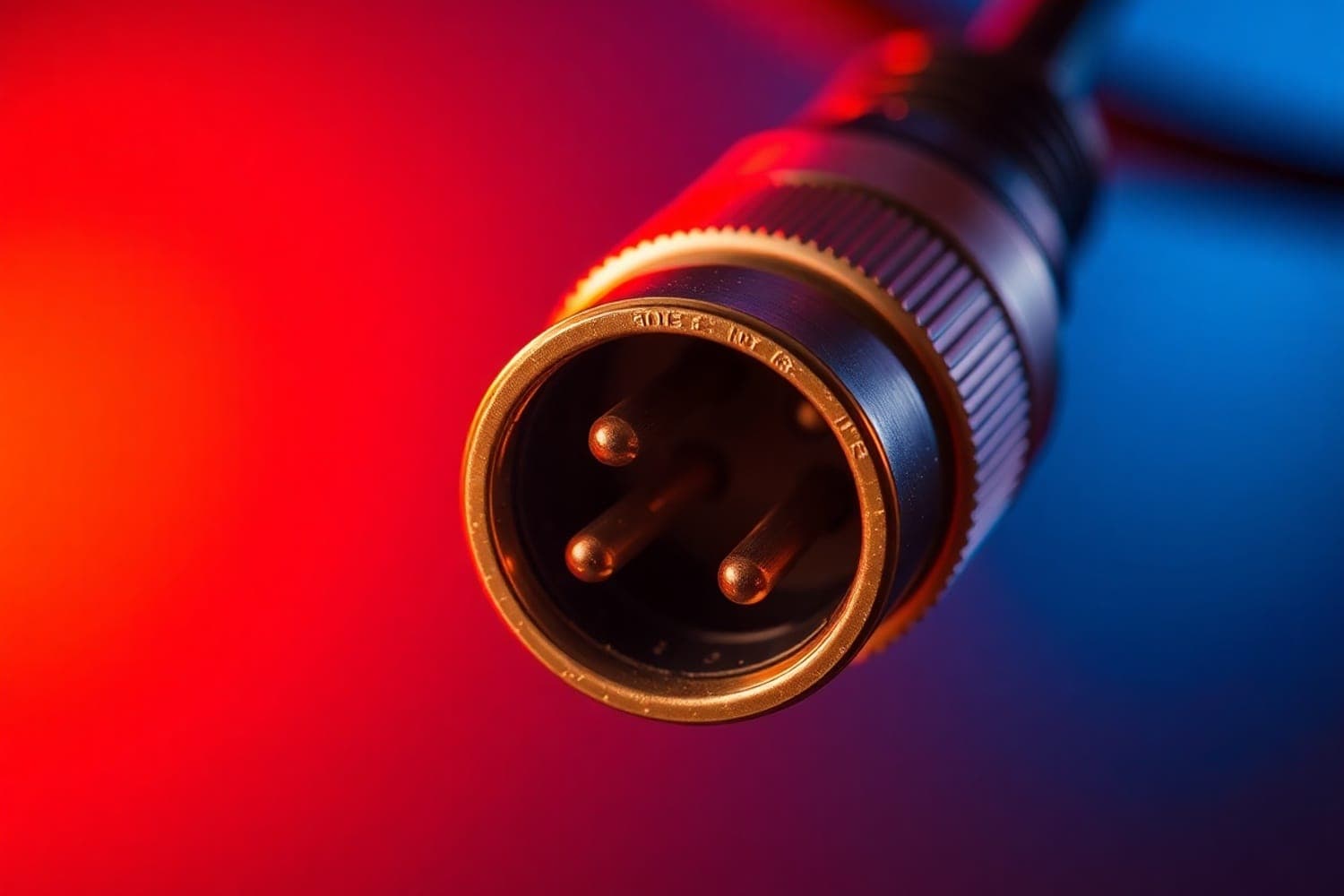
XLR cables are the standard for professional audio connections. They carry balanced signals that reject electromagnetic interference, making them essential for connecting microphones, DJ mixers, speakers, and audio interfaces in any serious setup.
Not all XLR cables are equal. The differences come down to shielding quality, connector durability, and gauge thickness — factors that determine how well a cable performs under heavy use and in electrically noisy environments like clubs and venues.
What to Look For
Connector quality. Neutrik connectors are the industry standard — their locking mechanism prevents accidental disconnection and the machined metal housing withstands years of plugging and unplugging. Cables with Neutrik or equivalent-quality connectors are worth the premium over generic alternatives.
Shielding. Shielding protects the signal from electromagnetic interference (EMI) caused by lighting rigs, power cables, and other electronic equipment. Braided copper shielding is the most effective. Spiral (serve) shielding is adequate for short runs. Foil shielding alone is the least effective but cheapest.
Wire gauge (AWG). Thicker wire (lower AWG number) provides lower resistance and better durability. 20–24 AWG is standard for microphone cables. 16–18 AWG is used for heavier-duty applications. For most DJ setups, 20–22 AWG is sufficient.
Strain relief. The connection point between the cable and connector is where most failures occur. Quality strain relief — a flexible boot or reinforced junction — prevents the internal wires from breaking when the cable is pulled or bent at sharp angles. This matters most for cables that get regularly connected and disconnected.
1. Pig Hog PHM10
Editor's Choice
| Spec | Detail |
|---|---|
| Gauge | 14 AWG (8mm wire diameter) |
| Connectors | Heavy-duty, tension-resistant |
| Shielding | Extra-thick copper |
| Lengths | 10, 15, 20, 25, 50 ft |
| Packs | Individual or bulk (up to 10) |
The Pig Hog PHM10 is built for abuse. The 14 AWG wire gauge is significantly thicker than the industry standard, making these cables far more resistant to kinking, tangling, and physical damage. The extra-thick copper shielding provides excellent EMI rejection even in electrically noisy club environments.
Heavy-duty connectors with tension-resistant strain relief handle constant plugging and unplugging without developing loose connections. The thick rubber jacket is durable enough for touring use — these cables survive being stepped on, run over by flight cases, and crammed into cable bags.
Available in lengths from 10 to 50 feet and in bulk packs up to 10, the PHM10 covers everything from studio monitor connections to long PA runs. The trade-off is thickness — these cables are harder to coil neatly and take up more space in your cable bag than thinner alternatives.
For DJs who gig regularly and need cables that won't fail, the Pig Hog PHM10 is the most reliable choice.
Pig Hog PHM10 XLR Cable
2. Mogami Gold Studio
Premium Choice
| Spec | Detail |
|---|---|
| Gauge | 24 AWG |
| Connectors | Neutrik gold-plated |
| Shielding | Copper serve + copper braid |
| Jacket | Rubber, flexible |
| Made In | Japan |
Mogami cables are the studio standard — used in professional recording facilities worldwide. The Gold Studio series combines Mogami's premium Japanese-made wire with Neutrik gold-plated connectors and dual-layer shielding (copper serve plus copper braid) for the cleanest possible signal path.
Gold-plated contacts resist corrosion and maintain optimal conductivity over years of use. The dual-layer shielding provides exceptional noise rejection. The rubber jacket is flexible yet durable, coiling easily without memory effect.
The 24 AWG wire is thinner than the Pig Hog, which makes these cables lighter and easier to manage. Signal quality is pristine — if there's any audible difference between XLR cables, Mogami is where you'll hear it.
The price is significantly higher than alternatives. For home studio use and recording, that investment in quality is justified. For DJ gigs where cables face physical abuse, the thicker Pig Hog may be more practical despite lower signal purity specifications.
Mogami Studio Gold XLR
3. AmazonBasics XLR Cable
Best Value
| Spec | Detail |
|---|---|
| Gauge | ~22 AWG |
| Connectors | Metal, Neutrik-style |
| Shielding | Spiral copper |
| Jacket | 6mm PVC |
| Price | Budget |
The AmazonBasics XLR cable delivers functional performance at the lowest price point. Neutrik-style connectors (not genuine Neutrik) provide decent build quality. Spiral copper shielding handles most home studio environments adequately. The PVC jacket is reasonably durable for indoor use.
The thin shielding means these cables are more susceptible to interference from nearby power cables, lighting rigs, and other electronic equipment. For home studios with short cable runs and minimal interference sources, this isn't a practical concern. For club gigs with stage lighting and long cable runs, interference can become audible.
At this price, you can afford to buy several as spares. For a first DJ setup or practice space, the AmazonBasics cable is perfectly serviceable. Plan to upgrade to better-shielded cables when you start gigging regularly.
Amazon Basics XLR Male to Female Cable
Other Cables Worth Considering
Monoprice Premier Series XLR-to-TRS — An XLR-to-1/4-inch balanced cable with gold-plated connectors and 16 AWG gauge. Perfect for connecting XLR outputs to TRS inputs on studio monitors or mixers. Thick shielding and durable build at a reasonable price. The go-to for mixed-connector setups.
Behringer MIC2USB — An XLR-to-USB adapter cable for recording directly to a computer without an audio interface. Plug-and-play on Mac and Windows. A quick-fix solution for basic recording or podcasting, though it lacks the quality of a proper audio interface. Only works with dynamic microphones (no phantom power).
FAQs
What does XLR stand for?
XLR stands for External Line Return, though the origin is debated. Some sources attribute the letters to the original Cannon X series connector with a Latch and Rubber compound. Regardless of etymology, XLR is the standard balanced audio connector used in professional microphones, mixers, speakers, and audio interfaces worldwide.
How long can an XLR cable be without losing quality?
XLR cables use balanced signal transmission, which rejects interference over long distances. Quality XLR cables can run 200 feet or more without noticeable signal degradation. For most DJ and studio applications, cable runs are well within this range. Use thicker gauge (lower AWG number) cables for runs over 50 feet.
Do I need XLR or TRS cables for my studio monitors?
Most studio monitors accept both XLR and TRS (1/4-inch balanced) inputs. XLR connections are slightly more secure due to the locking connector, which prevents accidental disconnection. Either connection type delivers identical audio quality. Check your monitor's input options and choose based on your mixer or interface outputs.
Are expensive XLR cables worth it?
For most users, mid-range cables from brands like Pig Hog or Monoprice deliver professional-quality performance. Premium cables (Mogami, Canare) offer superior shielding and durability for demanding touring and studio environments. The audible difference is minimal, but premium cables last longer under heavy use and are less likely to develop faults.
How many XLR cables do I need for DJing?
At minimum, two — one per channel for a stereo master output from your mixer or controller to powered speakers. Add one more for a microphone. Larger setups with monitor speakers, subwoofers, or multiple audio sources may need 4–8 cables. Always carry spares — a failed cable during a gig is the most common point of failure.
Verdict
The Pig Hog PHM10 is the best XLR cable for DJs and live sound. Its extra-thick 14 AWG wire and heavy-duty strain relief survive the realities of gigging — being stepped on, yanked out, and crammed into bags night after night.
For studio recording where signal purity matters most, the Mogami Gold Studio with Neutrik gold-plated connectors and dual-layer shielding is the professional standard. The AmazonBasics XLR is the budget pick for home studio setups where cable abuse is minimal.
Buy the best cables you can afford and always carry spares. A $15 cable that fails mid-set costs you far more than the $30 cable that doesn't.