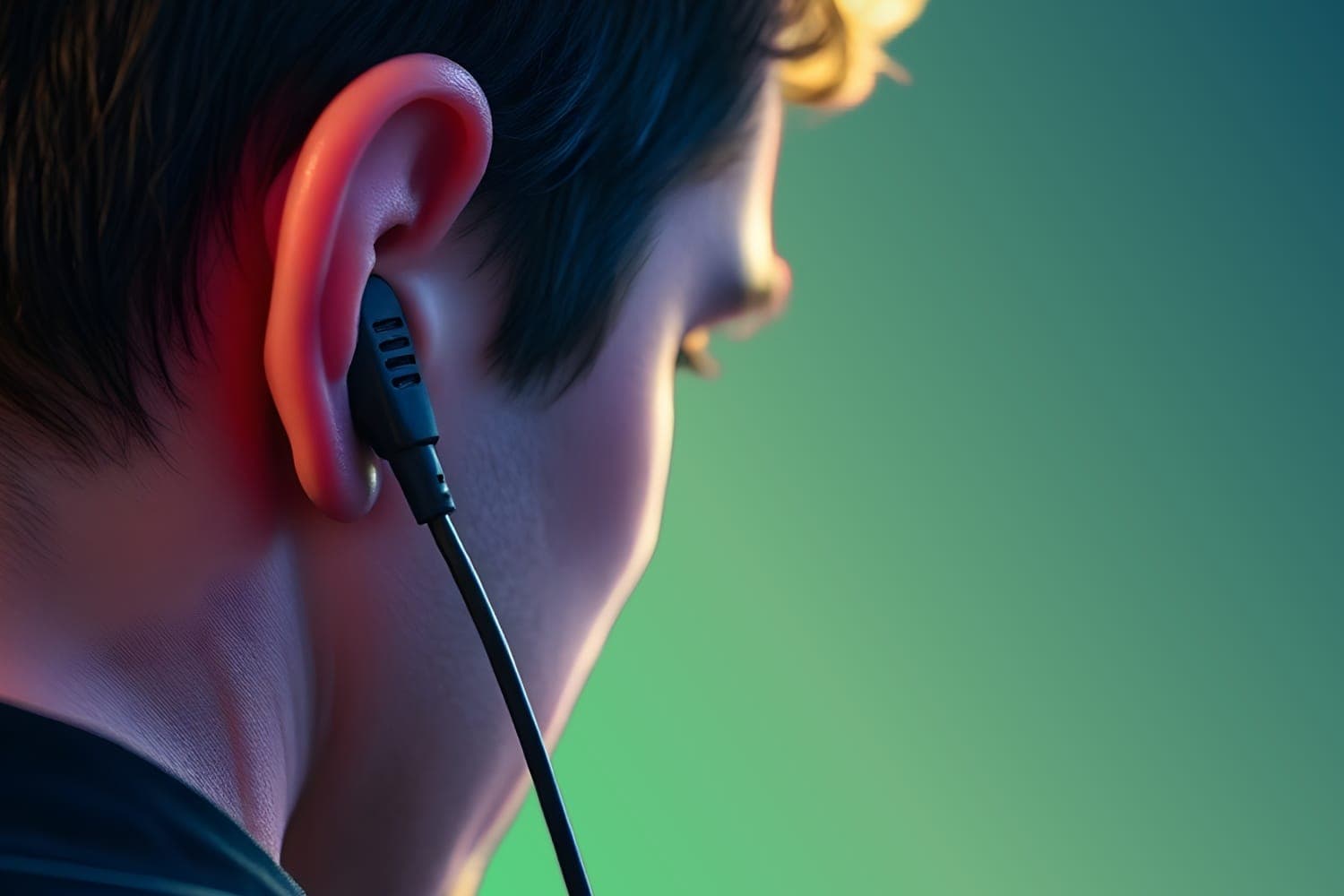
In-ear monitors (IEMs) replace traditional floor wedge monitors with a personal mix delivered wirelessly to earphones. A transmitter sends your monitor mix to a belt-pack receiver that you wear, feeding custom or universal-fit earphones. The result is consistent monitoring regardless of where you stand on stage.
For DJs, IEMs are less common than headphones — most DJ monitoring happens through over-ear cans. But DJs who perform on large festival stages, host events with microphone work, or collaborate with live musicians benefit from the freedom and consistency that wireless IEM systems provide.
What to Look For
Wireless range. The transmitter-to-receiver range determines how far you can move from your setup. Budget systems offer 100–300 feet, which covers most club stages. Professional systems (Shure PSM300, Sennheiser G4) are rated at 300 feet (90–100 m) line of sight — enough for large festival stages. Test range claims in real-world conditions — walls, bodies, and RF interference reduce effective range.
Frequency band. UHF systems (470–960 MHz) offer better range and fewer interference issues than 2.4 GHz systems. However, 2.4 GHz systems don't require frequency coordination and work worldwide. For single-user setups in small venues, 2.4 GHz is fine. For multi-user setups or large venues, UHF is more reliable.
Sound quality. The transmitter's audio processing determines how accurately your mix is reproduced. Higher-end systems use better companders (compressor/expander circuits) that preserve dynamic range. Budget systems can introduce audible compression artifacts. Always upgrade the included earphones — most bundled earphones are the weakest link.
Build quality. Belt-pack receivers get clipped to clothing, dropped, and stepped on. Metal receivers survive gigging life better than plastic. The transmitter needs to be rack-mountable for permanent installations.
1. Shure PSM300
Editor's Choice
| Spec | Detail |
|---|---|
| Frequency Band | UHF |
| Range | 300 ft (90 m), rated |
| Receiver | Polycarbonate (P3R) or metal (P3RA) |
| Features | MixMode, volume limiter |
| Earphones | SE112 included (upgradeable) |
The Shure PSM300 is the professional standard for wireless IEM systems. The UHF transmission provides reliable, interference-free monitoring out to Shure's rated 300 feet (90 metres) — enough for any festival stage. Shure's audio processing delivers clean, dynamic sound that accurately represents your monitor mix.
MixMode allows the performer to blend two separate audio sources (e.g., your mix and a click track) directly from the belt-pack receiver, without needing the sound engineer to adjust levels. The volume limiter protects hearing during sudden level spikes — important for performers in unpredictable live environments.
The metal P3RA belt-pack receiver — the Pro bundle's pack; the standard bundle's P3R is polycarbonate — is lightweight yet durable enough for touring. The included SE112 earphones are the weak link — a fine starting point, but upgrading to SE215s or better significantly improves what you hear.
At around $750 for the standard bundle — $989 for the better-equipped Pro trim — it's a significant investment. But for performers who depend on reliable monitoring night after night, the PSM300's reliability and sound quality justify the price.
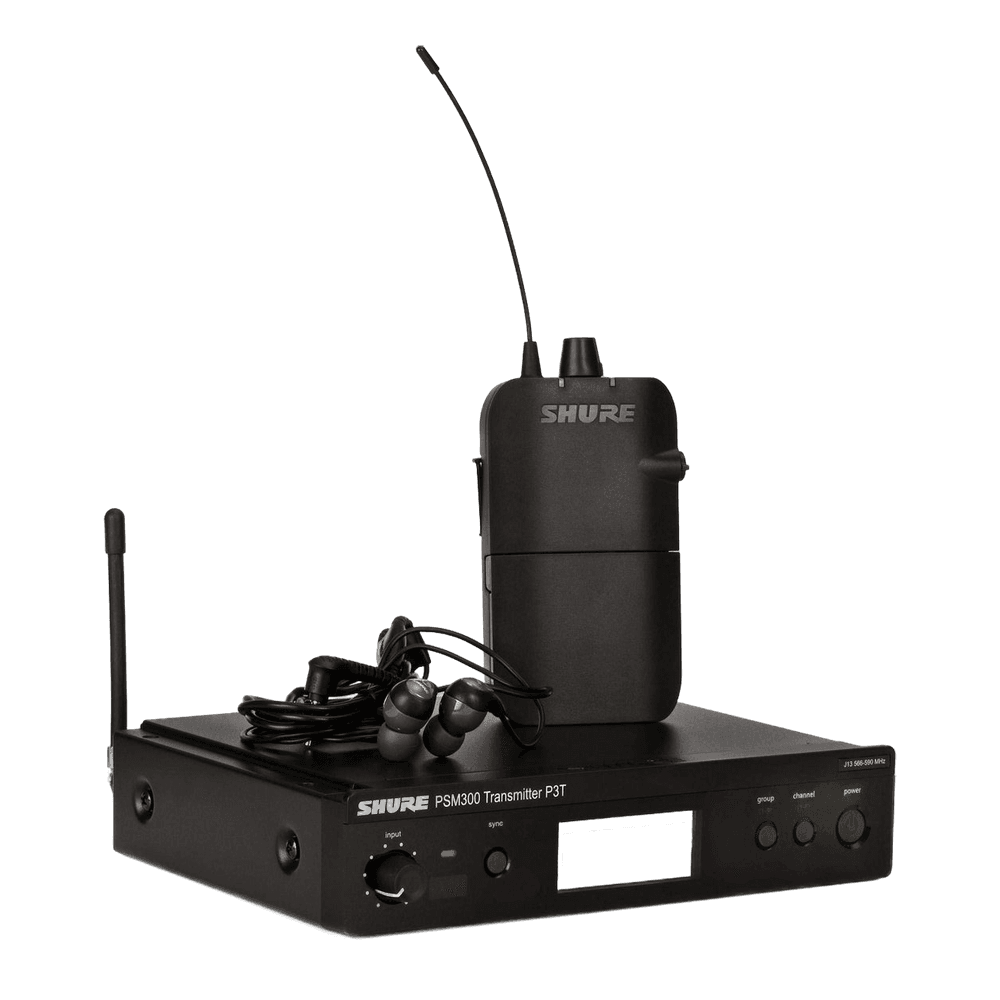
Shure PSM300
The dependable pro standard — rock-solid RF and quiet audio; just plan to replace the bundled earphones.
2. Phenyx Pro PTM-10
Best Value
| Spec | Detail |
|---|---|
| Frequency Band | UHF (900 MHz) |
| Range | 160 ft / 50 m (claimed) |
| Display | LCD (transmitter and receiver) |
| Channels | Selectable |
| Earphones | Included (basic) |
The Phenyx Pro PTM-10 delivers a solid feature set at a fraction of the Shure's price. Phenyx Pro rates the 900 MHz UHF link at 160 feet (50 m) line of sight, and owners report around 50 feet of reliable coverage indoors — enough for small stages and rehearsal rooms, not long throws. LCD displays on both the transmitter and receiver make channel and volume adjustments easy, even in low-light stage conditions.
Sound quality is clean and usable, though the compander doesn't match the Shure's transparency. The bright LCD displays are a genuine advantage over the minimal seven-segment display on the Shure PSM300's standard P3R pack. Multiple selectable channels allow operation alongside other wireless systems without interference.
The included earphones are basic — plan to upgrade them. The receiver is slightly heavier than the Shure, which is noticeable when clipped to clothing during energetic performances. But for the price, the PTM-10 delivers reliable wireless monitoring that handles small-venue gigs and rehearsals.
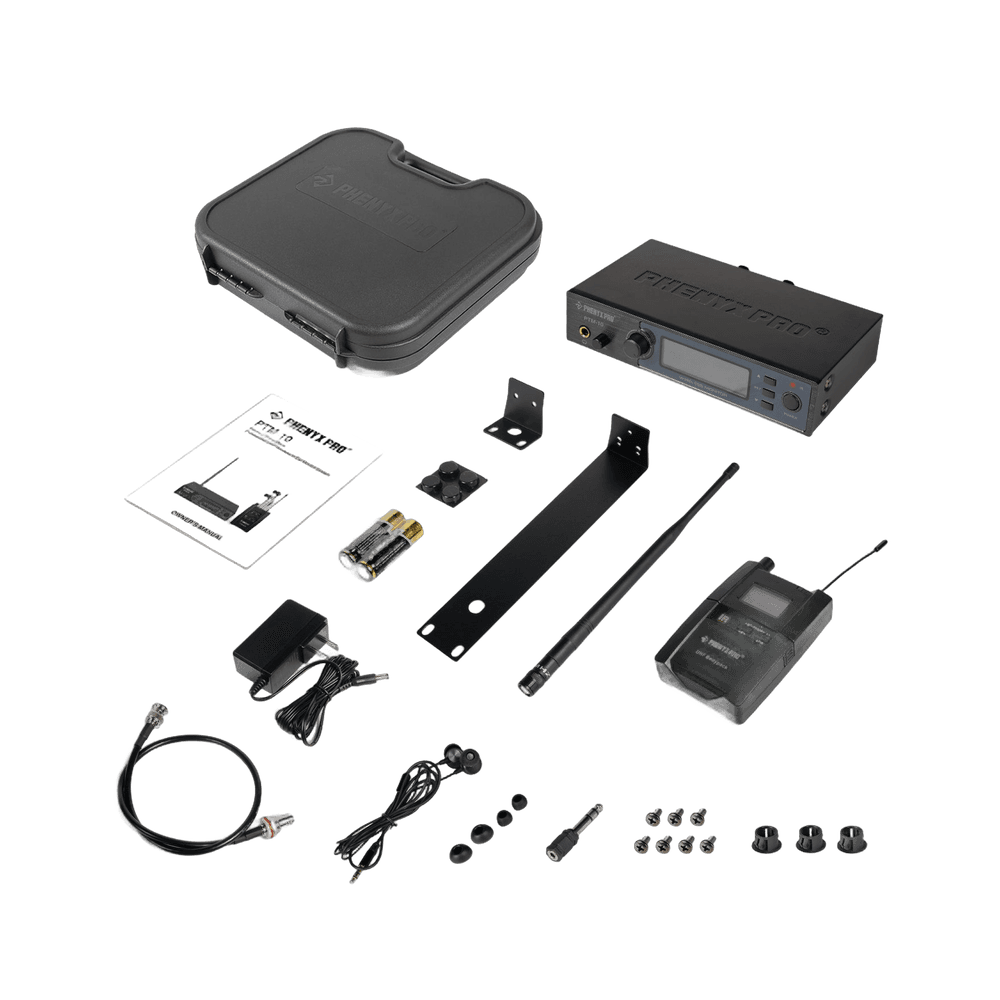
Phenyx Pro PTM-10
A cheap, usable way into wireless monitoring — fine for small rooms, but noisy and RF-limited under pressure.
3. Sennheiser EW IEM G4
Premium Choice
| Spec | Detail |
|---|---|
| Frequency Band | UHF |
| Range | Up to 300 ft (100 m) |
| Audio | High-dynamic-range transmission |
| Features | Adaptive diversity, auto-scan |
| Build | Professional, rack-mountable |
The Sennheiser EW IEM G4 is the other professional standard alongside the Shure PSM300. Sennheiser's high-dynamic-range transmission provides exceptionally clean audio with minimal compression artifacts — the most transparent sound of any system on this list.
Adaptive diversity reception automatically selects the strongest signal path, minimising dropouts in RF-congested environments like festival grounds with dozens of wireless systems. Auto-frequency scanning finds clean channels without manual coordination.
The ergonomic volume control on the receiver is smooth and precise. Sennheiser's bundled IE 4 earphones don't do the transmitter justice, though — owner consensus is that they're the first thing to replace. The transmitter is fully rack-mountable for permanent installations.
At $1,149–$1,249 as of August 2026 — against $989 for the PSM300's better-equipped Pro bundle — the G4 carries a clear premium; it's the pick when audio quality and multi-system RF headroom justify the gap.
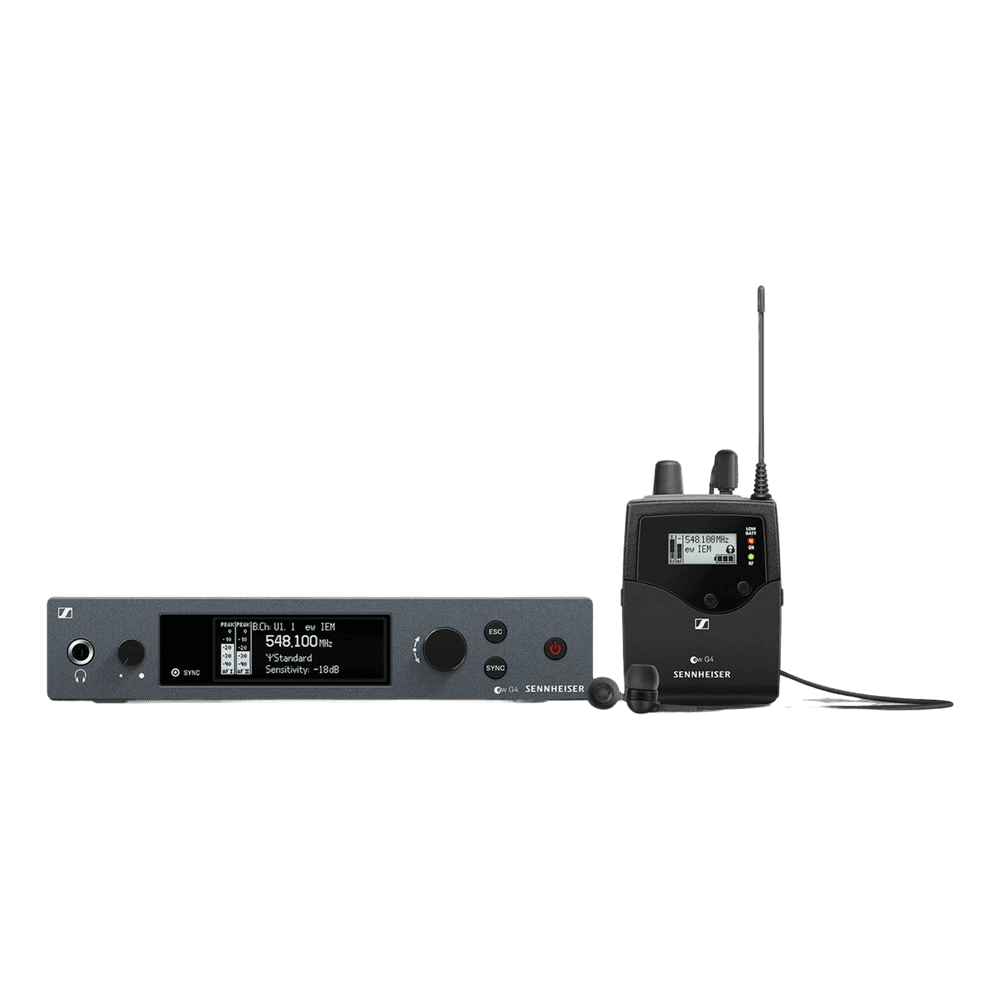
Sennheiser EW IEM G4
The best-sounding, most tour-ready wireless IEM system in its class — priced accordingly, and worth better earphones...
4. XTUGA IEM1200
Best for Full Bands
| Spec | Detail |
|---|---|
| Frequency Band | UHF (550–580 MHz) |
| Config | Multi-receiver bundles |
| Display | LCD |
| Volume | Button control |
| Earphones | Included (basic) |
The XTUGA IEM1200 solves one problem cheaply: getting a whole band onto in-ears without pro money. Its signature form is the multi-receiver bundle — one transmitter feeding several bodypacks — which costs a fraction of buying an individual system per player. An LCD display and reasonable entry-level range round it out.
The catch is built into that design: the transmitter carries two mono channels, so the whole band shares at most two mixes, which rules out the personal monitor mixes in-ears are prized for. The bundled earbuds are entry-level and RF stability is basic. As a group starter kit for a band trying in-ears together on a budget, it makes sense; players who need their own mix will outgrow it.
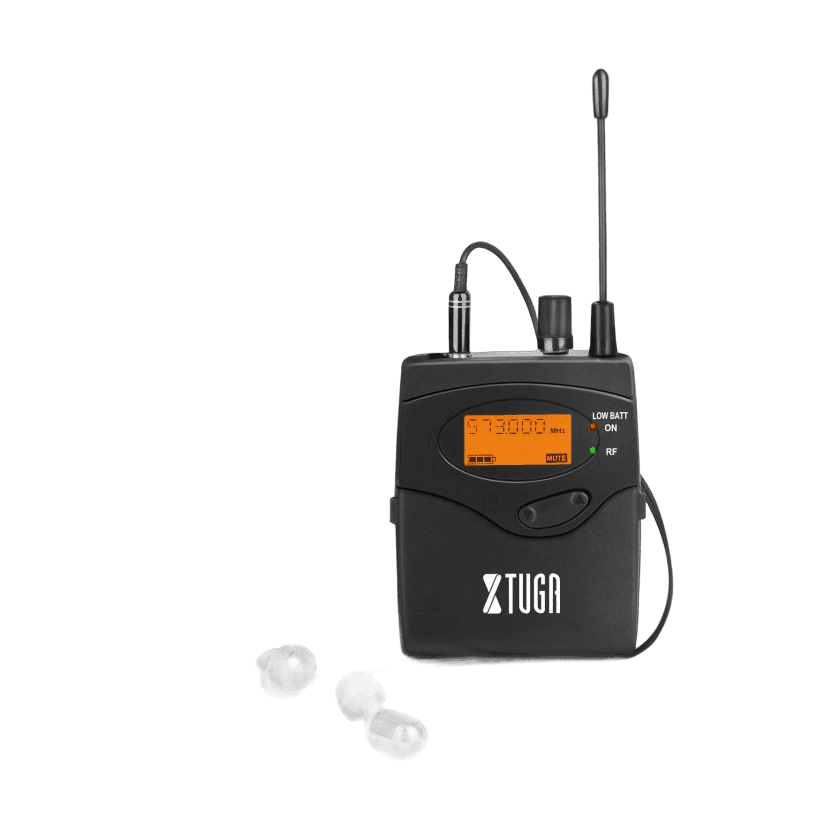
XTUGA IEM1200
The cheapest way to get a whole band on in-ears — two shared mono mixes at most, entry-level earbuds and RF.
5. Listener Pro
Simplest Setup
| Spec | Detail |
|---|---|
| Frequency Band | 2.4 GHz |
| Design | 2-in-1 transmitter/receiver |
| Battery | Rechargeable |
| Antennas | Dual |
| Earphones | Included (basic) |
The Listener Pro is one of the cheapest ways to try wireless monitoring, and its appeal is simplicity. The 2.4 GHz design needs no frequency coordination, the 2-in-1 transmitter/receiver is quick to set up, and rechargeable batteries save on AAs. For a performer stepping away from wedge monitors for the first time, it lowers the barrier to entry.
The trade-offs are real: sound, latency and long-term reliability sit below the pro brands, and because these budget systems come and go, support and spares can be hard to find. Treat it as a low-cost way to see whether in-ears suit you, not a system to gig on for years.
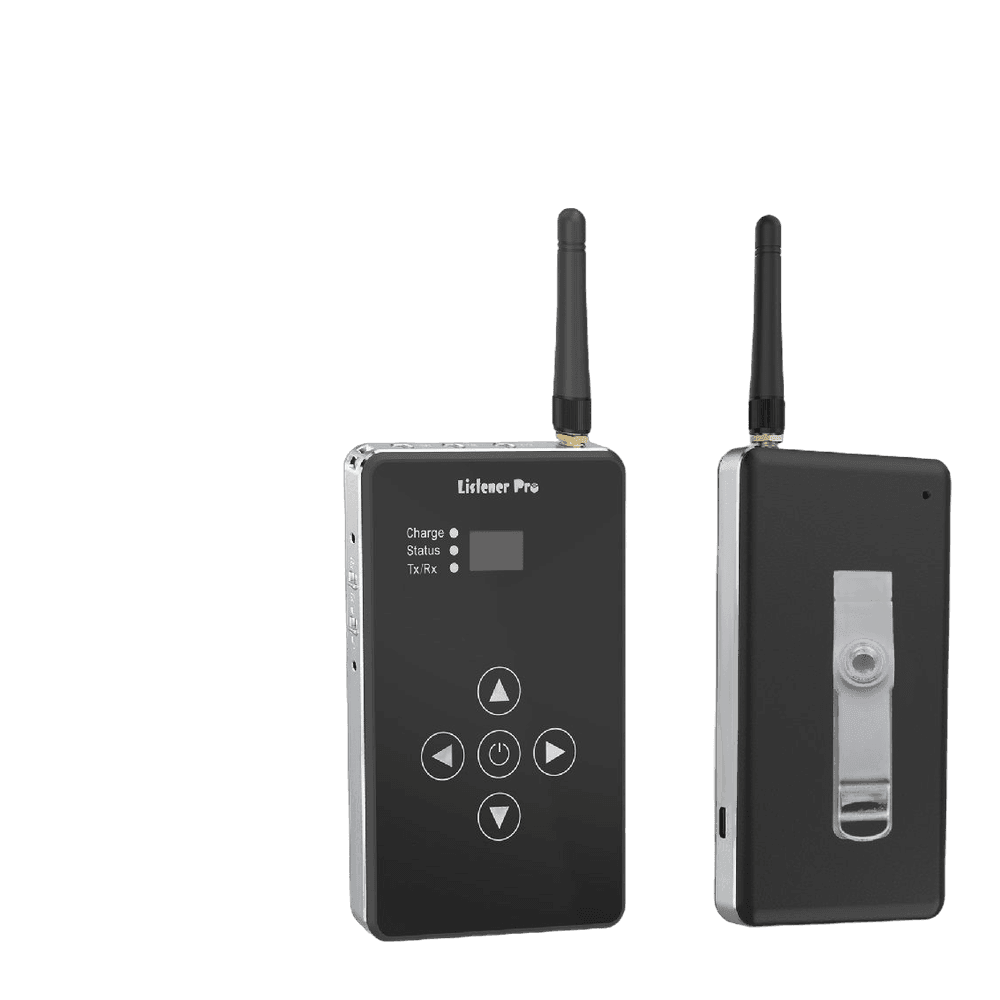
Listener Pro Listener Pro Wireless In-Ear Monitor System
A cheap, simple first step into IEMs — but sound, latency and reliability trail the pros, and support is thin.
FAQs
What are in-ear monitors used for?
In-ear monitors let performers hear themselves and the mix clearly on stage without relying on floor wedge monitors. A wireless transmitter sends the mix to a belt-pack receiver, which feeds custom or universal-fit earphones. IEMs provide consistent sound regardless of stage position, reduce stage volume, and protect hearing — all while giving performers freedom to move.
Do DJs need in-ear monitors?
Most DJs use headphones rather than IEMs for monitoring. However, DJs who perform on large festival stages, host live events with microphone work, or collaborate with live musicians can benefit from IEM systems. IEMs are most valuable when you need to hear a specific monitor mix while moving freely around a stage or venue.
What is the difference between IEMs and regular earphones?
IEM systems include a wireless transmitter and belt-pack receiver that deliver a dedicated monitor mix to the earphones. Regular earphones just play back audio from a connected device. The earphones themselves may look similar, but IEM systems are designed for professional live performance with features like adjustable mix levels, multiple channels, and long wireless range.
How much should I spend on an IEM system?
Budget $200–$500 for a reliable entry-level wireless IEM system. The Shure PSM300 (around $750) is the professional standard. Budget options like the Phenyx Pro PTM-10 (around $230) deliver solid performance for smaller venues. Below $100, reliability and sound quality drop significantly. Invest in quality earphones separately — the included earphones with most systems are basic.
Can I use my own earphones with an IEM system?
Yes. Most IEM belt-pack receivers have a standard 3.5mm output that works with any earphones. Upgrading the included earphones to quality universal-fit or custom-moulded IEM earphones significantly improves sound quality. Shure SE215, Westone UM Pro, and Sennheiser IE 100 Pro are popular upgrade choices.
Verdict
The Shure PSM300 is the professional standard for wireless in-ear monitoring. Reliable UHF transmission, MixMode for personal blend control, and clean audio processing make it the safest choice for performers who depend on consistent monitoring.
For the best audio and RF headroom, the Sennheiser EW IEM G4 is the premium pick, while the Phenyx Pro PTM-10 brings wireless monitoring within reach for small venues and rehearsal. Bands on a tight budget can get everyone on in-ears with the XTUGA IEM1200, and the Listener Pro is the simplest, cheapest first step away from wedge monitors. Whatever you choose, budget for better earphones than the bundled pair — on every system here, that's the single biggest upgrade you can make.
For budget-conscious performers, the Phenyx Pro PTM-10 delivers dependable small-venue monitoring and LCD displays at a fraction of the price. The Sennheiser EW IEM G4 offers the most transparent audio quality for performers who prioritise sonic accuracy.
Whichever system you choose, budget separately for quality earphones — upgrading from the included earphones is the single biggest sound quality improvement you can make.