Your speakers are where the rubber meets the road — everything you do with your controller, mixer, and software is ultimately heard through them. Whether you need studio monitors for accurate mixing at home or PA speakers for live events, choosing the right pair matters.
We've tested and reviewed dozens of speakers from JBL, Yamaha, KRK, Pioneer DJ, Mackie, and more. Most DJs reading this are kitting out a home setup — a bedroom, a spare room, or a desk in the corner of the living room — so most of what follows is studio monitors suited to exactly that, from the sweet-spot 6.5" models down to compact and budget options. Picks 7 and 8 are PA speakers for when you start playing out. Every pick was re-checked against live retailer stock in August 2026.
What to Look for in DJ Speakers
Before diving into our picks, it's worth understanding the two main categories:
- Studio monitors vs PA speakers: Studio monitors are designed for accurate, flat playback at moderate volumes — ideal for mixing and production. PA speakers are built to fill rooms with volume and are what you need for gigs, parties, and events. Most DJs need monitors for home use and may add PA speakers later.
- Driver size: Larger drivers (7–8") deliver deeper bass response. Smaller drivers (3–5") are more portable but may need a subwoofer for low-end. Match the driver size to your room — an 8" monitor in a tiny bedroom will cause problems.
- Power: For home studios, 50–120W is plenty. For live events, look at 300W+ PA speakers. More wattage doesn't always mean better — it means louder.
- Connectivity: Most monitors use XLR and 1/4" TRS inputs. Some add RCA for turntable connections or Bluetooth for convenience. Make sure the inputs match your audio interface or mixer outputs.
- Frequency response: A wider range (e.g. 38Hz–30kHz) means the speaker reproduces more of the audio spectrum. Pay attention to the low end — if it doesn't reach below 50Hz, you may want a subwoofer.
1. Yamaha HS7
Editor's Choice — Best Studio Monitor
Specifications
| Spec | Detail |
|---|---|
| Driver Size | 6.5-inch woofer + 1" tweeter |
| Power | 95W (60W LF + 35W HF) |
| Frequency Response | 43Hz – 30kHz |
| Connectivity | XLR, 1/4" TRS |
| Room Control | High Trim + Room Control switches |
| Weight | 8.2 kg |
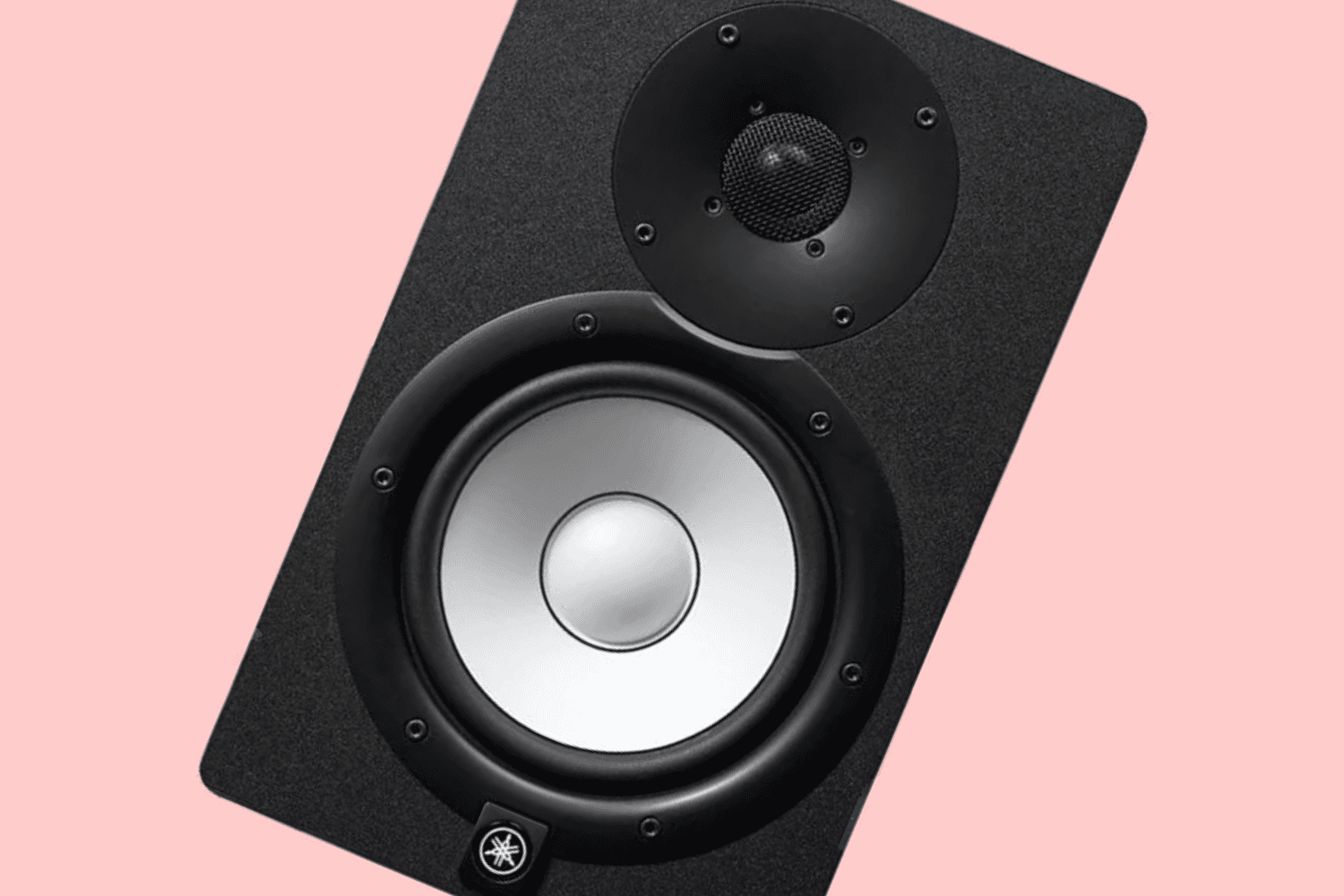
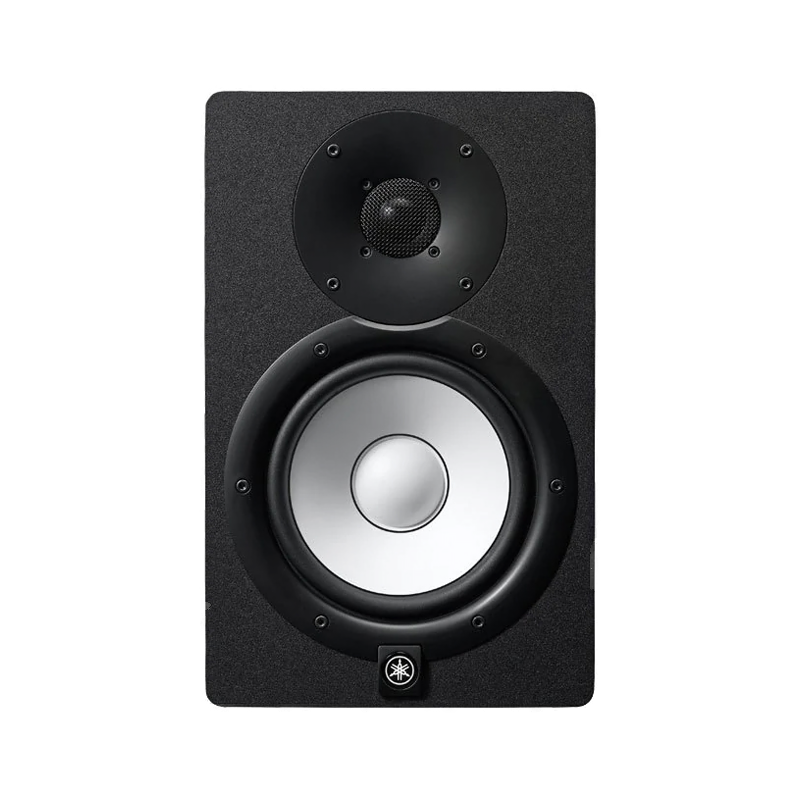
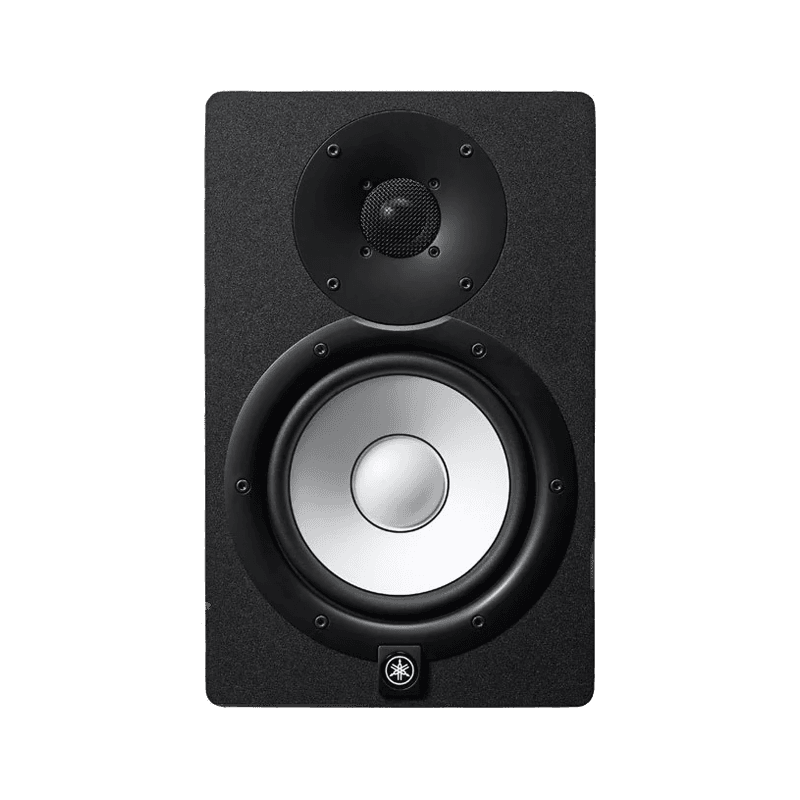
The HS7 is our top pick for DJ monitoring. It sits in the sweet spot of Yamaha's legendary HS series — more bass response than the HS5 without the room-filling bulk of the HS8 — and scored 10 for Sound Quality in our review, delivering the flat, honest reproduction that's made Yamaha's white-cone monitors an industry standard.
The dense MDF cabinet and solid build quality (8.2 kg per speaker) mean these aren't going anywhere once placed. Room Control and High Trim switches on the back let you tune the response to your space — essential if your room has acoustic issues. The HS series is what you'll find in studios worldwide, and for good reason: everything you mix on these translates accurately to other systems.
The trade-off is a narrow sweet spot (you need to be positioned correctly) and no RCA inputs. But for pure mixing accuracy in a medium-sized room, the HS7 is the monitor to beat.
Yamaha HS7
There are a lot of different options out there and there are also a fair amount of Yamaha HS7 reviews. However, there...
2. JBL 306P MKII
Best Value Studio Monitor
Specifications
| Spec | Detail |
|---|---|
| Driver Size | 6.5-inch woofer + 1" tweeter |
| Power | 112W (2x 56W bi-amplified) |
| Frequency Response | 47Hz – 20kHz |
| Tweeter | Image Control Waveguide |
| Connectivity | XLR, 1/4" TRS |
| Boundary EQ | +2 dB / 0 / -2 dB |
| Weight | 5.2 kg |
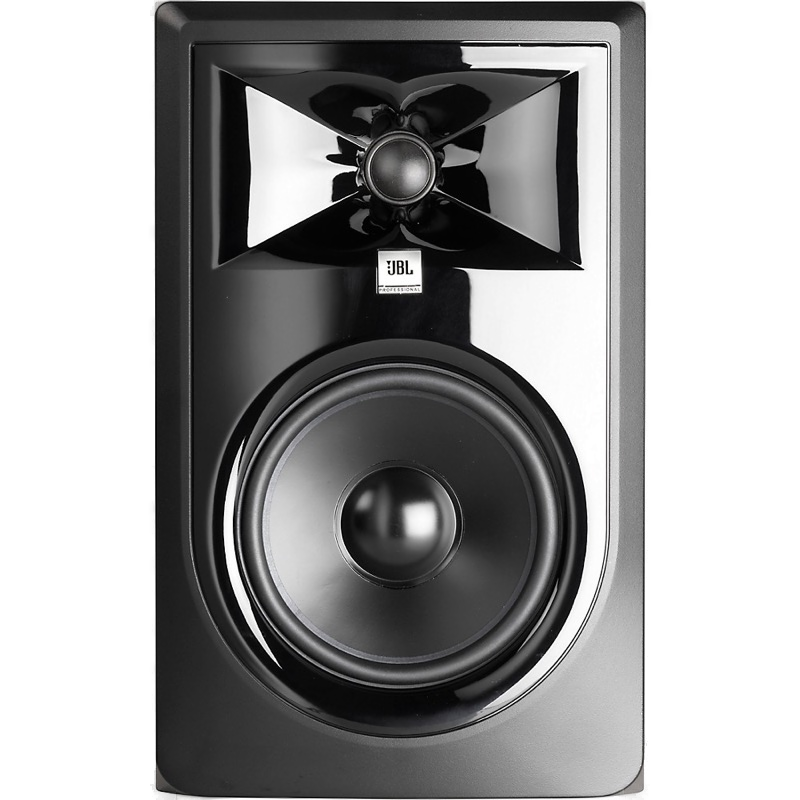
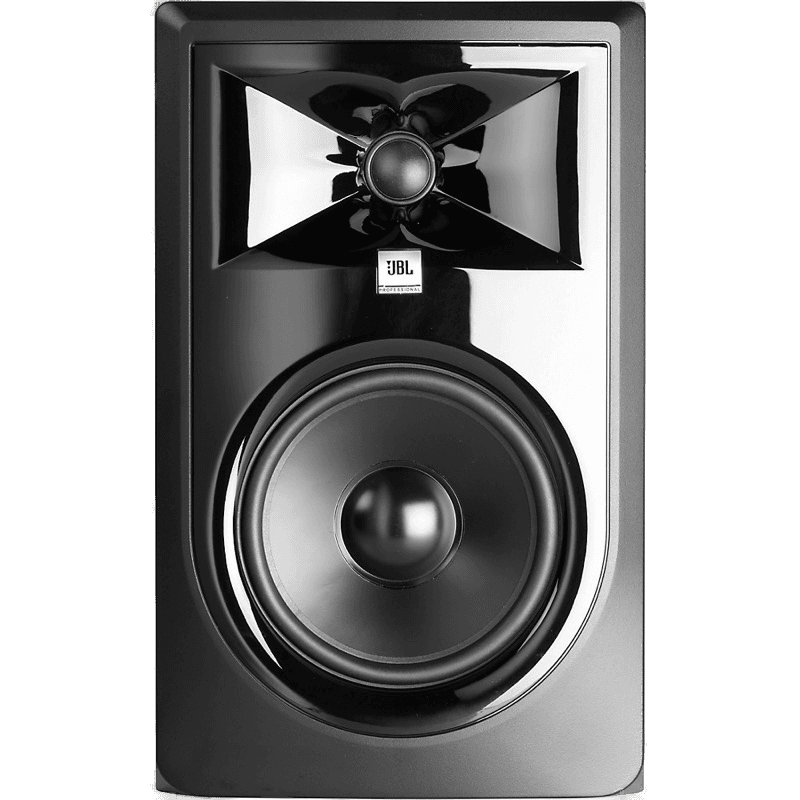
The JBL 306P MKII also scored a perfect 10 for Sound Quality in our review — matching the HS7 — and offers the widest sweet spot of any monitor on this list. JBL's Image Control Waveguide technology, borrowed from their flagship M2 reference monitors, means you don't have to sit in exactly the right position to get accurate imaging.
The 6.5" woofer delivers tight, controlled bass, while the refined tweeter handles highs without harshness. At moderate and high volumes alike, the sound stays remarkably consistent — no breakup, no muddiness. And at around $250 per speaker, the value is exceptional.
The only downside is a faint amp hiss when no audio is playing, which is common at this price point and inaudible once music starts. If you want studio-grade accuracy with a forgiving sweet spot, the 306P MKII is outstanding.
JBL 306P MKII
Ultimately, the question surrounding the JBL 306P MKII was whether or not it had the strength and power to compare with...
3. Yamaha HS8
Best Large Studio Monitor
Specifications
| Spec | Detail |
|---|---|
| Driver Size | 8-inch woofer + 1" tweeter |
| Power | 120W (75W LF + 45W HF) |
| Frequency Response | 38Hz – 30kHz |
| Connectivity | XLR, 1/4" TRS |
| Room Control | High Trim + Room Control switches |
| Weight | 10.2 kg |
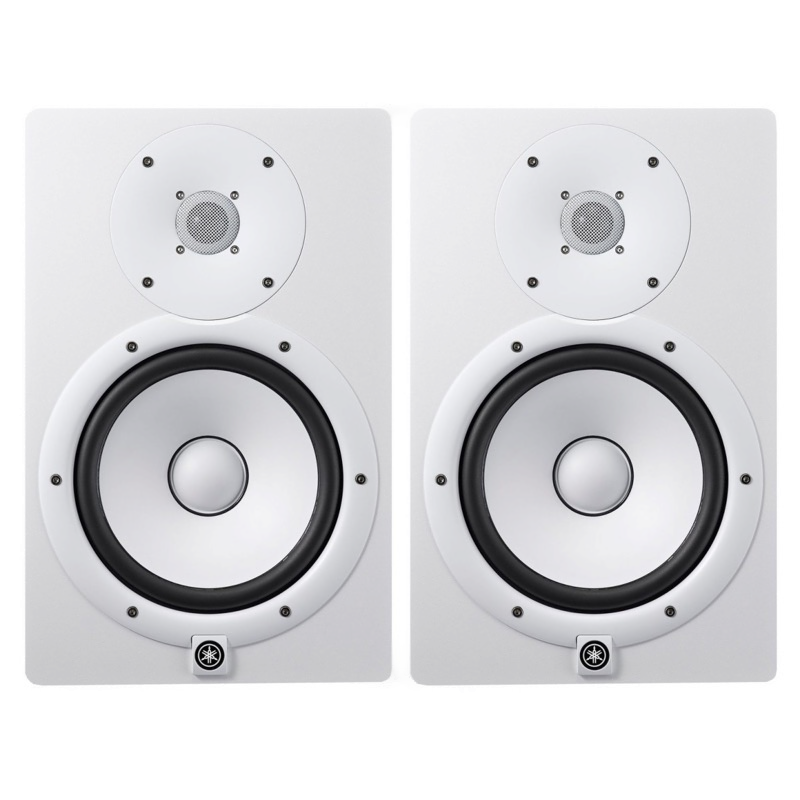
The HS8 is the largest speaker in Yamaha's HS lineup, and the extra driver size pays dividends in bass response. The 8-inch woofer reaches down to 38Hz — low enough to accurately monitor bass-heavy genres without needing a subwoofer.
With 120W of bi-amplified power, the HS8 delivers a clean, precise sound across the full frequency range. Like the HS7, it features Room Control and High Trim switches for acoustic tuning, and the same flat, reference-grade accuracy that makes Yamaha monitors an industry standard.
The trade-off is size and weight (10.2 kg each) — these need a proper desk or stands and a room large enough to let the 8" driver breathe. If your room is small, consider the HS7 or HS5 instead.
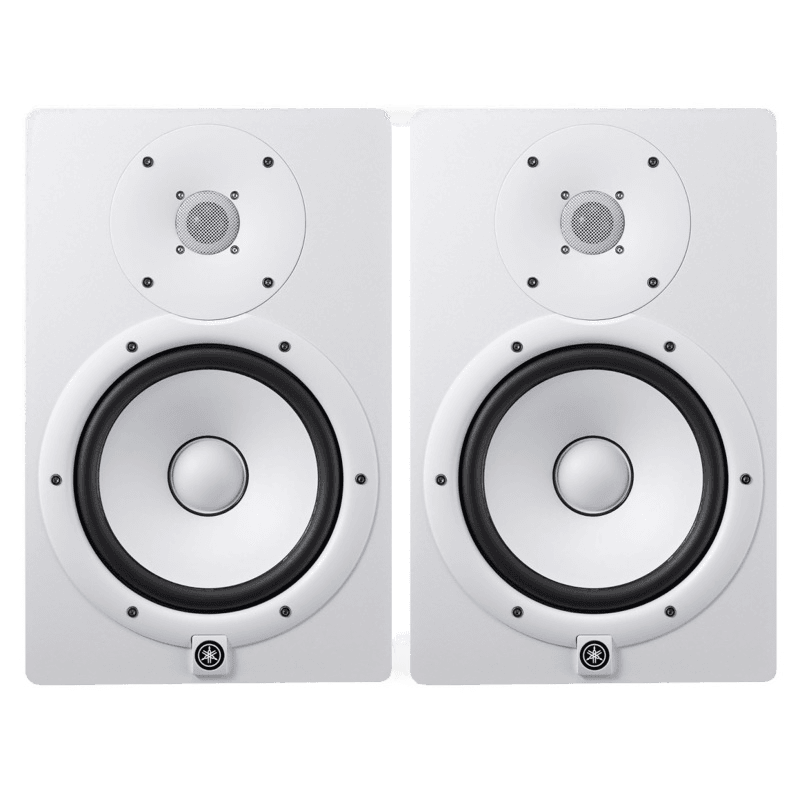
Yamaha HS8
Unparalleled accuracy and low-end response in the HS series — the go-to for serious monitoring.
4. PreSonus Eris E4.5
Best Budget Studio Monitor

Specifications
| Spec | Detail |
|---|---|
| Driver Size | 4.5-inch woofer + 1" silk-dome tweeter |
| Power | 50W per pair (bi-amplified) |
| Frequency Response | 70Hz – 20kHz |
| Connectivity | RCA, 1/4" TRS, 1/8" Aux, Headphone out |
| Acoustic Tuning | Built-in (Mid/High controls + Acoustic Space) |
| Price | ~$110 (Pair) |
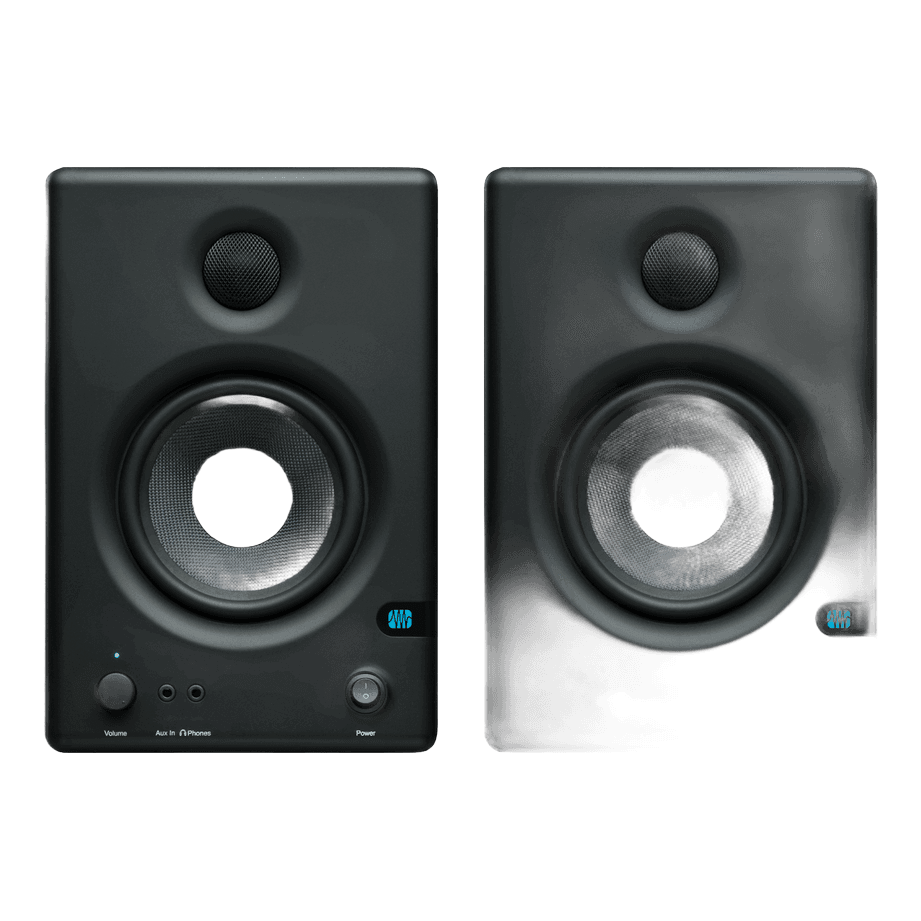
This slot used to go to the smaller Eris E3.5, which has fallen out of stock at the retailers we track. The Eris E4.5 is the natural step up and, at around $110 a pair, still the cheapest way into proper studio monitoring for a home DJ setup — we rated it 8.5.
The extra inch of driver matters more than it sounds like it should: the E4.5 keeps the clear, precise mids and highs the Eris line is known for while pushing the low end a useful step deeper than the E3.5 managed. Built-in acoustic tuning — Mid and High controls plus an Acoustic Space switch — lets you compensate for a monitor pushed against a bedroom wall, which is where most of these end up.
The versatile connectivity is a standout: RCA, 1/4" TRS, 1/8" aux input, and even a headphone output. You can plug in turntables, controllers, laptops, and phones without needing an audio interface.
Bass is still naturally limited at this driver size — don't expect deep sub-bass, and the styling is forgettable. But for bedroom DJs, beginners, and anyone who needs a compact, affordable monitoring setup, the E4.5 punches well above its weight.
PreSonus Eris E4.5
The PreSonus Eris E4.5, at first glance, really didn’t seem like all that much. It came across as something that looked,...
5. IK Multimedia iLoud Micro Monitors
Best Portable Studio Monitor
Specifications
| Spec | Detail |
|---|---|
| Driver Size | 3-inch woofer + 3/4" tweeter |
| Power | 50W (total, bi-amplified) |
| Frequency Response | 45Hz – 22kHz |
| Connectivity | RCA, 1/8" TRS, Bluetooth |
| Weight | 0.9 kg (each) |
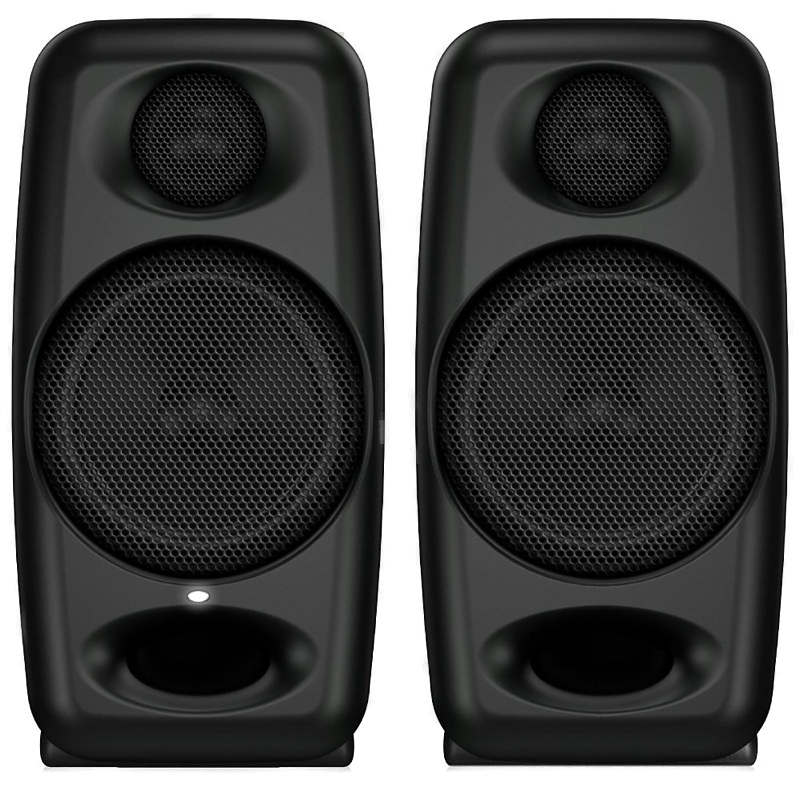
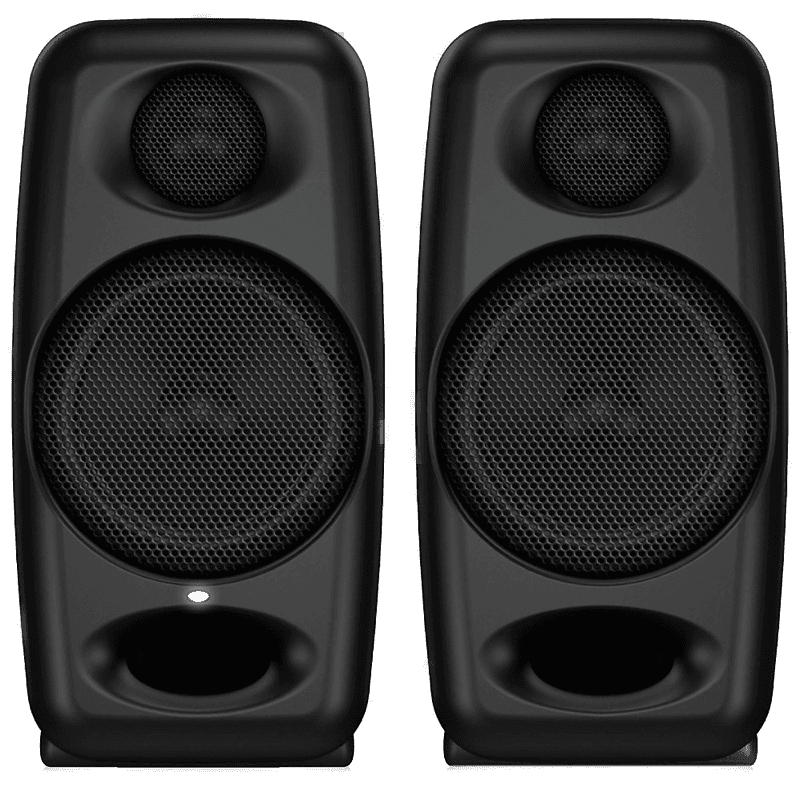
The iLoud Micros prove that great sound doesn't require a large footprint. At under 1 kg each, these are genuinely portable monitors that you can throw in a backpack — yet they deliver 50W of bi-amplified power with a frequency response that reaches down to 45Hz.
Bluetooth connectivity makes them versatile beyond DJ use, and the RCA + 1/8" inputs cover most controller and laptop setups. The built-in DSP ensures a linear response despite the tiny enclosure.
The obvious limitation is volume — these won't fill a room for a party. But for travel, small studios, and DJ practice setups where space is at a premium, the iLoud Micros are unmatched.
IK Multimedia iLoud Micro
Impossibly powerful for their size — the ultimate portable monitoring solution for DJs on the move.
6. Pioneer DJ VM-50
Best Monitor for DJs
Specifications
| Spec | Detail |
|---|---|
| Driver Size | 5.25-inch aramid fiber woofer + 1" tweeter |
| Power | 40W (25W LF + 15W HF) |
| Frequency Response | 50Hz – 30kHz |
| Connectivity | XLR/TRS Combo, XLR output |
| DSP Modes | Flat, Bass Boost, Bass Reduction, Low-Mid Boost |
| Weight | 5.3 kg |
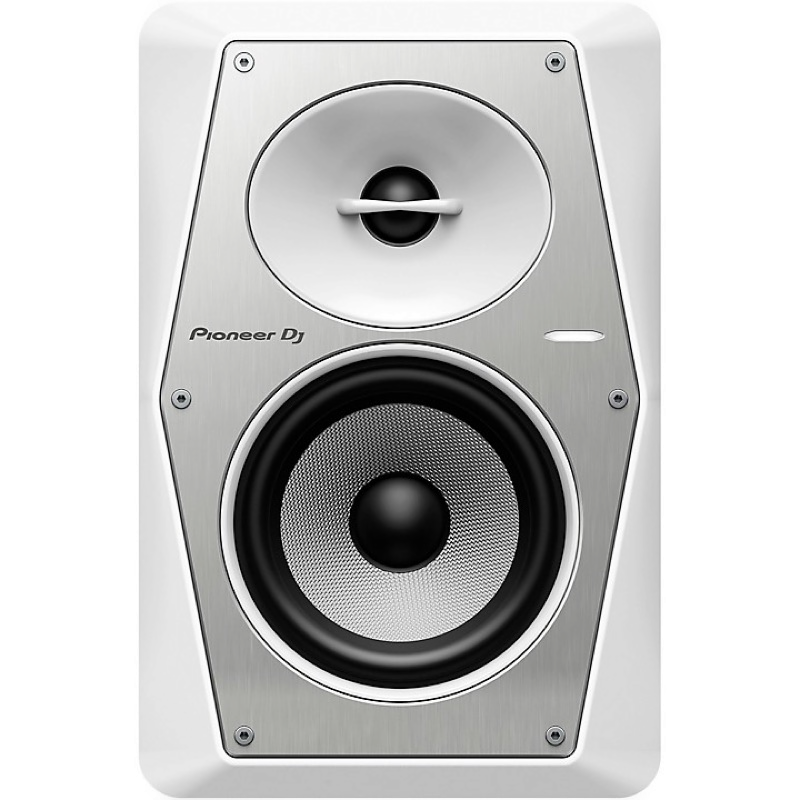
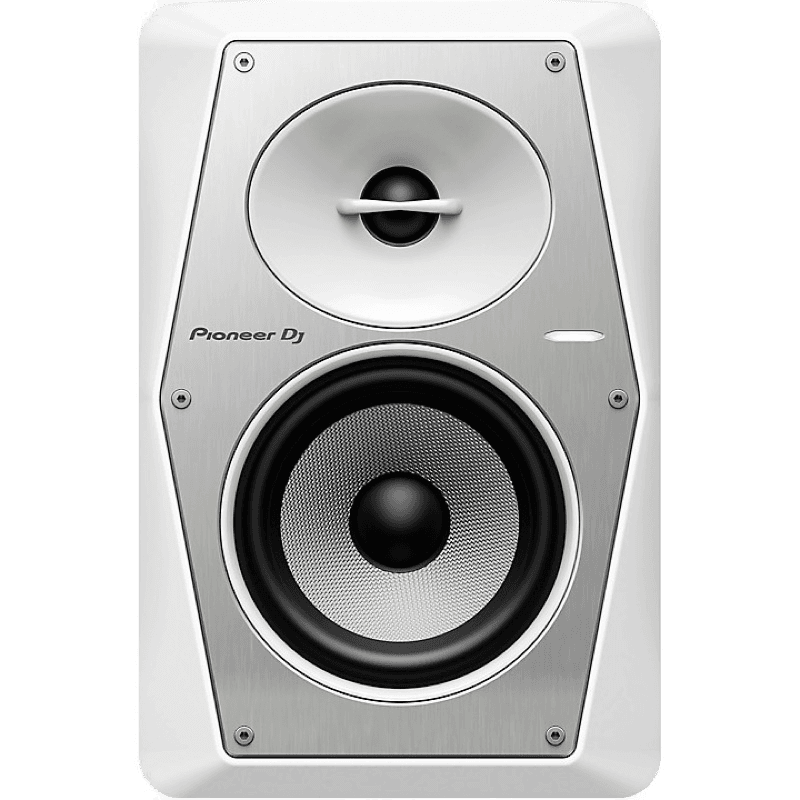
Pioneer DJ designed the VM series specifically for DJ monitoring — and it shows. The four DSP EQ modes let you quickly switch between flat reference monitoring and bass-boosted playback, which is genuinely useful when you want to check how a mix sounds on a club-style system vs. flat reference.
The 5.25" aramid fiber woofer delivers tight, accurate playback, and the aramid material is more rigid than typical paper or polypropylene cones — resulting in cleaner transients. The XLR output makes it easy to daisy-chain to a subwoofer.
Bass is the main limitation at this driver size (50Hz floor), but that's expected. The VM-70 (6.5") and VM-80 (8") offer deeper extension if you need it. For a compact DJ monitor with intelligent DSP, the VM-50 is a smart choice.
Pioneer DJ VM-50
DJ-tuned accuracy with DSP room correction — Pioneer's sleek entry into studio monitoring.
7. Mackie C300z
Best PA Speaker
Specifications
| Spec | Detail |
|---|---|
| Driver Size | 12-inch woofer + 1.75" titanium driver |
| Power | 300W Class-D |
| Frequency Response | 45Hz – 22kHz |
| Connectivity | 1x Speakon, 2x TS |
| Design | Patented split baffle |
| Weight | 14.5 kg |
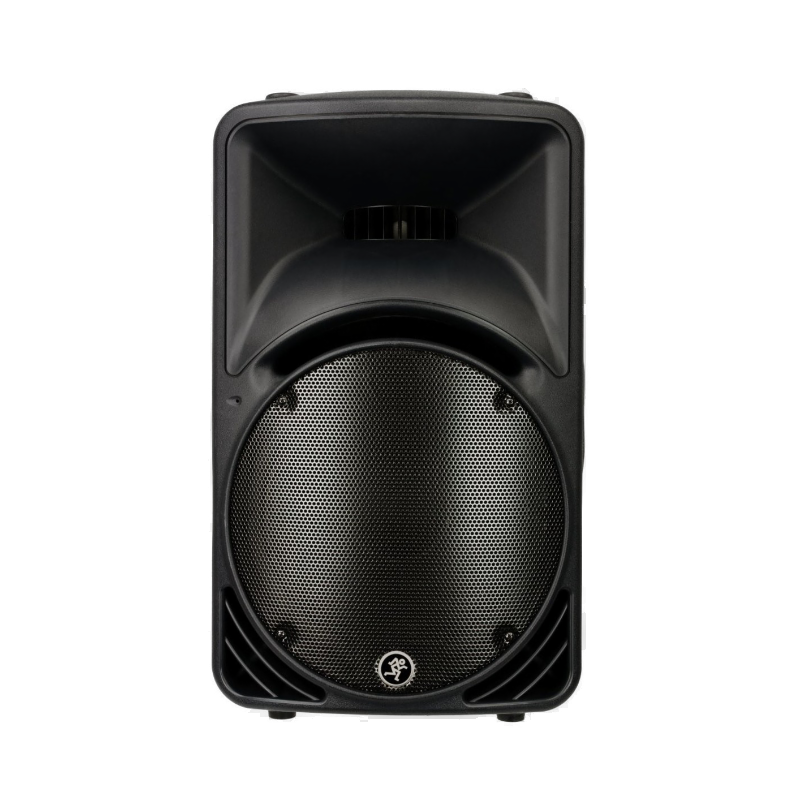
The C300z is Mackie's lightweight entry into professional PA — and it punches hard. The 12-inch woofer and 300W Class-D amplifier deliver enough volume for mid-sized venues, weddings, and outdoor events, while the patented split baffle design improves dispersion and sonic impact.
The 1.75" titanium high-frequency driver handles the top end with clarity, and the crossovers are tuned to keep everything tight. Despite the 12" driver, the C300z is surprisingly light at 14.5 kg, making it practical for mobile DJs.
If you're gigging regularly and need a dedicated PA speaker (not a studio monitor), the C300z offers professional-grade performance at a reasonable price.
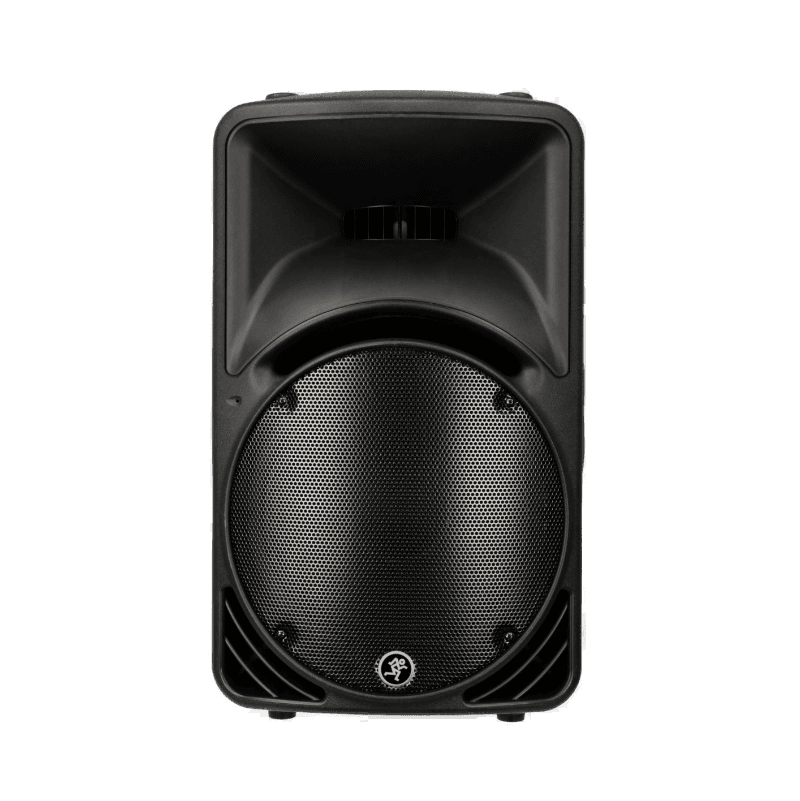
Mackie C300z
25 years of Mackie loudspeaker expertise in a lightweight, powerful PA package.
8. Mackie Thump GO
Best Portable PA
Specifications
| Spec | Detail |
|---|---|
| Driver Size | 8-inch woofer + 1" tweeter |
| Power | 200W peak |
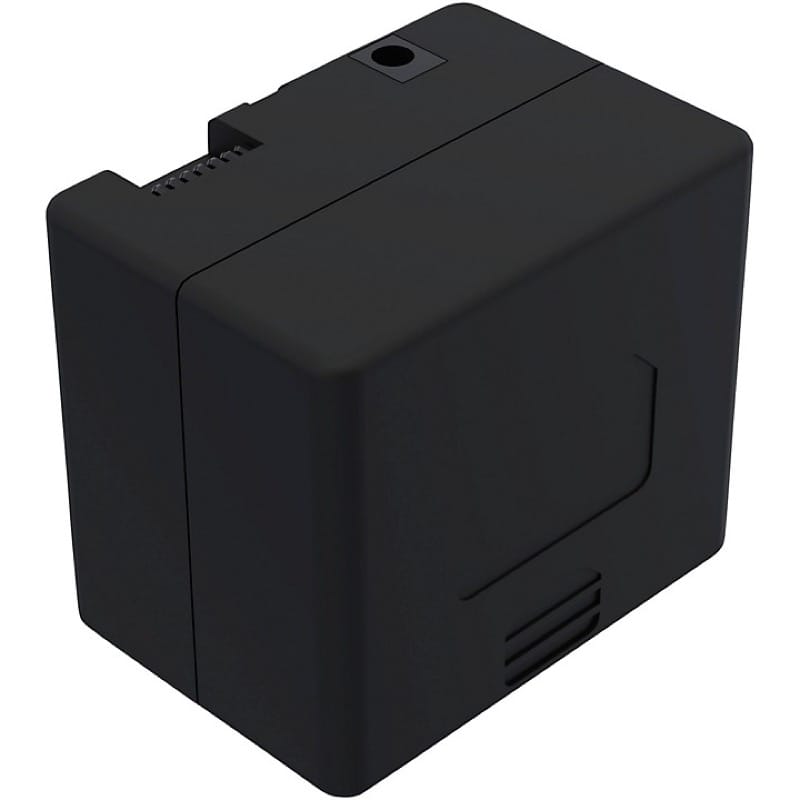
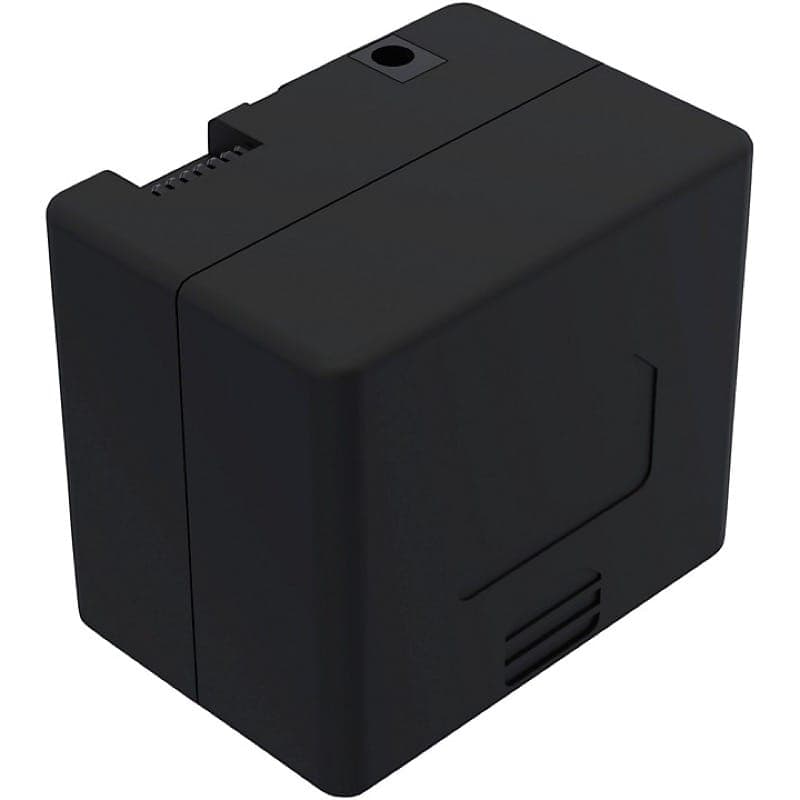
| Battery | Rechargeable, swappable |
| Connectivity | XLR/TRS combo, Bluetooth, built-in mixer |
| App | Thump Connect2 |
| Weight | 8 kg (17.6 lb) |
Not every gig has a power outlet within reach. The Mackie Thump GO is the PA speaker for garden parties, beach sets, pop-ups, and any booking where you're carrying everything yourself — a genuine PA-level 8" system in a 17.6 lb battery-powered box, which we rated 8.0.
The rugged moulded case is built to survive being thrown in a car boot repeatedly, and the built-in mixer plus multiple audio modes mean you can run a small set straight into it without a separate desk. The Thump Connect2 app handles EQ and levels from your phone, which is genuinely useful when the speaker is already up on a stand.
Two caveats worth knowing: Bluetooth introduces noticeable latency, so cue over cable rather than wirelessly if you're beatmatching, and battery life shortens considerably at high volume. Bring the charger for anything longer than a short set. For mobile DJs who need real volume without mains power, though, nothing else at this price is as easy to live with.
Mackie Thump GO
All in all, when it comes down to Mackie’s Thump Go speakers, they are awesome, well-rounded, the speaker that is great...
9. KRK Classic 8
Best KRK Monitor
Specifications
| Spec | Detail |
|---|---|
| Driver Size | 8-inch woofer + 1" tweeter |
| Power | Bi-amplified Class-D |
| Bass Port | Front-facing |
| Connectivity | XLR/TRS Combo, RCA |
| Protection | Built-in auto-limiter |
| Rating | 8.0 |
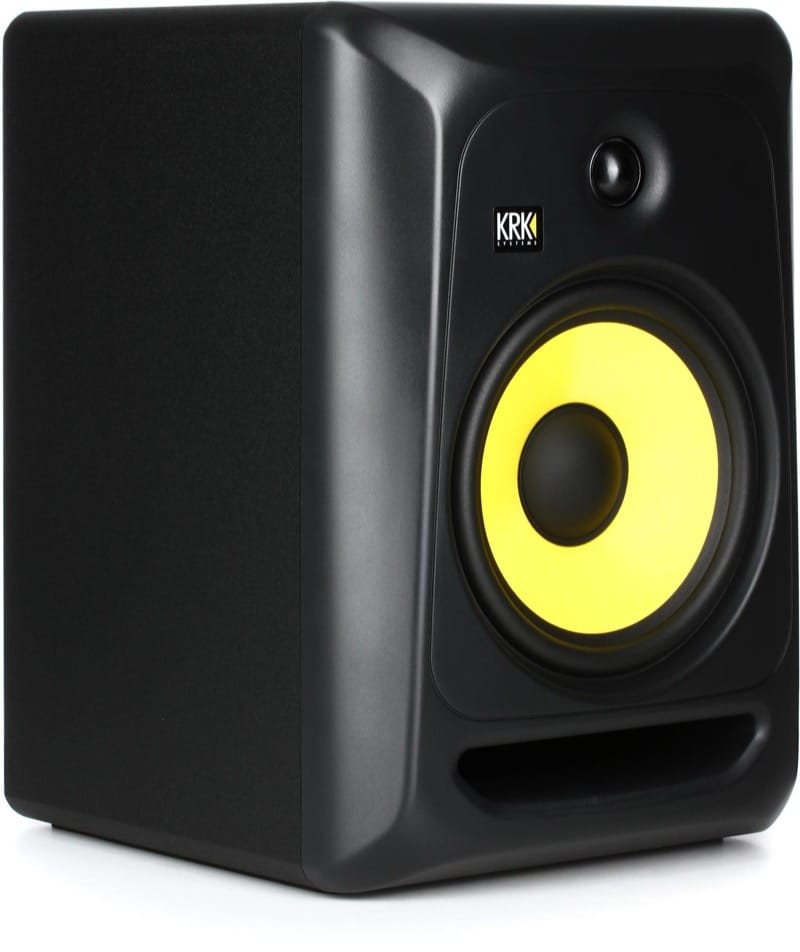
The Rokit 7 G4 held this slot previously and has gone out of stock at the retailers we track; the KRK Classic 8 is the current way into the KRK sound, and at around $160 it's remarkably cheap for an 8-inch powered monitor.
The headline practical feature is the front-facing bass port. Rear-ported monitors need breathing room behind them or the low end turns to mush — a real problem in a bedroom where the desk is against a wall. Porting forward means the Classic 8 stays usable in exactly the tight spaces most home DJs are working in. A built-in auto-limiter protects the drivers when you inevitably push them.
Be clear about what you're buying, though: the Classic 8 has that familiar hyped KRK low end rather than a flat reference response, and unlike the Rokit G4 line there's no app-based EQ to correct it. If you want the bass to feel big while you mix, that's a feature. If you want mixes that translate accurately everywhere, buy the Yamaha HS7 instead.
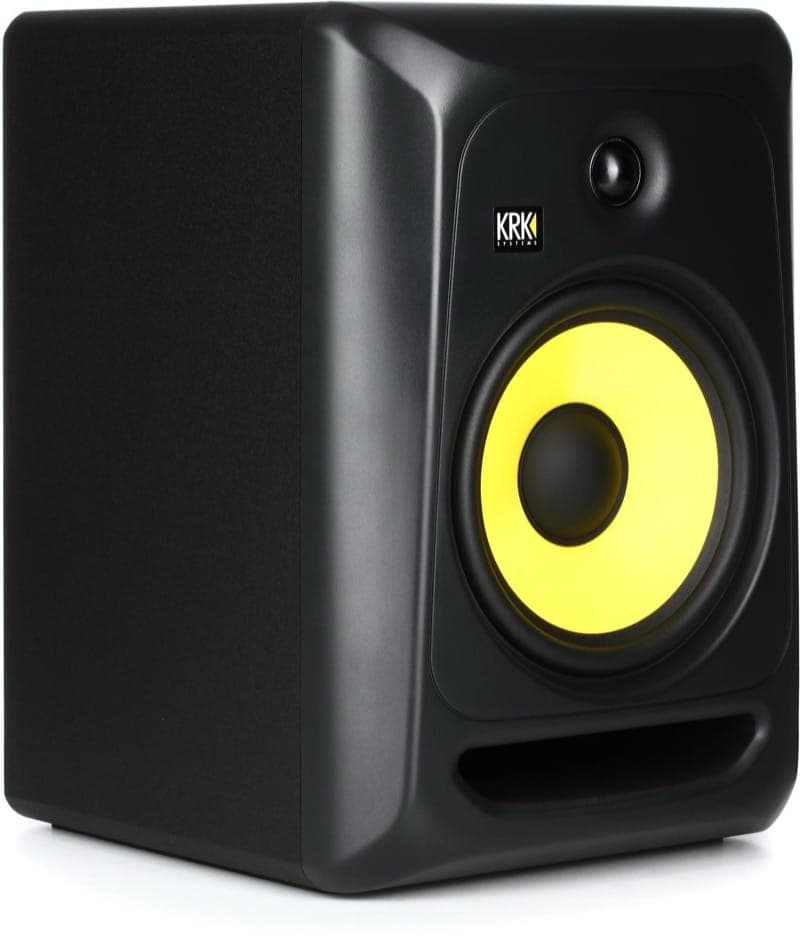
KRK Classic 8
The Classic 8’s are a little on the low-end scale for flat frequency solution, so if you don’t need that, then there may...
Other Speakers Worth Considering
Beyond our top nine picks, there are several other solid options worth a look.
Yamaha HS5
The entry point to Yamaha's HS series. The 5-inch woofer and 70W power deliver the same flat, honest sound as the HS7 and HS8 in a more compact package. Ideal for small rooms where an 8" driver would overpower the space. We rated it 9.0 — read our review.
Behringer Eurolive B210D
A budget PA option with a 10-inch driver and 220W of Class-D power. Build quality reflects the price — the tweeter isn't the most durable — but the sonic performance and noise-free operation make it a solid starter PA. We rated it 8.0 — read our review.
KRK Rokit 7 G4
The previous holder of our Best KRK slot, and still the better monitor of the two if you can find one: the 25-point graphical EQ in the KRK Audio Tools app corrects the hyped low end that the Classic 8 leaves in place. Stock has dried up at the retailers we track, so it's worth grabbing at a sensible price rather than paying a premium. We rated it 8.5 — read our review.
PreSonus Eris E3.5
The 3.5-inch little brother to our budget pick, and the cheapest proper monitoring you could buy while it lasted. Also thin on stock now, but ideal if your desk genuinely cannot fit a 4.5-inch cabinet — read our review.
Pioneer DJ VM-70
The mid-size option in Pioneer's VM series with a 6.5-inch aramid fiber woofer. Deeper bass extension than the VM-50 and the same DSP modes. A solid choice if you want Pioneer-ecosystem consistency. We rated it 7.5 — read our review.
Adam Audio T7V
A popular studio monitor with Adam Audio's signature ribbon tweeter, delivering detailed and airy high frequencies. The 7-inch driver reaches down to 39Hz — impressive for the size. Strong value at around $250 per speaker.
Yamaha DXR8 MKII
Yamaha's premium powered PA speaker with 1100W of Class-D power. The 8-inch 2-way design fills medium-to-large venues with clean, powerful sound. A serious investment, but the build quality and output justify the price for working DJs.
QSC K10.2
A professional-grade powered PA with 2000W of peak power. The 10-inch driver and Class-D amplification deliver exceptional projection and durability. Industry-standard in many venues, though the price reflects it.
Frequently Asked Questions
Do I need studio monitors or PA speakers for DJing?
For home practice and mixing, studio monitors are the better choice — they deliver flat, accurate sound so you can hear exactly what your mix sounds like. PA speakers are designed for volume and projection, making them ideal for gigs, parties, and events. Most DJs start with studio monitors and add PA speakers later when they begin playing out.
What size studio monitor should I get?
Match the driver size to your room. 3–5 inch monitors suit small bedrooms and desks. 6–7 inch monitors (like the Yamaha HS7 or JBL 306P MKII) are the sweet spot for most home studios. 8-inch monitors need a larger room to sound their best — in a small space, the bass will be overwhelming and inaccurate.
Do I need a subwoofer with my studio monitors?
Not necessarily. Monitors with 6.5-inch or larger drivers (like the Yamaha HS7 or HS8) typically produce enough bass for DJ monitoring. A subwoofer is worth considering if you use smaller monitors (5 inches or below) or produce bass-heavy music and need to accurately hear sub-bass frequencies below 45Hz.
Can I use studio monitors for a house party?
Studio monitors can work for small gatherings, but they're not designed for high-volume playback and can be damaged if pushed too hard. For parties and events, you need powered PA speakers — the Mackie C300z for mains-powered gigs, or the battery-powered Mackie Thump GO where there's no outlet — which are built to handle sustained high volumes and project sound across a room.
What is the difference between active and passive speakers?
Active (powered) speakers have a built-in amplifier — just plug in an audio source and you're ready to go. Passive speakers require a separate external amplifier. All the studio monitors on this list are active, which is simpler and more convenient for most DJ setups.
How should I position my studio monitors?
Place monitors at ear height, forming an equilateral triangle with your listening position. Angle them inward so the tweeters point directly at your ears. Keep them away from walls and corners to reduce bass buildup. Use isolation pads or stands to decouple them from your desk and reduce vibration.
Best DJ Speakers: The Verdict
For studio monitoring, the Yamaha HS7 is our Editor's Choice — its industry-standard flat response, rock-solid build quality, and room tuning controls make it the best all-round monitor for DJs. The JBL 306P MKII matches it on sound quality with an even wider sweet spot, making it the best value pick. The HS8 adds deeper bass for larger rooms.
On a tight budget, the PreSonus Eris E4.5 at around $110 a pair is remarkable value. For portability, the iLoud Micro Monitors are unbeatable.
For gigs, it comes down to power: the Mackie C300z delivers professional 12-inch performance where there's a mains socket, while the battery-powered Mackie Thump GO covers outdoor sets, garden parties, and anywhere you're carrying the whole rig yourself.
Complete Your DJ Setup
Speakers are one part of the chain — here's the rest of the gear worth getting right:
- Best DJ headphones — for cueing your next track before it hits the speakers.
- Best DJ controllers — the all-in-one heart of most home setups.
- Best DJ mixers — if you're building a modular booth.
- Best standalone DJ controllers — play without a laptop, straight into these speakers.
- Best USB sticks for DJing — the drive your library lives on when you play out.
More Speaker & Monitor Reviews
Explore our in-depth reviews of specific DJ speakers and studio monitors:
Studio Monitors (5-8 inch):
- JBL 305P MKII Review — 5" powered studio monitor with waveguide technology
- JBL 306P MKII Review — 6.5" studio monitor with wide sweet spot
- KRK Rokit 5 G4 Review — 5" monitor with DSP-driven room correction
- KRK Rokit 7 G4 Review — 7" monitor for mid-sized rooms
- KRK Rokit 8 G4 Review — 8" monitor with deep bass extension
- KRK Classic 8 Review — Professional 8" studio monitor
- PreSonus Eris E35 Review — Budget-friendly 3.5" monitors
- PreSonus Eris E45 Review — 4.5" monitors with acoustic tuning
- Yamaha HS5 Review — Compact 5" near-field monitor
- Adam Audio A4V Review — Premium studio monitor with ribbon tweeter
Desktop & Compact Monitors:
- Mackie CR3-X Review — 3" multimedia reference monitors
- Mackie CR4-X Review — 4" creative reference monitors
- KRK GoAux 4 Review — Portable powered monitors with Bluetooth
PA Speakers & Live Sound:
- JBL EON 610 Review — 10" powered PA speaker for live events
- Mackie Thump 12A Review — 12" active PA speaker
- Mackie Thump GO Review — Portable battery-powered column PA
- Behringer Eurolive B210D Review — Budget active PA speaker
Subwoofers:
- Bose F1 Subwoofer Review — Portable powered bass module
- KRK Subwoofer Review — Studio subwoofer for extended low-end