Most home DJs end up with the wrong speakers because they buy on bass first and accuracy second. That's understandable — bass is what makes the music feel right — but it backfires the moment you want to edit a track, cue a sub-heavy intro, or hear whether your filter sweep is actually doing what you think it's doing.
Studio monitors solve this. They're built to reproduce music as it is rather than how you'd like it to sound. The same accuracy that makes them useful for producers makes them useful for DJs who care about what's actually in their tracks. The trick is matching the monitor to the room.
We've ranked seven monitors that work for home DJs across the range — from a budget desktop pair to full 8-inch nearfields — with each pick anchored to a specific use case rather than a generic "best" claim.
What to look for
Four things matter more than the spec sheet suggests.
Room size before driver size. A 7-inch monitor in a bedroom under 10 square metres will excite room modes you can't fix without acoustic treatment, and the result is muddier bass than a 5-inch monitor would give you. Bigger isn't better — fitting is better.
Port placement. Rear-ported monitors (the HS-series, KRK Rokit) need 15–20cm behind them or the bass piles up against the wall. If your desk sits flat against a wall, look for front-ported designs or models with a wall-proximity EQ switch.
Low-volume listening. Home DJs play at lower volumes than studios are designed for, especially when the neighbours can hear. Monitors that sound great at 85dB can sound thin at 65dB because the Fletcher-Munson curve flattens at low volume. The Yamaha HS-series and PreSonus Eris are forgiving here; some KRK and JBL models really want to be pushed.
Inputs you'll actually use. Balanced XLR or TRS from your audio interface is the right answer for clean signal. RCA from a controller's master output works but adds noise. If you're planning to plug your controller directly into the monitors, double-check the input list before buying.
1. Yamaha HS7
Editor's Choice
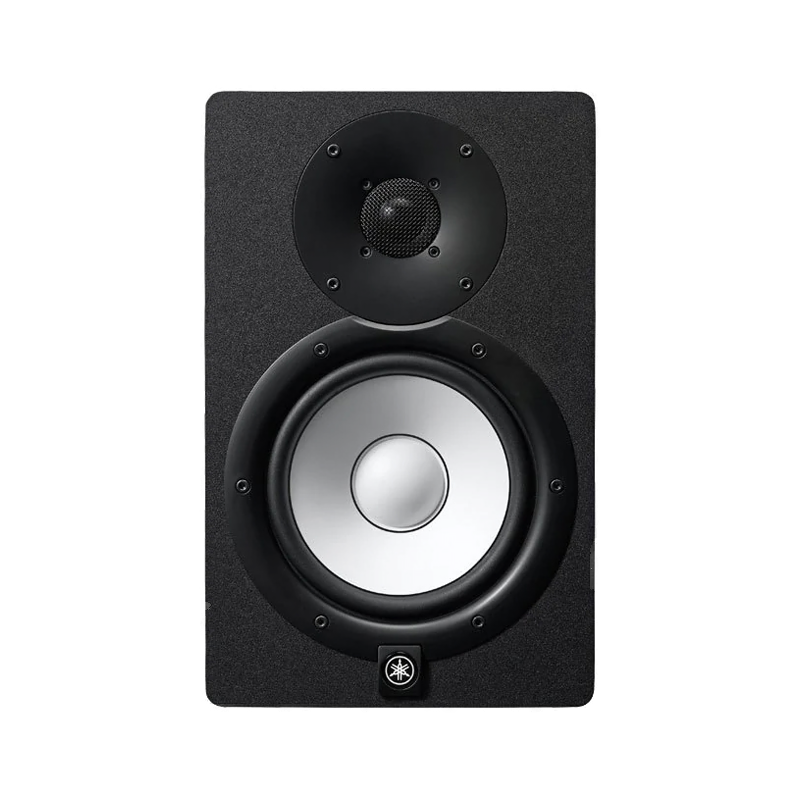
| Spec | Detail |
|---|---|
| Woofer | 6.5" cone |
| Tweeter | 1" dome |
| Frequency Response | 43Hz – 30kHz |
| Max SPL | 95dB |
| Inputs | XLR, TRS |
The Yamaha HS7 is the monitor most home DJs should buy first. The HS line is built around honesty in the midrange — Yamaha's white-cone design traces back to the NS-10, the studio reference monitor for forty years of recorded music — and the HS7 carries that lineage with a bigger driver and meaningfully better low-end than the HS5.
Bass response reaches 43Hz, which gets you most of the way into sub-bass territory without a subwoofer. The two rear-panel EQ switches — high-trim and room-control — let you compensate for desk reflections and wall proximity. It's a 2-way bi-amped design with 60W on the woofer and 35W on the tweeter, plenty for any room a home DJ is realistically working in.
The trade-off is the high-mid voicing. The HS7 leans slightly forward in the 2–5kHz range, which can sound harsh at low volume or on already-bright tracks. That's the same trait that makes mixing decisions translate well — the things the HS7 makes prominent are the things that will sound bright on other systems too — but you'll want to start the listening session 10–15 minutes before any critical work to let your ears adapt.
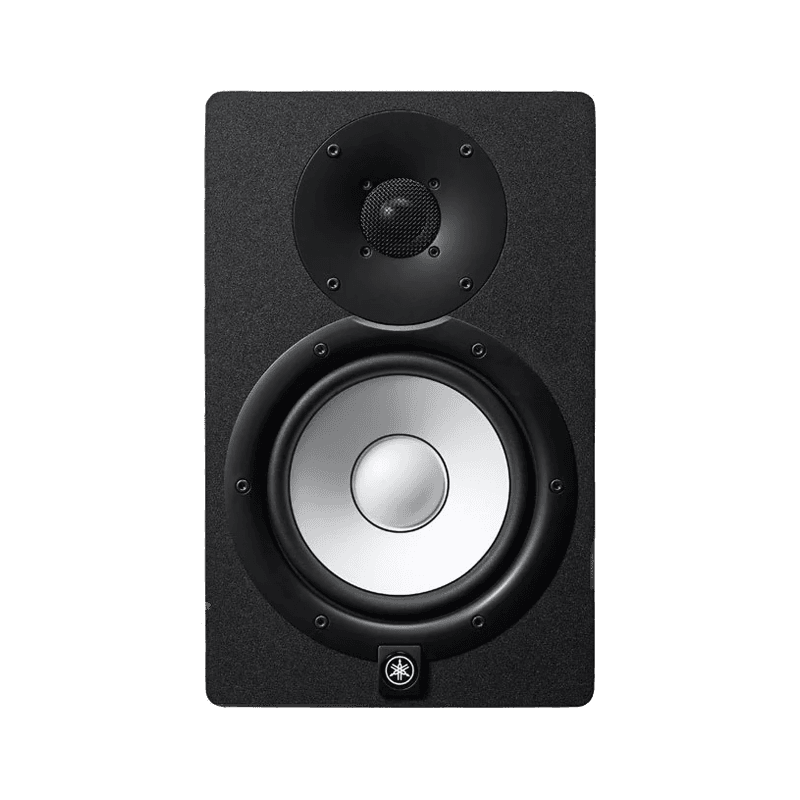
Yamaha HS7
There are a lot of different options out there and there are also a fair amount of Yamaha HS7 reviews. However, there...
2. JBL 305P MkII
Best Value

| Spec | Detail |
|---|---|
| Woofer | 5" cone |
| Tweeter | 1" neodymium |
| Frequency Response | 49Hz – 20kHz |
| Max SPL | 108dB |
| Inputs | XLR, TRS |
The JBL 305P MkII delivers performance that nobody else matches at the price. JBL's Image Control Waveguide creates a noticeably wider sweet spot than most 5-inch monitors — you can move your head 30cm either side without the stereo image collapsing, which matters in a home setup where you're not always sitting in the same exact spot.
Bass extension reaches 49Hz thanks to the double-flared port, deeper than the Yamaha HS5 but with less of the room-coupling problems an 8-inch driver creates. The 108dB max SPL gives you real headroom for a 5-inch monitor. Boundary EQ and HF Trim switches handle wall placement adequately, though the room-correction options are less granular than KRK or IK Multimedia offer.
Two drawbacks worth knowing. The amp has audible hiss with no audio playing, which becomes distracting in quiet listening sessions late at night. And the midrange isn't quite as neutral as the Yamaha — it has a slight scoop around 1–2kHz that makes vocals sound a touch recessed. Neither is a dealbreaker, especially for the price, but they're real.
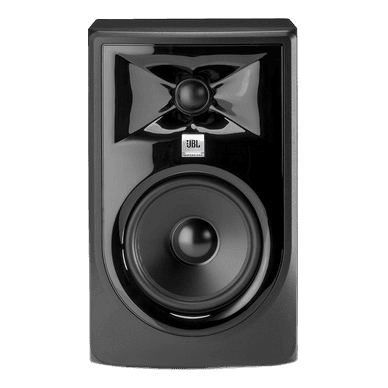
JBL 305P MkII
The JBL 305p MkII certainly brings some of that legendary JBL performance and impressive dynamic range into any studio...
3. KRK Rokit 5 G4
Best for Producer-DJs

| Spec | Detail |
|---|---|
| Woofer | 5" Kevlar |
| Tweeter | 1" Kevlar |
| Frequency Response | 43Hz – 40kHz |
| Max SPL | 104dB |
| Inputs | XLR, TRS, RCA |
The KRK Rokit 5 G4 has the strongest argument of any monitor here for DJs who also produce bass-heavy music. The G4 is the generation where KRK closed the accuracy gap that hurt earlier Rokits — the LCD on the rear panel shows real-time room-analysis output from the companion app, and the 25-position graphic EQ lets you actually correct what the analysis finds rather than just looking at it.
Bass response is the most extended on the list (43Hz, matched only by the HS7), and the Kevlar drivers move air confidently. The voicing leans slightly bass-forward, which is divisive — neutral-purists hate it, drum-and-bass DJs love it — but the room-correction EQ lets you flatten the signature if you'd rather not have it. Inputs include RCA for direct controller hookup, which most "proper" studio monitors don't bother with.
The trade-off is the same as the bass-forward voicing's strength — out of the box, the Rokit makes everything sound a bit more impressive than it should. That's a problem when you're trying to make mixing decisions. The fix is the app correction, but you'll spend an evening with a measurement mic to dial it in properly. If you don't want to do that, the HS7 or 305P are honest from the first listen.
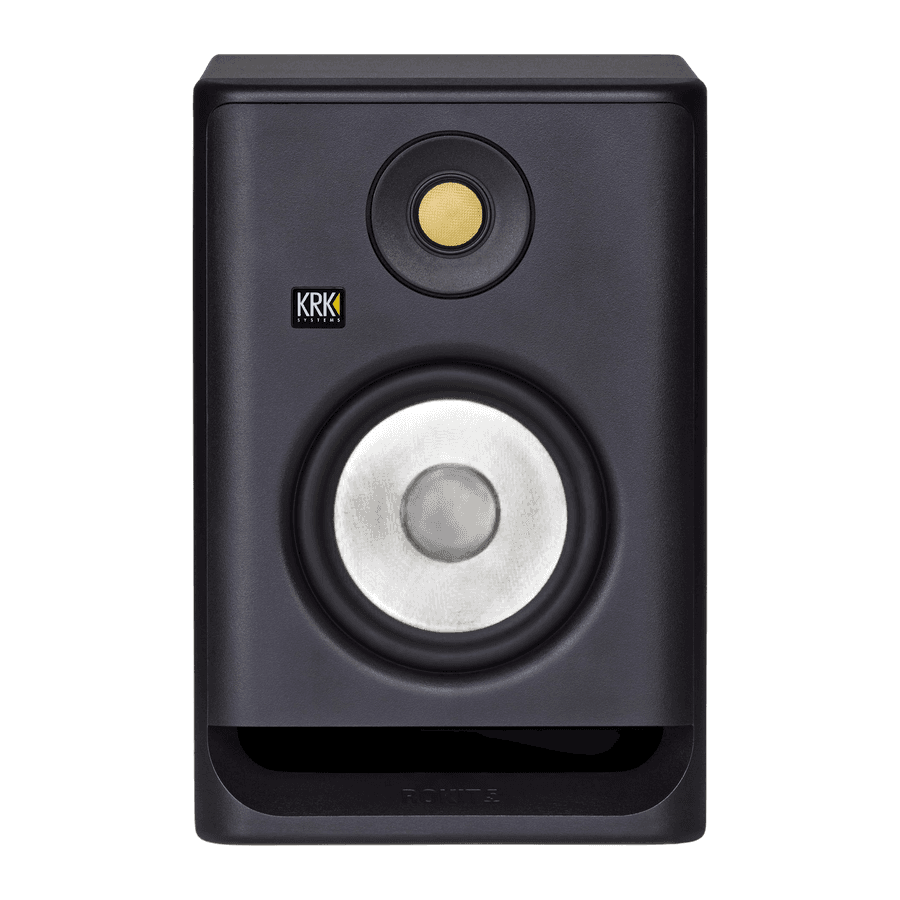
KRK Rokit 5 G4
Punchy Kevlar drivers with app-driven DSP tuning — a KRK classic that delivers above its price.
4. PreSonus Eris E4.5
Best Budget

| Spec | Detail |
|---|---|
| Woofer | 4.5" Kevlar |
| Tweeter | 1" silk dome |
| Frequency Response | 70Hz – 20kHz |
| Max SPL | 100dB |
| Inputs | TRS, RCA, 3.5mm |
The PreSonus Eris E4.5 is the entry point — a real studio monitor sold by the pair rather than per unit, at a price most other monitors charge per speaker. PreSonus doesn't strip the feature set to hit the price either: the Kevlar woofer, silk-dome tweeter, and front-panel EQ controls (mid, high, low-cut) all come from their higher-end Eris models.
Connectivity is unusually broad. Balanced TRS for an audio interface, RCA for a controller's master out, and a 3.5mm aux for a phone or laptop — plus a front-panel headphone jack that mutes the speakers automatically. For a beginner setup that needs to plug in different sources at different times, no other monitor at the price makes it this easy.
The clear trade-off is the 4.5-inch driver. Bass rolls off at 70Hz, which means anything below the lowest note of a bass guitar disappears. For DJing house, techno, or anything with sub-bass content, you're missing decisions you need to make. If your music sits above 80Hz (pop, indie, most rock), the E4.5 is enough. If it doesn't, treat the E4.5 as a stepping-stone to one of the picks above.
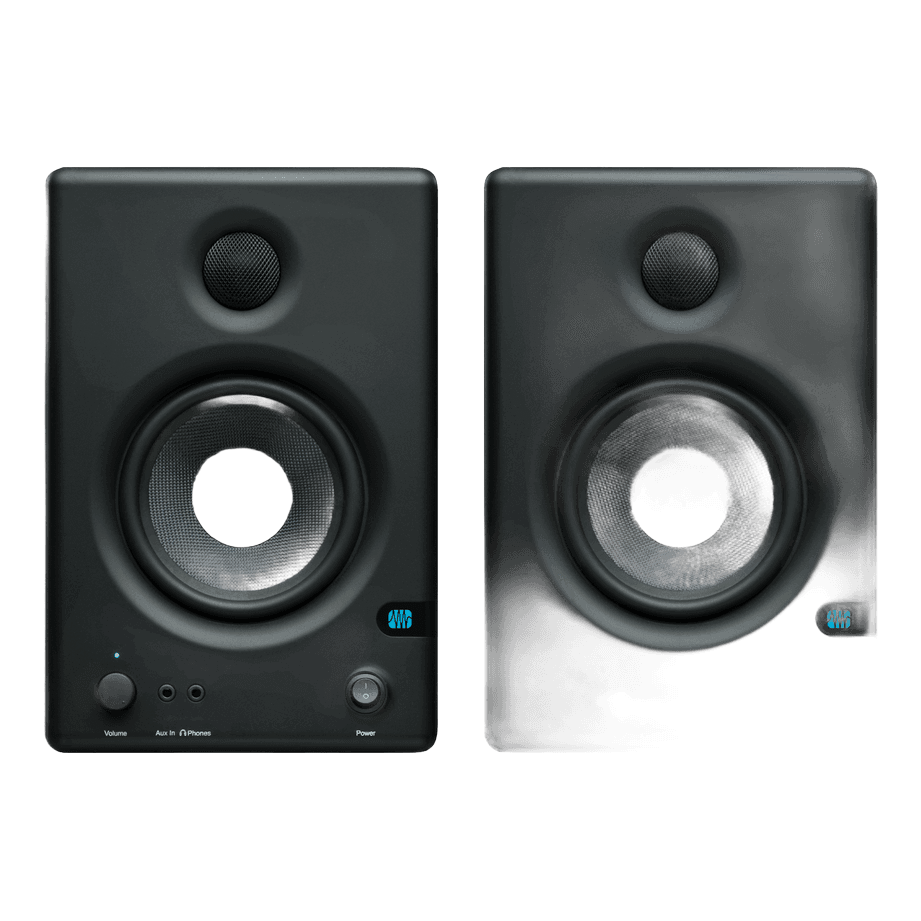
PreSonus Eris E4.5
The PreSonus Eris E4.5, at first glance, really didn’t seem like all that much. It came across as something that looked,...
5. iLoud Micro Monitors
Best for Tiny Spaces
| Spec | Detail |
|---|---|
| Woofer | 3" cone |
| Tweeter | 0.75" silk dome |
| Frequency Response | 55Hz – 20kHz |
| Max SPL | 107dB |
| Inputs | TRS, RCA, 3.5mm, Bluetooth |
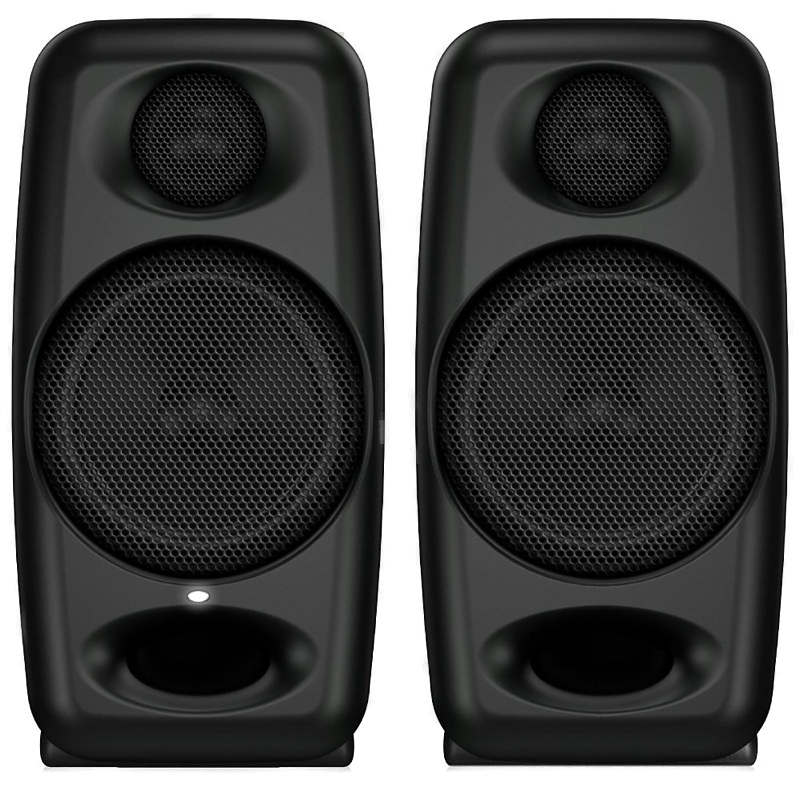
The IK Multimedia iLoud Micro Monitors are what you buy when the room is too small for anything else. A 3-inch driver should be a compromise, but IK uses internal DSP to flatten the response in software — the same trick higher-end monitors use, just applied here to compensate for the physical limits of a 3-inch cone. The result is a frequency response that reaches 55Hz from a cabinet smaller than a hardback book.
Inputs cover everything: balanced TRS, RCA, 3.5mm aux, and Bluetooth for casual listening. The two speakers are linked wirelessly to each other so you only run a cable to one of them — useful when desk space is at a premium. They tilt back on a built-in stand or sit vertically depending on your sightlines.
The physics catch up at the top end. You can't drive a 3-inch cone to club-level SPL without distortion, and the bass extension, however clever the DSP, doesn't actually match a 5-inch driver below 60Hz. For an apartment where loud isn't an option and a 5-inch pair literally won't fit on the desk, the iLouds are the right answer. For anywhere bigger, they're an expensive desk speaker.
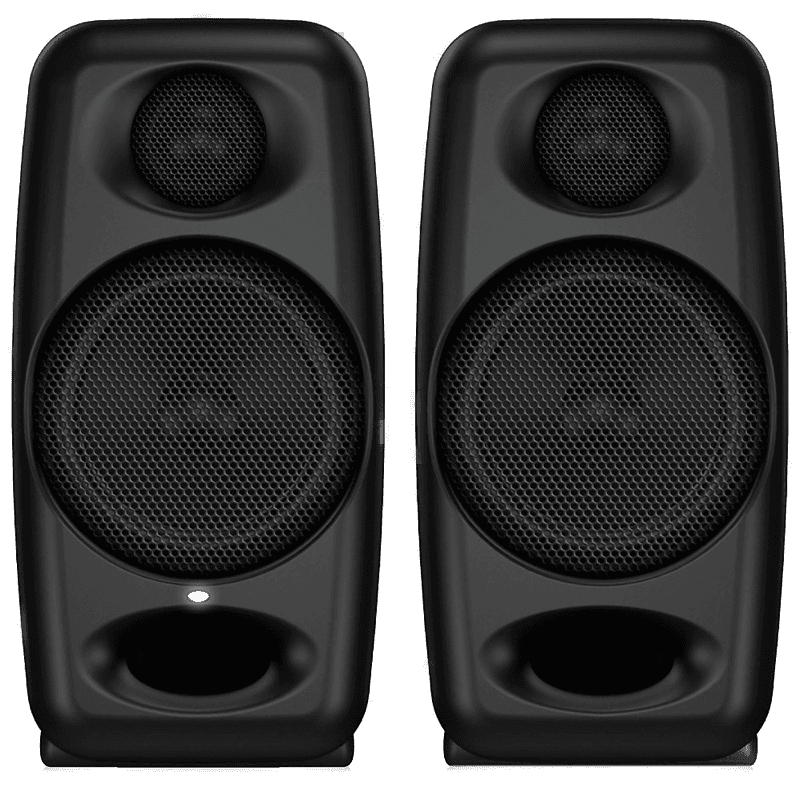
IK Multimedia iLoud Micro
Impossibly powerful for their size — the ultimate portable monitoring solution for DJs on the move.
6. Yamaha HS5
Best for Smaller Rooms
| Spec | Detail |
|---|---|
| Woofer | 5" cone |
| Tweeter | 1" dome |
| Frequency Response | 54Hz – 30kHz |
| Max SPL | 107dB |
| Inputs | XLR, TRS |
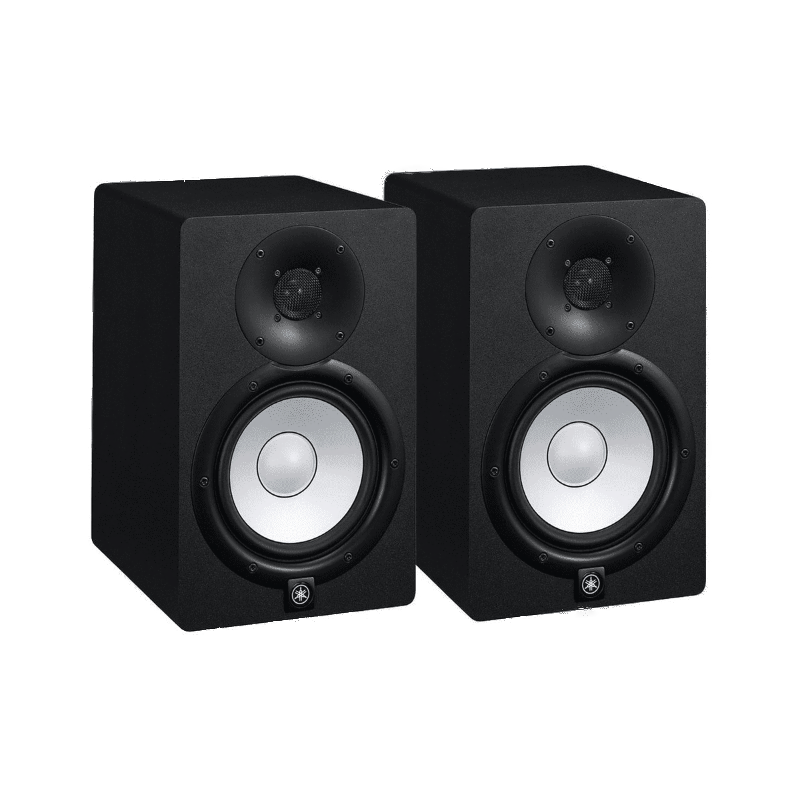
If your room is under 12 square metres, the Yamaha HS5 is the smaller-driver answer that keeps the HS-series accuracy without the room-mode problems a 6.5-inch driver creates in a tight space. It rolls off earlier than the HS7 (54Hz vs 43Hz), but a small room couldn't reproduce that lower octave cleanly anyway — you'd hear room boom, not music.
Everything else is exactly what the HS-line is known for: flat midrange, honest tweeter, two EQ switches on the rear panel for room compensation. The white cone is a visual cue that has become a kind of credibility marker in studios. The build is dense MDF, which keeps cabinet resonance out of what you hear.
The HS5 is the cheaper monitor in the HS family but it's not the "lesser" one for a small-room DJ — it's the right one. The HS7 in a bedroom under 10 square metres often sounds worse than the HS5 because the bigger driver excites bass nodes your ears then have to learn to ignore. If you have any doubt about room size, start here. We cover the 5-inch class in detail in our best 5-inch studio monitors guide.
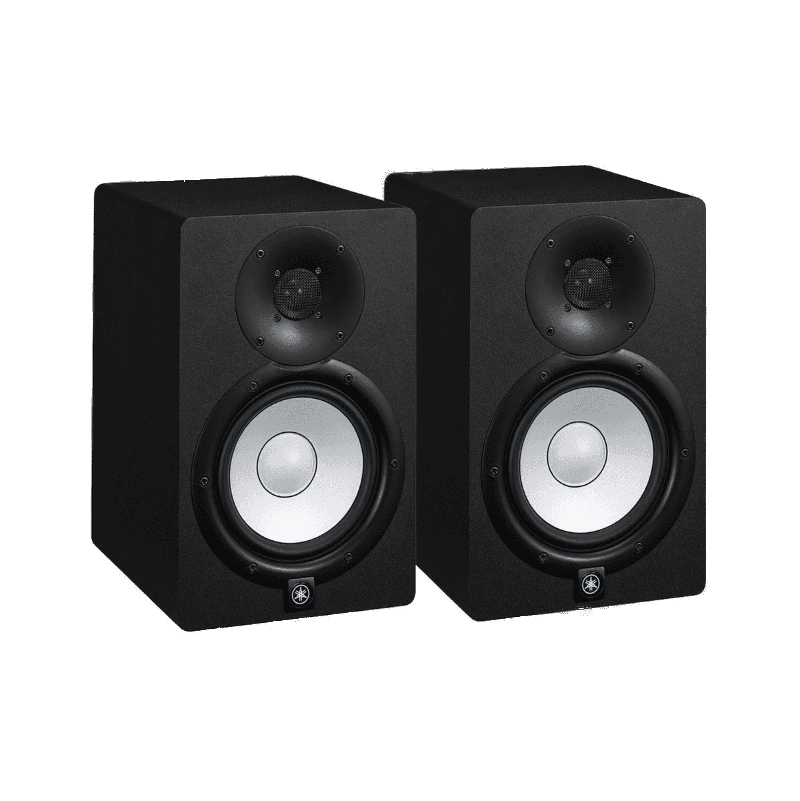
Yamaha HS5
Industry-standard clarity and flat response — the benchmark 5-inch monitor for home studios.
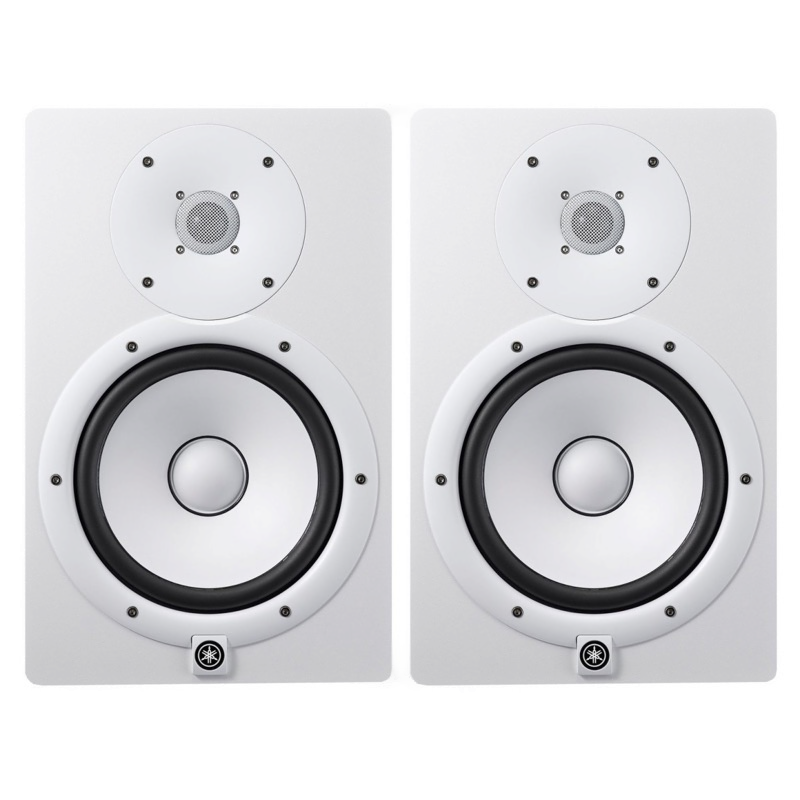
7. Yamaha HS8
Best for Larger Rooms
| Spec | Detail |
|---|---|
| Woofer | 8" cone |
| Tweeter | 1" dome |
| Frequency Response | 38Hz – 30kHz |
| Max SPL | 100dB |
| Inputs | XLR, TRS |
The Yamaha HS8 is the right call when the room can support an 8-inch driver — a spare room, a garage studio, a converted loft. Bass response reaches 38Hz, which is the lowest octave most DJs ever need to hear, and the 75W woofer amp has serious headroom for a nearfield speaker. Tracks with sub-bass content come through with the actual content audible, not the room-coupled mush a smaller driver would give you trying to push that low.
The HS-series voicing is consistent across the line, so the HS8 sounds like a bigger HS7 rather than a different speaker entirely. That matters if you're upgrading from an HS5 or HS7 — your mixing decisions translate, your ear doesn't need to relearn the speaker.
The trade-offs are physical. The HS8 needs at least 30cm behind it for the rear port to breathe properly, more weight (over 10kg each), and a power amp draw that you'll notice. For rooms over about 20 square metres, or for serious bass-music work, the headroom pays back. For anything smaller, the HS7 is the better fit — bigger is genuinely worse when the room can't support it.
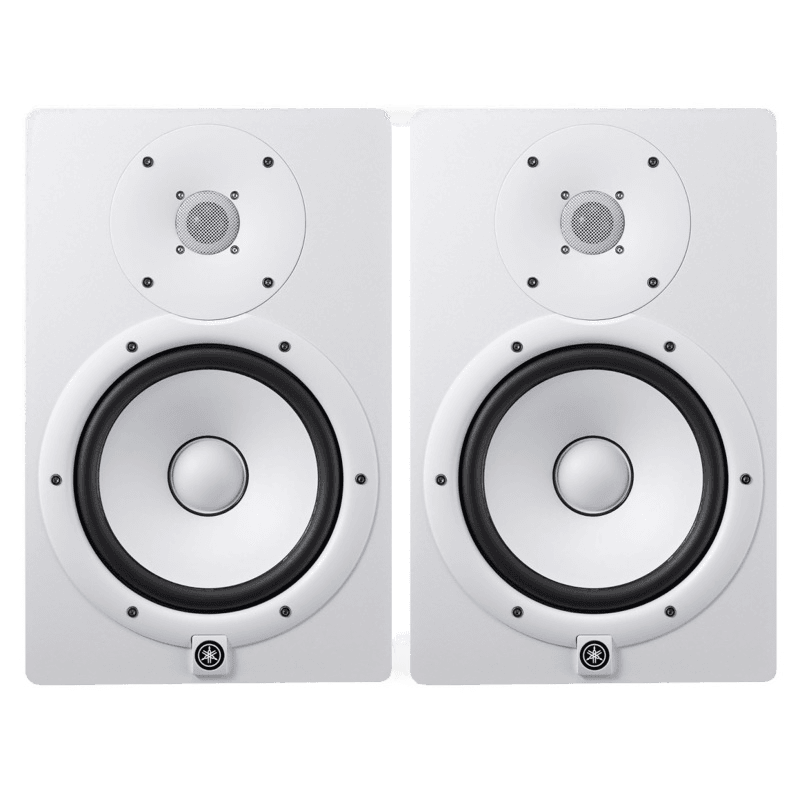
Yamaha HS8
Unparalleled accuracy and low-end response in the HS series — the go-to for serious monitoring.
Other monitors worth considering
A few that didn't make the seven but earn a mention. The Adam Audio A4V is a meaningful step up in build and detail retrieval, but at roughly double the HS7's price the value case is harder for a home DJ. The Mackie CR4-X is cheaper than the PreSonus E4.5 and works as a multimedia speaker, but lacks the input flexibility and tweeter quality. The Pioneer DJ VM-50 is voiced specifically for DJ booths and ships with DSP-driven room correction — covered in detail in our best 5-inch monitors guide where it lands as our "Best for DJs" pick.
How we picked
The seven monitors here all met three criteria. They have a verifiable flat frequency response when measured with a calibrated mic — not a smooth-looking spec sheet, but actual measurement consistency across review units. They handle low-volume listening without losing detail, because most home DJs aren't playing at the SPLs studios are designed for. And they sit in the home-studio price tier — pro-grade nearfields are out of scope and belong in a separate guide for that buyer.
We weighted DJ-specific use cases (cueing accuracy, low-end honesty for bass-music decisions, low listening fatigue over a long session) more than pure mastering criteria. A monitor that's perfect for a mastering engineer can be wrong for a DJ who needs the speaker to be friendly to use for four hours straight.
Buyer's questions
The FAQ section below covers the questions we get most often — particularly around room size, subwoofers, and the difference between studio monitors and DJ-flattering speakers.