A CDJ is a DJ media player from AlphaTheta, the company behind Pioneer DJ: one deck with a jog wheel, a tempo slider and a screen, which plays music prepared in rekordbox from a USB drive without a laptop. You need two or more and a DJ mixer, they are the players found in most club booths, and the current models are the CDJ-3000X, CDJ-3000 and CDJ-1500X.
What a CDJ does
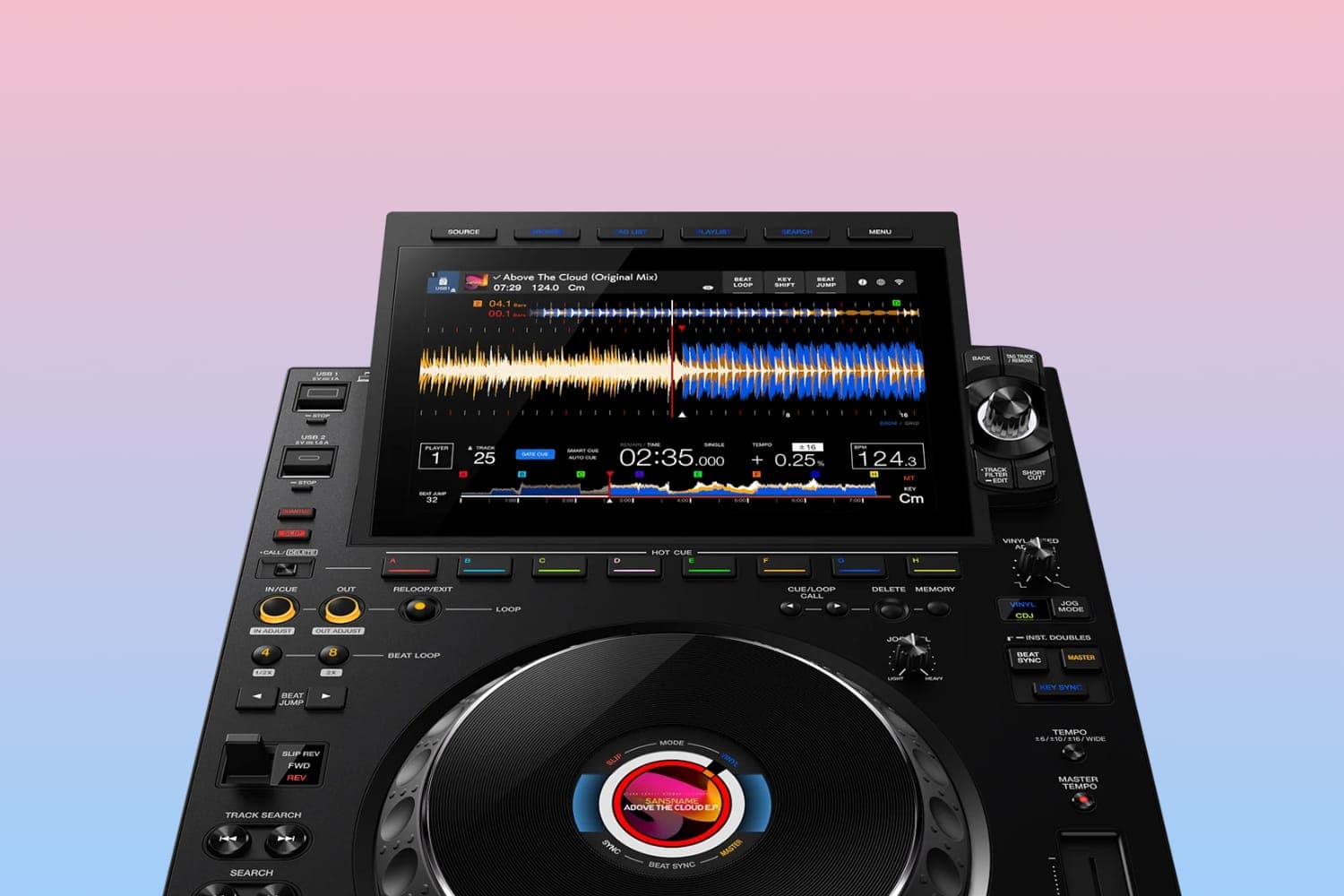
A CDJ is one deck and nothing else. It has no mixer and no speakers: its analogue and digital outputs go into one channel of a DJ mixer, and the mixer does the blending, EQ and effects. Taking the CDJ-3000 as the example, from its manual and product page, each player has:
- A jog wheel for nudging, cueing and scratching. In Vinyl mode, pressing the top of the wheel stops the track and turning it scratches, like a hand on a record; in CDJ mode the wheel neither stops nor scratches, and turning its outer edge speeds up or slows down playback.
- A tempo slider with four ranges, from fine to WIDE, which runs from a stop to double speed. Master Tempo keeps the key the same when the tempo changes.
- Cue and play buttons, eight Hot Cue buttons, loops and Beat Jump, plus Key Sync and Key Shift.
- A touch screen with the waveform, the track list and the library browser.
- Beat Sync. The BEAT SYNC button locks a player's tempo and beat to the player set as sync master, over a LAN connection, for tracks analysed in rekordbox. So CDJs do have sync; whether to use it is the DJ's choice, and the sync button and how to beatmatch cover both ways of mixing.
The name comes from CDs. Pioneer's DJ business began in 1994 with the CDJ-500, which AlphaTheta's company history calls the world's first flat-top DJ CD player. None of the current CDJs has a disc drive. The last flagship that did, the CDJ-2000NXS2, is now archived by Pioneer DJ and sold used.
Pioneer DJ and AlphaTheta
The company that makes CDJs was Pioneer DJ Corporation, which split from Pioneer Corporation and later renamed itself AlphaTheta Corporation, per its company page. In 2024 it began selling new products under the AlphaTheta name as well, a brand that, in Mixmag's words, "runs side-by-side with Pioneer DJ". So the newest players carry the AlphaTheta name and older ones the Pioneer DJ name, and both work with the same rekordbox software. Pioneer DJ's player comparison lists them together.
The current players
- CDJ-3000X (AlphaTheta). The flagship since September 2025, per AlphaTheta's product page and Digital DJ Tips. It has a 10.1-inch capacitive touch screen and built-in Wi-Fi, streams Apple Music, Beatport Streaming and TIDAL, and plays from Dropbox and Google Drive.
- CDJ-3000 (Pioneer DJ). The flagship from 2020, still sold beside the 3000X everywhere except Japan. It has a 9-inch touch screen and no Wi-Fi; over a wired connection it streams Beatport and plays a rekordbox cloud library, each needing a paid plan. Nine of the ten professional reviews in its record recommend it.
- CDJ-1500X (AlphaTheta). A smaller player with the 3000X's 10.1-inch screen, Wi-Fi and streaming, a medium-sized jog wheel and a weight of 3.6 kg, which AlphaTheta aims at bars, small venues, lounges and restaurants. It has no product page here yet.
Pioneer DJ also makes XDJ players, which work the same way but play from USB only, with no streaming: the XDJ-1000MK2 and the smaller XDJ-700. CDJ vs XDJ compares every model side by side, including the all-in-one XDJs that build in a mixer.
How a CDJ setup works
Players and a mixer. Two players are the minimum for mixing one track into the next. Each goes into its own mixer channel, so a four-channel mixer takes up to four players. The best DJ mixers covers the mixer half.
Pro DJ Link. A LAN cable from each player to a compatible mixer, or a network switch, links them. Linked players share music from one USB drive or SD card, so one stick can feed every deck, and Beat Sync works between them. The CDJ-3000 links up to six CDJ-3000s, and the CDJ-3000X links with either model, per Pioneer DJ's comparison.
Where the music comes from. You prepare and analyse tracks in rekordbox and export them to a USB drive, which the player reads in Export mode. rekordbox now writes two library formats: the CDJ-3000X reads the newer OneLibrary, and the CDJ-3000 and older players read the original Device Library. AlphaTheta's March 2026 notice says rekordbox 7.2.11 and later writes both on export, so update rekordbox before exporting if you play on different booths. The best USB sticks for DJing covers the drive itself. The players also take music from rekordbox on a laptop over the network, and the newer ones stream over Wi-Fi.
Other software. The CDJ-3000 controls Serato DJ Pro, TRAKTOR PRO 3 and djay PRO AI for Mac over USB, per its product page; AlphaTheta lists Serato DJ Pro for the CDJ-3000X with a licence needed.
CDJs, controllers and all-in-ones
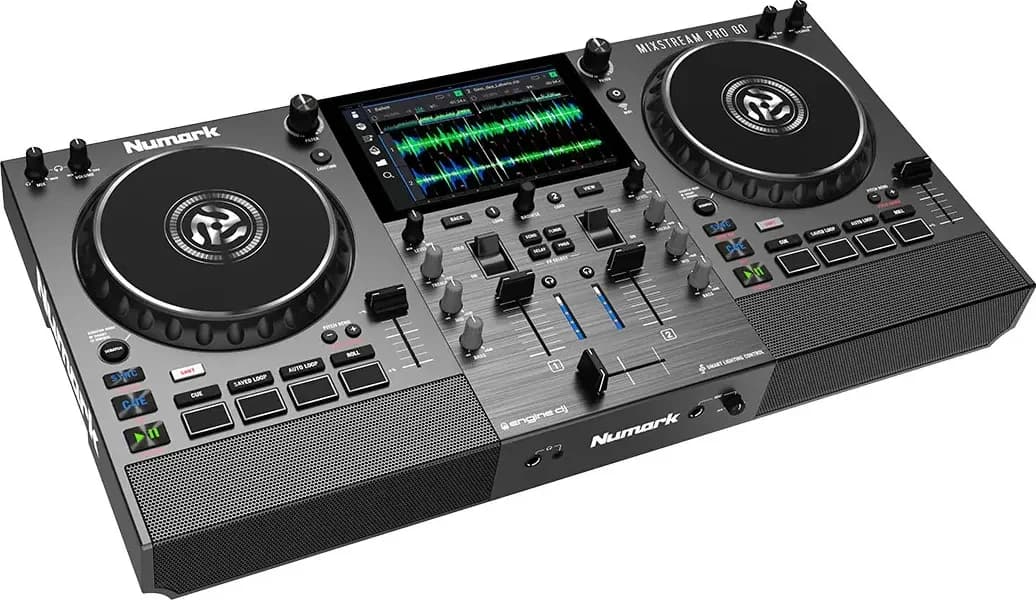
- A DJ controller puts two or four decks and a mixer in one unit, but the software runs on a laptop.
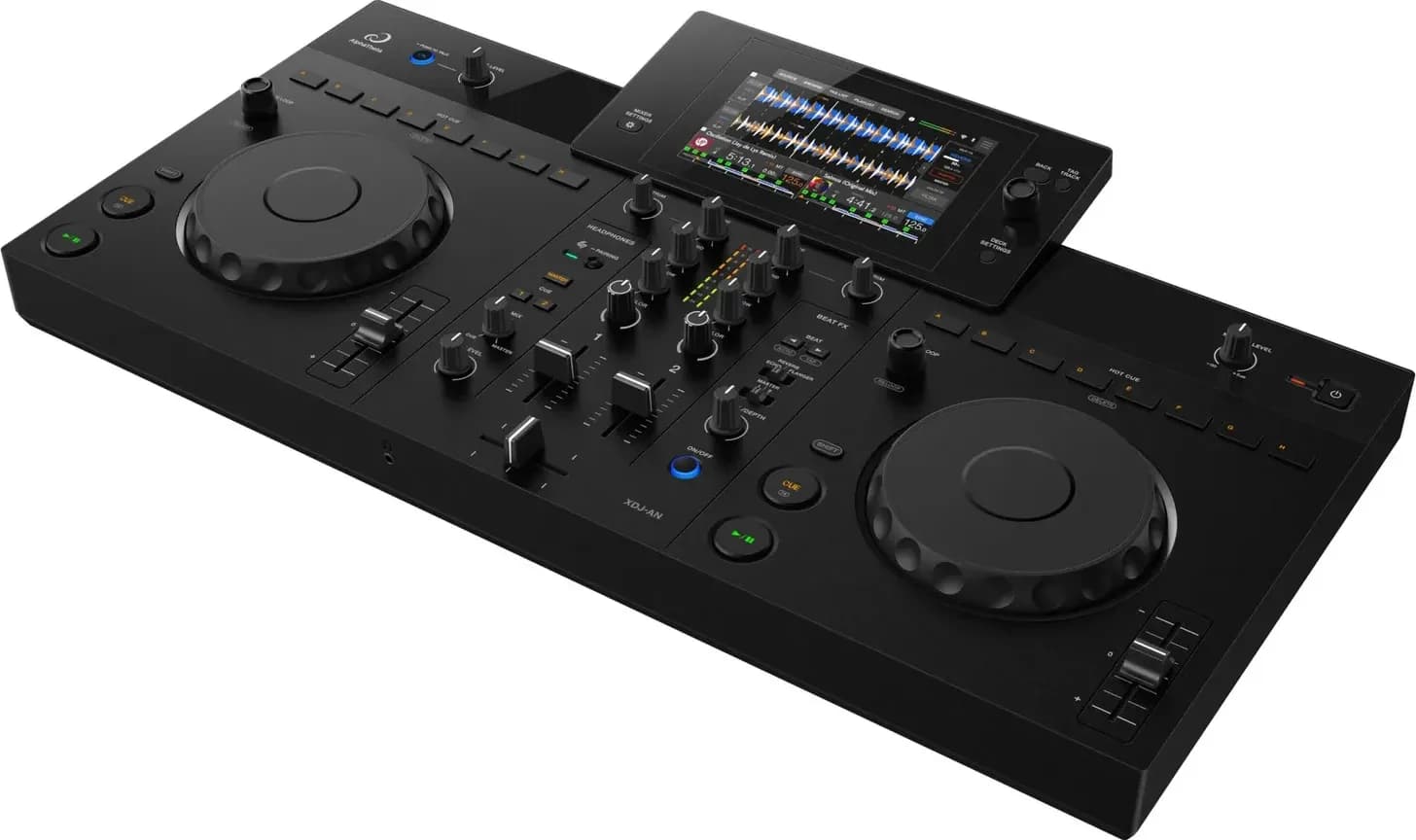
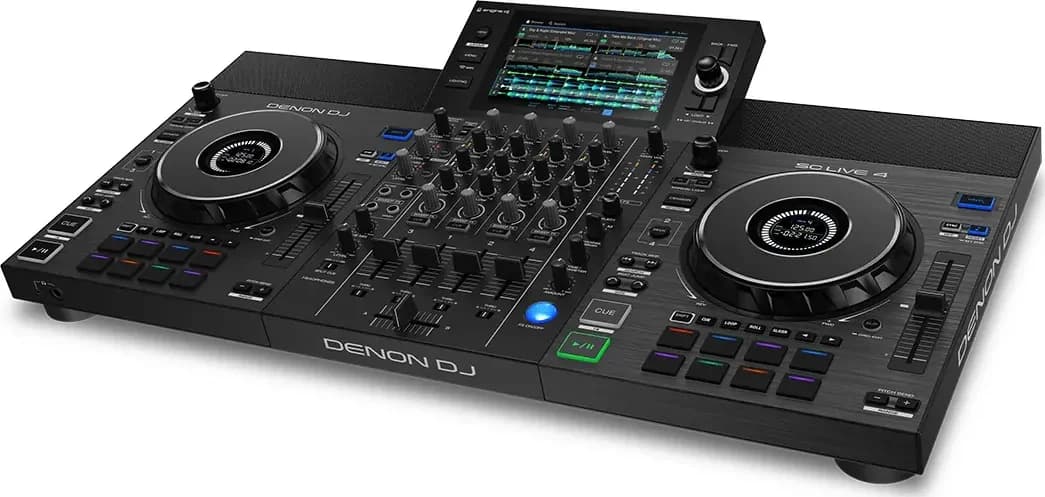
- An all-in-one, or standalone, puts CDJ-style decks, a mixer and a screen in one box with no laptop, such as Pioneer DJ's XDJ-RX3 and AlphaTheta's XDJ-AZ. The best standalone DJ controllers compares them with Denon DJ's.
- Other makers' media players do the same job as CDJs under other names. Denon DJ's SC6000 PRIME and the motorised SC6000M run Engine DJ rather than rekordbox; SC6000 vs CDJ-3000 compares them.
- Turntables play vinyl, or control software through timecode records; see CDJs vs turntables.
Who needs CDJs
If you play club booths, CDJs are what you will usually find there. Reviewers in the CDJ-3000's record call it a staple of DJ booths worldwide (MusicRadar) and a fixture of high-end venues and big-name DJs' riders (DJ Times), so practising on the same players means nothing changes at the gig. The same record holds the counterpoint: five of its reviews call it expensive next to rivals, and a 2026 video review says bedroom, beginner and house-party DJs get most of the experience from high-end standalone systems for less. An all-in-one with the club layout is the other route: six of seven reviews in its record recommend the XDJ-RR as a laptop-free way to learn the CDJ and DJM layout before buying separate players.
How this page is made
Features and model details come from Pioneer DJ's and AlphaTheta's own pages, the CDJ-3000 manual and AlphaTheta's company history, all linked above and read on 13 October 2026, with the brand history from Mixmag's report. Reviewers' views come from the opinion records on each product page, which link every review they draw on. We haven't tested these players for this page. The methodology explains how the site works.