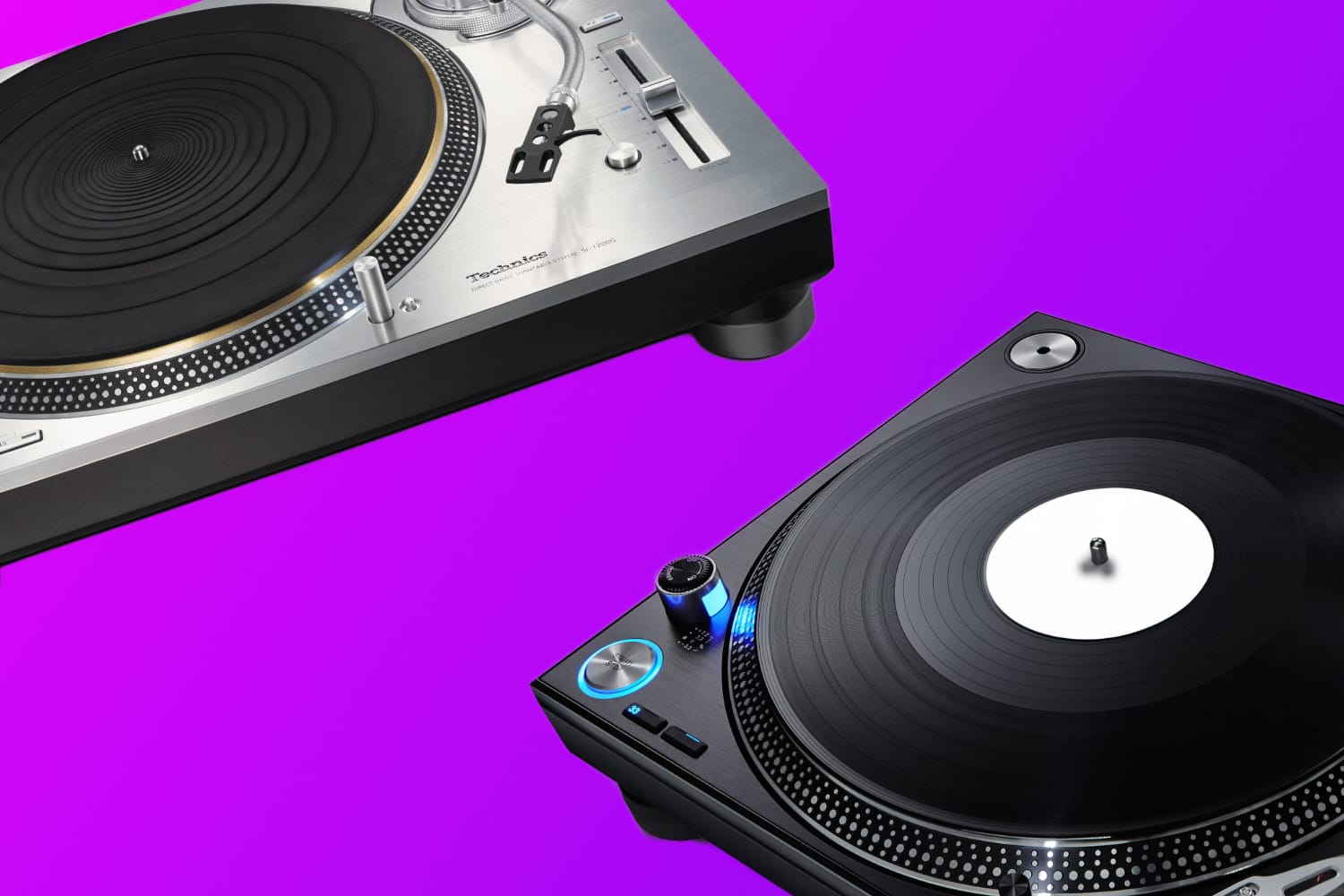
Buy the Technics SL-1200MK7 if you want the deck whose layout the others copy: eight of nine professional reviews recommend it, and it adds reverse play, 78 rpm and adjustable torque and brake, which the PLX-1000 lacks. Buy the Pioneer DJ PLX-1000 if you would rather have a heavier deck with a stronger motor and a wider pitch range and can do without those extras; three of its five reviews recommend it, and the doubts are about value, not performance.
Which one for which DJ
- Mixing records on the standard layout: the Technics SL-1200MK7. Reviewers and owners praise speed that holds steady through long blends and a precise pitch fader. The best DJ turntables picks it as the club standard.
- A heavier, more planted deck with a stronger motor: the Pioneer DJ PLX-1000. Reviewers and owners say it lays out and feels like a Technics 1200, so club DJs adapt at once; what sets it apart is a heavier chassis and a stronger motor.
- Big tempo changes: the PLX-1000. It has the widest pitch range of the two, with a button that resets the tempo.
- Reverse play, 78s, or setting how the platter starts and stops: the SL-1200MK7. The PLX-1000 has none of these.
- Scratching with DVS: neither. The PLX-CRSS12, built on the PLX-1000, reads the movement of any record in its Digital Vinyl mode, so the tonearm stays parked and can't skip.
- A smaller budget: neither. The turntable guide picks the Reloop RP-7000 MK2 for the Technics feel for less, and the Audio-Technica AT-LP140XP for a first deck.
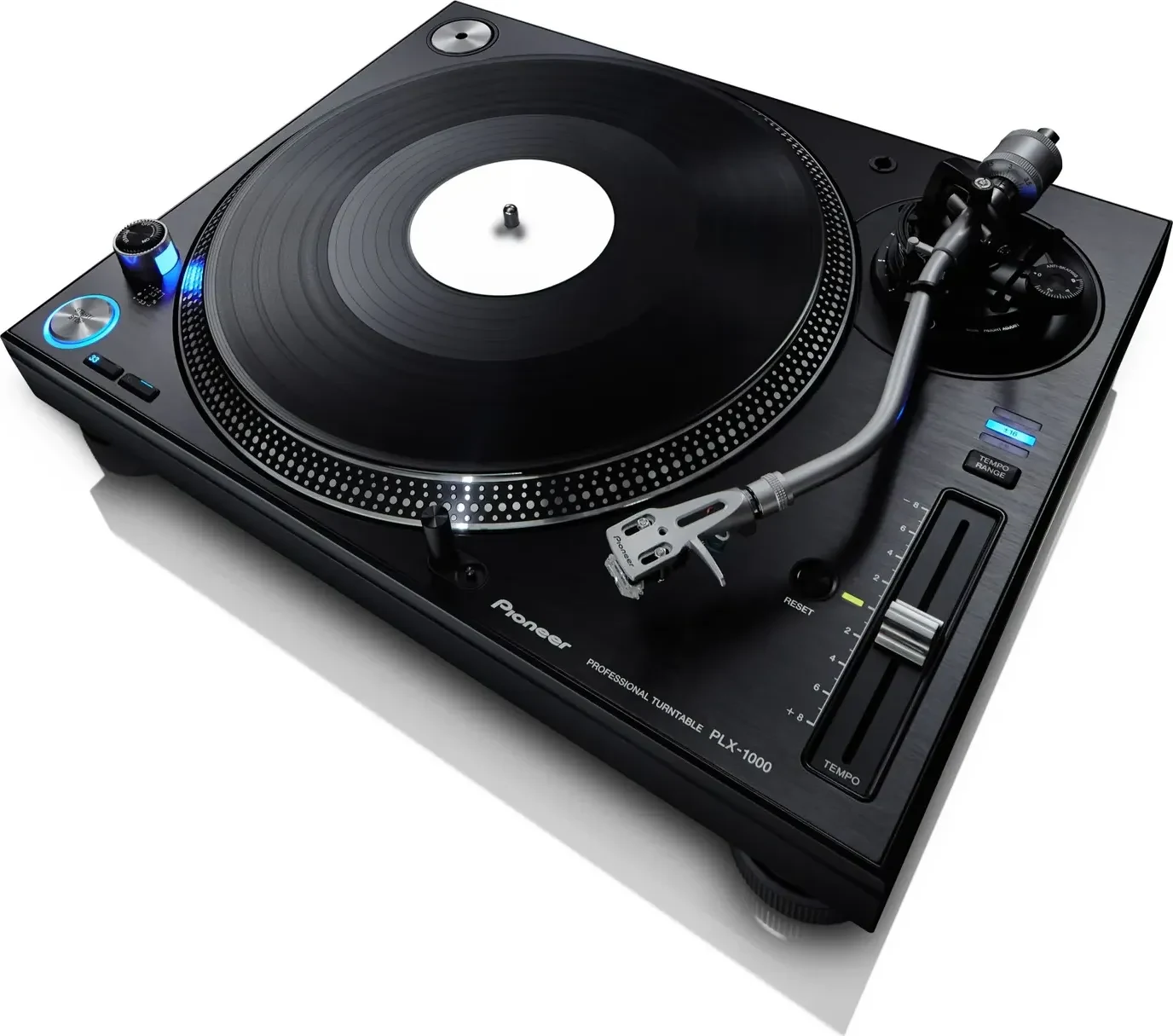
Pioneer DJ PLX-1000
Full product page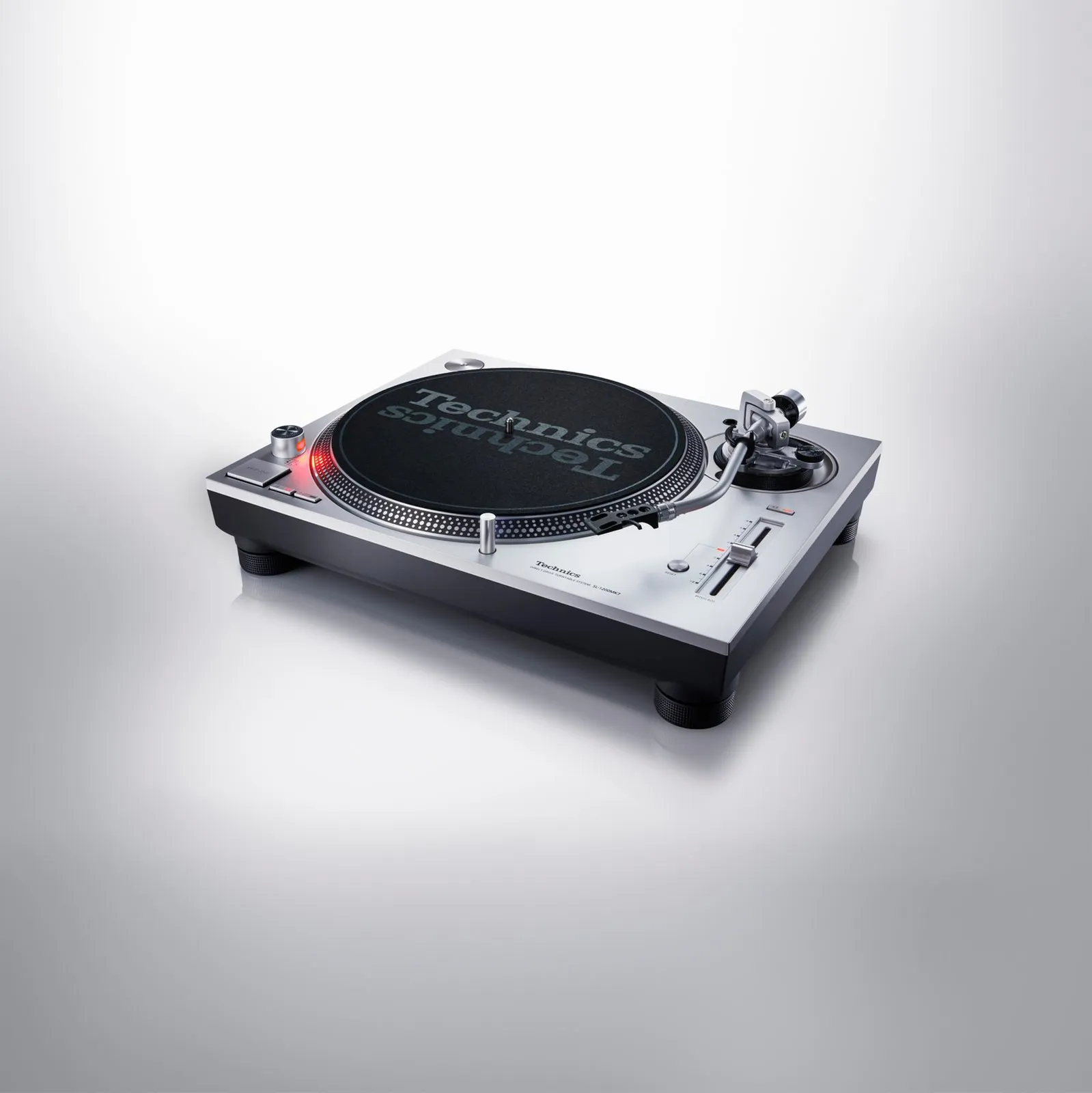
Technics SL-1200MK7
Full product pageWhat "Technics 1200" means today
Technics made the SL-1200 series from 1972 until 2010, when production stopped with the SL-1200MK6, Panasonic says. It returned for DJs with the SL-1200MK7, on sale since 2019 and still sold by Technics. A new Technics DJ deck is an MK7; an MK2 to MK6 is a used deck at least fifteen years old, so its condition depends on its history. The Pioneer DJ PLX-1000 came out in 2014, and Pioneer DJ still lists it.
The PLX-1000 and SL-1200MK7 compared
| Pioneer DJ PLX-1000 | Technics SL-1200MK7 | |
|---|---|---|
| On sale since | August 2014 | May 2019 |
| Drive | Direct drive, quartz-lock, 3-phase brushless DC motor | Direct drive, coreless motor |
| Starting torque | 4.5 kg·cm or more | 1.8 kg·cm |
| Start-up time to 33⅓ rpm | 0.3 s | 0.7 s |
| Adjustable torque and brake | No | Yes, four levels each |
| Pitch ranges | ±8%, ±16%, ±50%, with a tempo reset button | ±8%, ±16% |
| Speeds | 33⅓, 45 rpm | 33⅓, 45 rpm, and 78 rpm by switch |
| Reverse play | No | Yes |
| Wow and flutter | 0.1% or less WRMS (JIS WTD) | 0.025% W.R.M.S. |
| Tonearm | S-shaped, gimbal bearing, 230 mm effective length | S-shaped, static balance, 230 mm effective length |
| Cartridges (with the supplied headshell) | 3.5 to 13 g | 5.6 to 12.0 g |
| Cartridge in the box | No, headshell only | No, headshell only |
| Cables | Detachable power, phono and ground | Detachable phono, earth and power |
| Output | Phono (RCA) | Phono (RCA) |
| Weight | 13.1 kg | 9.6 kg |
| Size (W × H × D) | 453 × 159 × 353 mm | 453 × 169 × 353 mm |
Sources: Pioneer DJ's PLX-1000 launch specifications; Technics' SL-1200MK7 specifications and catalogue for the adjustable torque and brake; Bonedo and Audiofanzine for what the PLX-1000 can't adjust or do. Both product sheets are on the product pages.
The differences that matter
The motor
The PLX-1000's motor is the stronger: Pioneer DJ lists a starting torque of 4.5 kg·cm or more and 0.3 s (at 33⅓ rpm) to reach speed, against 0.18 N·m (1.8 kg·cm) and 0.7 s from standstill to 33⅓ rpm for the Technics. A stronger motor pulls back harder against your hand. The Technics lets you set its torque and its brake speed separately, in four levels each, which Bonedo notes the PLX-1000 can't do. In the SL-1200MK7's record, the praise mentioned most is that its speed holds steady through long blends.
Pitch
The PLX-1000 has three pitch ranges, the widest far beyond the Technics', and a button that resets the tempo, per Pioneer DJ. The SL-1200MK7 has two ranges, and its reviewers and owners single out a precise pitch fader. For matching tempos by ear, see how to beatmatch.
Build, weight and feedback
The PLX-1000 weighs 13.1 kg, with a die-cast zinc chassis, a resin base and a vibration-damping layer, and nine sources in its record call it built like a tank. Two reviews still report hum or feedback when it sits near loud monitors. The SL-1200MK7 weighs approx. 9.6 kg (21.2 lb), and ten sources in its record say it is lighter and more plastic than the old MK2, with buttons and a finish that feel cheaper; three say it isolates feedback less well than older 1200s at high volume. Its sources also say it shrugs off knocks and vibration, and nine point out that the dust cover just sits on top, with no hinges.
Features
The SL-1200MK7 plays in reverse, plays 78 rpm records with a switch and adjusts its torque and brake. The PLX-1000 does none of those, and its reviewers' main reservation is that it offers few features for the price, while near-identical decks from other brands cost less. Both now have detachable cables, which the SL-1200MK7's owners welcome after the old 1200's wired-in ones.
What else you need
Neither comes with a cartridge; both include a headshell, so budget for a cartridge for each deck. Both send a phono-level signal, so they plug into a mixer's phono channels or a separate phono stage; the best DJ mixers compares mixers with phono inputs. To play a digital library on either deck, a timecode record and DVS software do the job; the guide to digital vinyl systems explains the setup, and learning to scratch covers the technique. For turntables against CDJs, see CDJs vs turntables.
How this comparison is made
Specifications come from Pioneer DJ's and Technics' own pages and specification sheets, read through each product's sheet and linked above. Reviewers' and owners' views come from the opinion records on each product page, which link every review and retailer page they draw on: nine professional reviews and 26 owner reviews for the SL-1200MK7, and five professional reviews and ten owner reviews for the PLX-1000. We haven't tested these turntables for this page. The methodology explains how the site works.