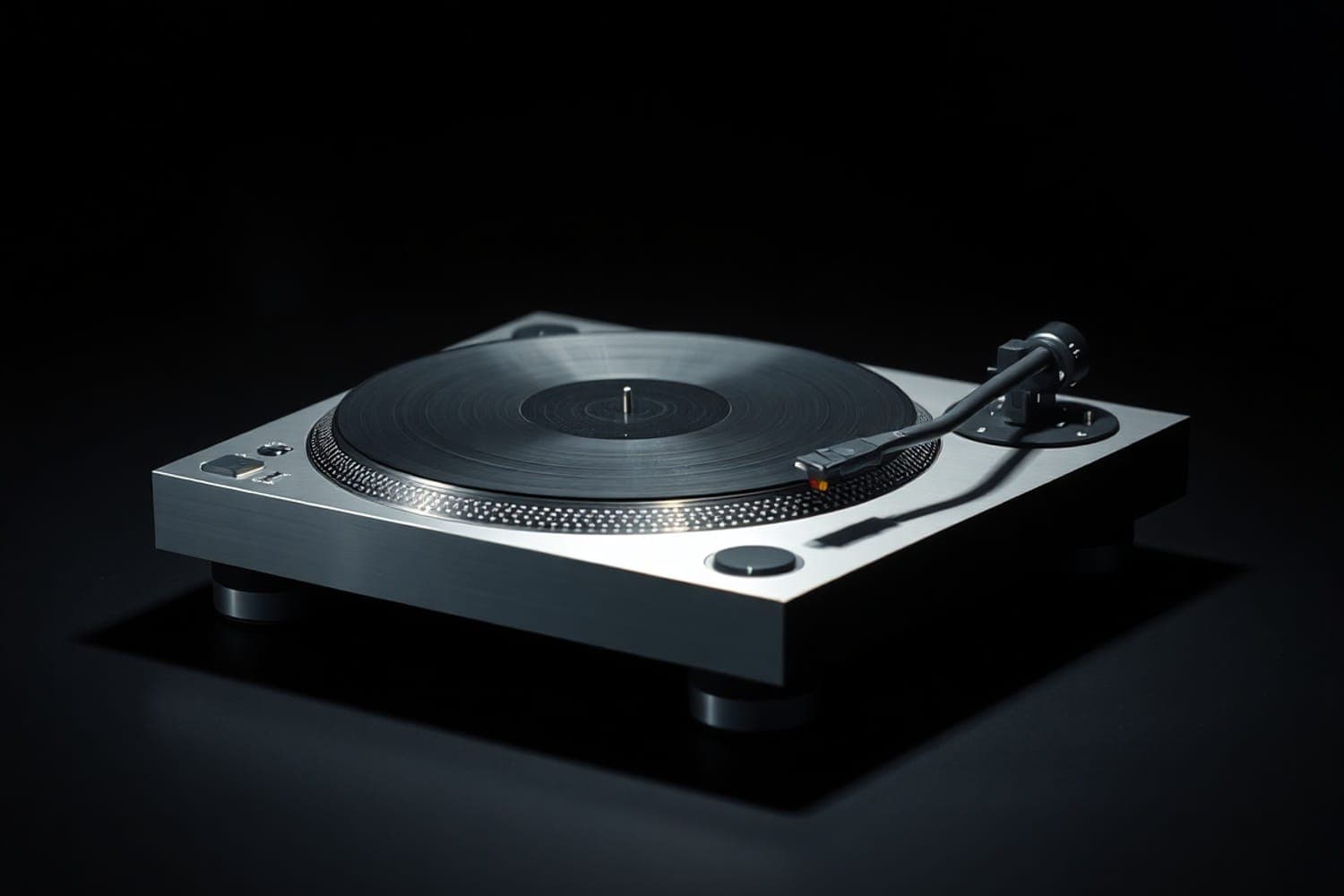
Nothing in DJing replicates the feel of vinyl. The resistance of a platter under your fingers, the physical connection to the music, the tactile precision of a well-set tonearm — it's why turntables have survived every digital revolution the industry has thrown at them.
Whether you're building a full scratch setup, adding vinyl playback to a digital workflow, or stepping up from entry-level gear, this guide covers the best DJ turntables we've tested. We rank them on build quality, motor performance, DVS compatibility, and value.
What to Look For
Before choosing a turntable, understand these key factors.
Motor type and torque. Direct drive is essential for DJing — the motor sits directly under the platter for instant start-up and consistent speed. Torque determines how quickly the platter reaches full speed and how well it resists your hand during scratching. Look for at least 1.6 kg/cm for mixing; 3+ kg/cm for serious scratching.
Platter weight. Heavier platters provide more stable rotation and better resistance to external vibrations. A well-damped platter also reduces colouration and feedback, especially in loud environments.
DVS compatibility. If you want to control digital music through vinyl, you need either a DVS-compatible setup (turntable + timecode vinyl + compatible software) or a hybrid turntable like the Pioneer PLX-CRSS12 that handles DVS without a tonearm.
Build quality. DJ turntables take abuse — scratching, transport, loud environments with heavy bass. Metal construction, rubber isolation feet, and a solid tonearm bearing are non-negotiable for longevity.
1. Technics SL-1200MK7
Best Overall
| Spec | Detail |
|---|---|
| Drive | Coreless direct drive |
| Pitch range | ±8% / ±16% |
| Reverse | Yes |
| Cartridge | Not included |
| Build | Aluminium die-cast top, glass-fibre composite base |
The Technics SL-1200MK7 is the deck every other turntable is measured against, and it earns that status honestly. Its coreless direct-drive motor runs with no cogging — the tiny speed stutter cheaper motors produce — so platter speed stays rock-steady whether you're riding the pitch fader or dropping the needle. The build quality is in a class of its own, and nothing here comes close on long-term reliability or resale value; a well-kept 1200 holds its price for years.
The catch is what you pay for it. At the top of the price bracket, you're buying heritage engineering rather than new features — the tonearm design has barely changed in decades, and there are none of the modern extras you'll find on cheaper decks. But if you want a turntable that will outlast everything else on this list and feel identical in any booth in the world, this is the one to own.
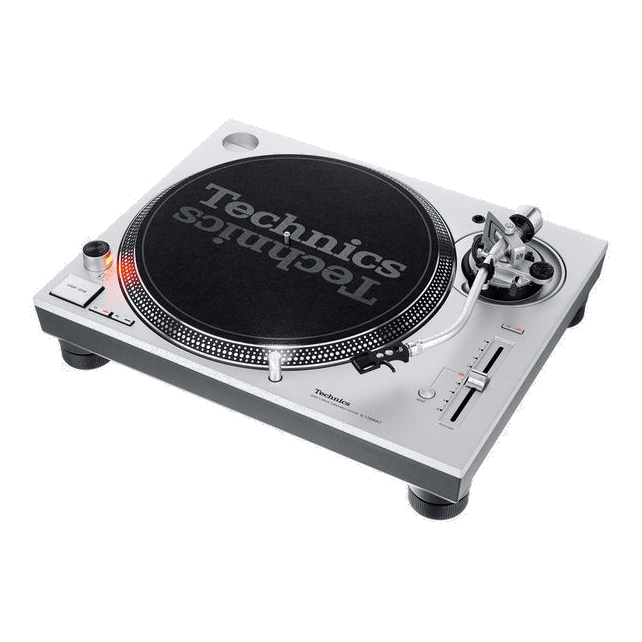
Technics SL-1200MK7
The benchmark for build, reliability and resale — the deck you'll never need to replace.
2. Pioneer DJ PLX-CRSS12
Best Hybrid
| Spec | Detail |
|---|---|
| Drive | Direct drive |
| DVS | Tonearm-free (Magvel Clamp) |
| Software | Serato DJ Pro, rekordbox |
| Platter | Heavy precision |
| Stems | Yes |
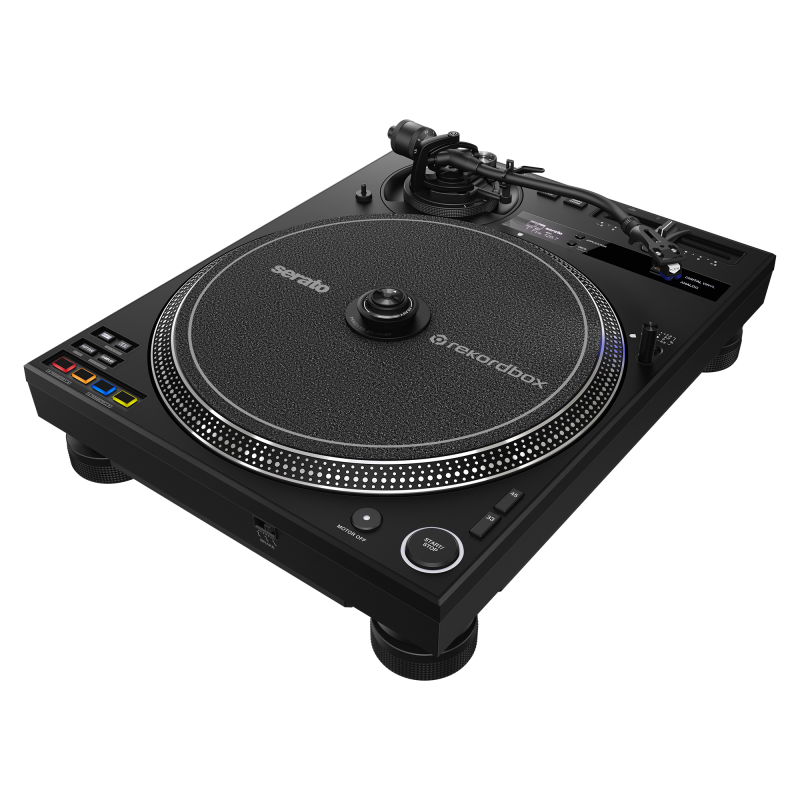
The Pioneer DJ PLX-CRSS12 is the most innovative DJ turntable on the market. It's the world's first turntable that supports both traditional analog vinyl playback and tonearm-free DVS control — meaning you can scratch and mix digital tracks through Serato DJ Pro or rekordbox without ever touching a needle or timecode vinyl.
The Magvel Clamp system reads the platter's rotation directly and translates it to software control. This eliminates needle skips entirely — a game-changer for scratch DJs who are tired of replacing styluses. The heavy precision platter feels solid and responsive, and cables route underneath for a clean setup.
The trade-off is price. You'll need two units for a full setup, and at this price point that's a serious investment. The colourful buttons on the front panel are a design choice that divides opinion against the otherwise all-black aesthetic. But as a piece of turntable technology, the PLX-CRSS12 represents the future of vinyl DJing.
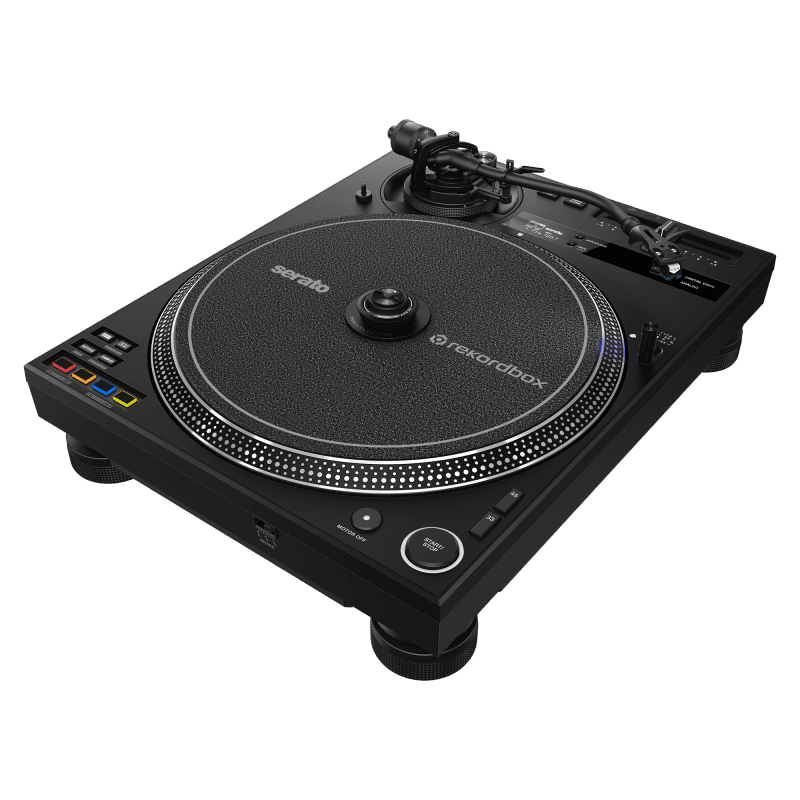
Pioneer DJ PLX-CRSS12
So, as you can see, the Pioneer DJ PLX-CRSS12 controller turntable comes with a lot of features and is a game-changing...
3. Pioneer DJ PLX-1000
Best Club Deck
| Spec | Detail |
|---|---|
| Drive | High-torque direct (4.5 kg/cm) |
| Pitch range | ±8% / ±16% / ±50% |
| Cables | Detachable |
| Reverse | No |
| Cartridge | Not included |
The Pioneer DJ PLX-1000 is Pioneer's take on the club standard, and it nails the fundamentals. The chassis is heavy and well-damped, so it shrugs off the low-end vibration of a loud floor, and the high-torque direct-drive motor snaps up to speed and holds firm under your hand. Detachable cables are a genuinely useful touch for transport and repairs, and the deck carries real club credibility at a price that sits comfortably below the Technics.
Where it shows its age is features. There's no reverse and none of the creative extras newer decks pack in, so next to something like the Reloop it can start to feel a little plain for the money. But as a straightforward, road-ready club deck it does the core job with no fuss — which is exactly what a lot of DJs want.
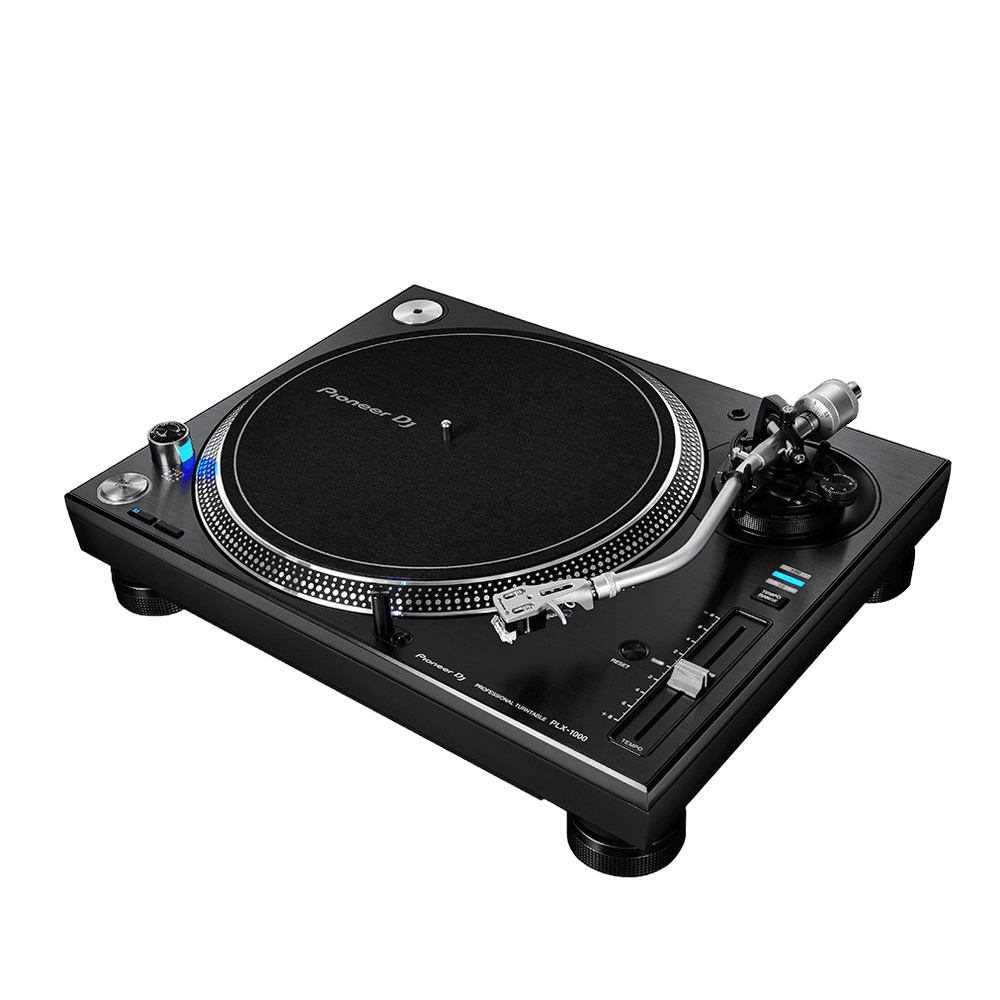
Pioneer DJ PLX-1000
A straightforward, road-ready club deck that nails the fundamentals for less than the Technics.
4. Reloop RP-7000 MK2
Best Value
| Spec | Detail |
|---|---|
| Drive | Adjustable-torque direct (2.8–4.5 kg/cm) |
| Pitch range | ±8% / ±16% / ±50% |
| Pitch fader | Upright (battle-friendly) |
| Reverse | Yes |
| Cartridge | Not included |
The Reloop RP-7000 MK2 punches well above its price. Its motor, with starting torque adjustable from 2.8 to 4.5 kg/cm, grips like decks costing far more, and the upright pitch fader is a real advantage for battle-style setups where you want the controls clear of your hands. Pound for pound, it's the best-performing deck on this list.
The compromises are in the details rather than the performance — fit and finish, tonearm bearing quality, and resale value all sit a step below the Technics. None of that stops it doing serious work. For most DJs building a first proper vinyl setup, this is the sweet spot between price and capability.
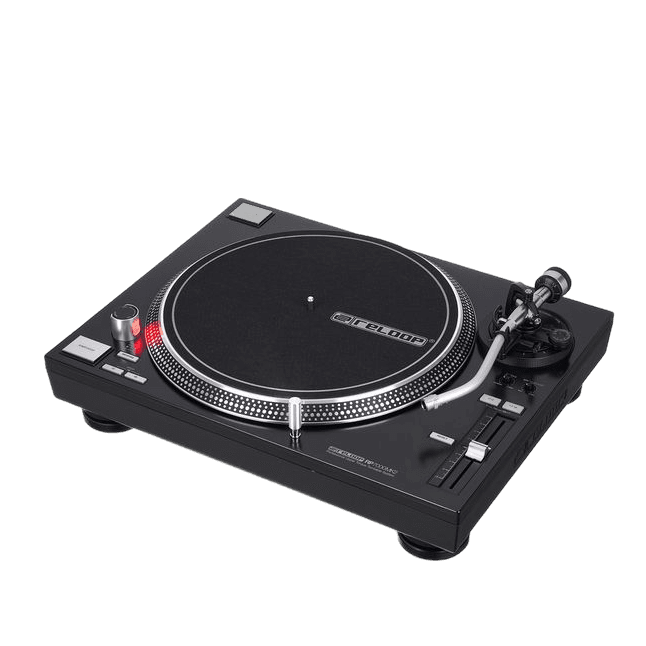
Reloop RP-7000 MK2
The sweet spot between price and capability — the most performance per pound in its class.
5. Audio-Technica AT-LP140XP
Best Under $500
| Spec | Detail |
|---|---|
| Drive | Direct drive |
| Pitch range | ±8% / ±16% / ±24% |
| Preamp | None — phono-level output only |
| Cartridge | AT-XP3 included |
| Reverse | Yes |
The Audio-Technica AT-LP140XP is the easiest way onto a proper direct-drive deck. It's the cheapest entry point here and, crucially, it plays straight out of the box — an AT-XP3 cartridge comes fitted, so there's no separate cartridge to buy or align before the first record spins. Note there's no built-in phono preamp and no USB output: the deck puts out a phono-level signal only, so you'll need a mixer or amp with phono inputs, or an external phono preamp. For a first turntable, the fitted cartridge still removes a lot of the usual friction and cost.
The savings show up in the build. It's lighter than the club decks, which makes it more sensitive to feedback near loud speakers, and the torque is weaker, so it won't hold up to aggressive scratching the way the heavier decks do. Think of it as the ideal bedroom-practice and home-listening deck rather than a club or battle workhorse.
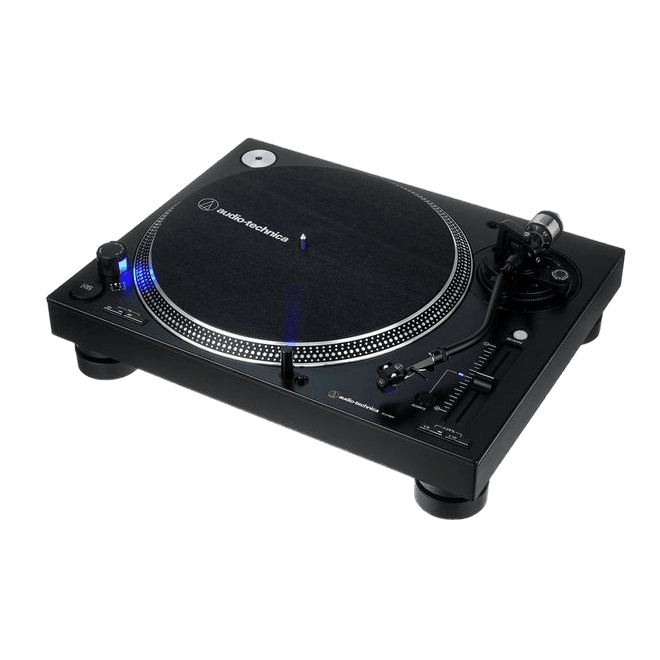
Audio-Technica AT-LP140XP
The easiest, cheapest way onto a proper direct-drive deck — ideal for home and practice.
Also Worth Considering
Reloop RP-8000 MK2 — if you want turntable feel with controller features built in, the RP-8000 MK2 adds Serato performance pads and creative pitch tools (scales and notes) on top of a torque-adjustable direct-drive motor. It's a specialist pick for hybrid DVS setups rather than a pure vinyl deck, but nothing else blends the two worlds quite as tightly.
FAQs
What is the difference between direct drive and belt drive?
Direct drive turntables have the motor directly under the platter, providing instant start-up and consistent speed — essential for scratching and beatmatching. Belt drive turntables use a rubber belt to spin the platter, which reduces motor vibration but has slower start-up and can slip. For DJing, direct drive is the standard choice.
Do I need a mixer to use DJ turntables?
Yes. Unlike DJ controllers, turntables are just playback devices — they don't include a mixer. You'll need a separate DJ mixer with phono inputs to connect two turntables. If you want to use digital music with turntables, you'll also need a DVS-compatible mixer or audio interface.
What is DVS and do I need it?
DVS (Digital Vinyl System) lets you control digital music files using real turntables with special timecode vinyl. The turntable sends a signal to software like Serato or rekordbox, which plays digital tracks in response to your physical movements. You need DVS if you want the feel of vinyl but the convenience of a digital library. The Pioneer PLX-CRSS12 can do this without timecode vinyl.
How much should I spend on DJ turntables?
Entry-level DJ turntables start around $200–300 each. Mid-range models from Pioneer and Audio-Technica sit around $550–850. The Technics SL-1200 MK7 and Pioneer PLX-CRSS12 represent the high end at $1,000+. Remember you need two turntables plus a mixer, so budget accordingly.
Can I scratch on any turntable?
You can scratch on any direct drive turntable, but the experience varies dramatically. Higher torque motors respond faster to your hand movements. A quality slipmat and a scratch-oriented cartridge also make a big difference. Belt drive turntables are not suitable for scratching.
What cartridge should I use for DJing?
For general DJing and mixing, the Ortofon Concorde series (DJ S or Mix models) or the Shure M44-7 are industry standards. For scratching, the Ortofon Concorde Scratch is designed with a reinforced stylus that handles aggressive platter manipulation. Spherical styli track grooves better during scratching than elliptical ones.
Verdict
For most DJs, the Technics SL-1200MK7 is the deck to buy — the benchmark for build, reliability, and resale, and the one you'll find in booths worldwide. If your budget won't stretch that far, the Pioneer DJ PLX-1000 delivers genuine club credibility for less, and the Reloop RP-7000 MK2 is the best performance-per-pound on the list.
If you work in a digital-vinyl hybrid setup, the Pioneer DJ PLX-CRSS12 is a genuine breakthrough — tonearm-free DVS control with no needle skips — though you pay a clear premium for it. And for a first deck that just works out of the box, the Audio-Technica AT-LP140XP is the easiest and cheapest way in.
Related Reviews & Guides
- Pioneer DJ PLX-CRSS12 Review — Tonearm-free DVS hybrid turntable
- Guide to Digital Vinyl Systems — How to use turntables with DJ software
- Learning to Scratch — Master scratching techniques
- CDJs vs Turntables — Which format is right for you?
- Direct Drive vs Belt Drive Turntables — Understanding turntable motor types
- 33 vs 45 RPM Vinyl — Vinyl speed formats explained
- Best DJ Mixers — Mixers for turntable setups