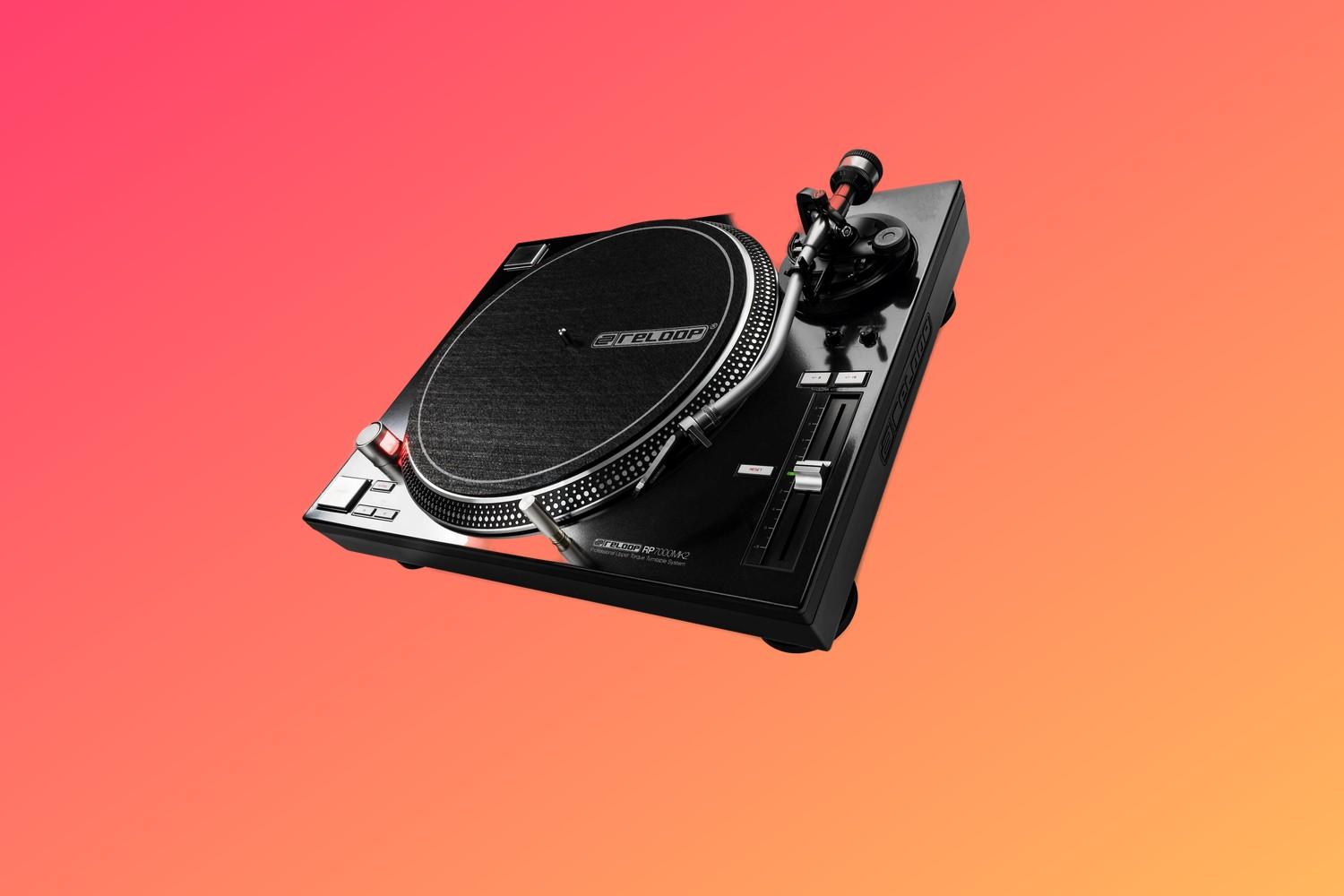
Buy the Reloop RP-7000 MK2 if you want more features for less money: it adds adjustable torque and brake, reverse play, 78 rpm and a line output, none of which the Pioneer DJ PLX-1000 has, and all three of its professional reviews recommend it. Buy the PLX-1000 if you want the deck reviewers call the closest to a Technics 1200 in layout and feel, with a heavier 13.1 kg chassis and a dust cover and headshell in the box; three of its five reviews recommend it, and the doubts are about value, not performance.
Which one to buy
- You want the most deck for the money: the Reloop RP-7000 MK2. Digital DJ Tips' own PLX-1000 review names the RP-7000MK2 as a cheaper option, and Resident Advisor wrote that it would have no qualms recommending the Reloop even at the PLX-1000's price.
- You scratch and want to set how the platter behaves: the RP-7000 MK2. Its starting torque and brake time are both adjustable, and it has a second start/stop button for decks turned sideways. Bonedo notes that the PLX-1000's torque and start/stop behaviour can't be adjusted.
- You play in clubs on Technics decks and want the same feel at home: the Pioneer DJ PLX-1000. Eleven sources in its record say it lays out and feels like a Technics 1200. Bonedo says the Reloop feels quite different from one, and that Technics loyalists may not take to it.
- You need reverse play or 78 rpm: the RP-7000 MK2. The PLX-1000 has neither.
- You want to plug into a line input, with no phono channel: the RP-7000 MK2. Its output switches between phono and line level. The PLX-1000's output is phono only.
- You want a lid and a headshell in the box: the PLX-1000. Pioneer DJ includes both. Reloop sells its dust cover separately and lists no headshell in the box.
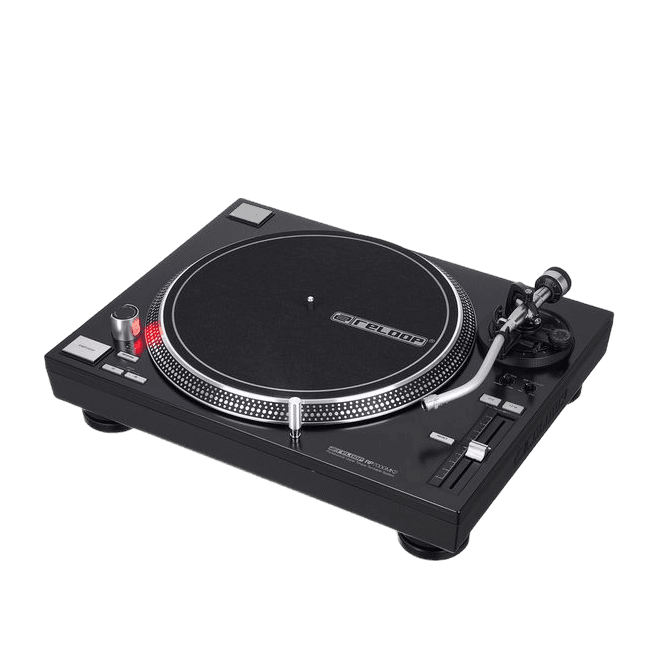
Reloop RP-7000 MK2
A heavy, high-torque deck that mixes like a Technics for less; the box is bare and some units ship with loose bearings.
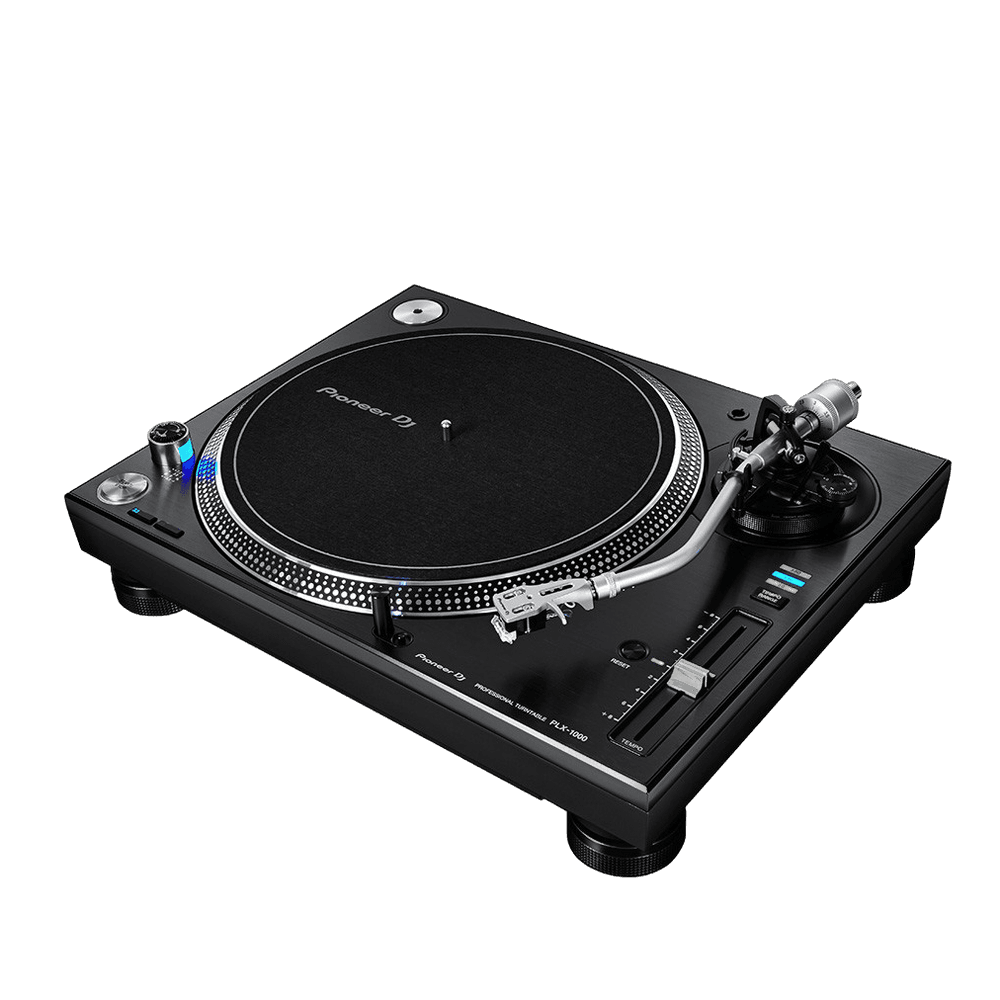
Pioneer DJ PLX-1000
The closest new deck to a Technics 1200 in layout and feel, with few extras for the price.
RP-7000 MK2 and PLX-1000 compared
| Reloop RP-7000 MK2 | Pioneer DJ PLX-1000 | |
|---|---|---|
| Status | Current | Current |
| On sale since | October 2017 | August 2014 |
| Drive | Direct drive, quartz-driven, 16-pole 3-phase brushless motor | Direct drive, quartz-lock, 3-phase brushless DC motor |
| Starting torque | 2.8 to 4.5 kg/cm, adjustable | 4.5 kg/cm or more, fixed |
| Start-up time | Under 0.2 s | 0.3 s (at 33⅓ rpm) |
| Brake | Electronic, stop time adjustable from 0.2 to 6 s | Electronic, not adjustable |
| Speeds | 33⅓, 45, 78 rpm | 33⅓, 45 rpm |
| Pitch ranges | ±8%, ±16%, ±50% | ±8%, ±16%, ±50% |
| Reverse play | Yes | No |
| Wow and flutter | 0.01% WRMS | 0.1% or less WRMS (JIS WTD) |
| Signal-to-noise ratio | Over 55 dB (DIN-B) | 70 dB (DIN-B) |
| Platter | Die-cast aluminium, 332 mm | Die-cast aluminium, 332 mm |
| Tonearm | S-shaped, static balance, 230 mm effective length | S-shaped, static balance, gimbal bearing, 230 mm effective length |
| Tonearm height adjustment | 0 to 6 mm | 6 mm |
| Cartridge weight | 3.5 to 8.5 g | 3.5 to 13 g |
| Output | Phono or line, switchable (RCA) | Phono (RCA) |
| Cables | Detachable power and RCA | Detachable power, audio and ground |
| Cartridge in the box | No | No |
| Headshell in the box | None listed | Yes |
| Dust cover in the box | No, sold separately | Yes |
| 45 rpm adapter in the box | None listed | Yes |
| Size (W x D x H) | 458 x 354 x 144.6 mm | 453 x 353 x 159 mm |
| Weight | About 11.7 kg | 13.1 kg |
Sources: Reloop's RP-7000 MK2 product page for its specifications and box contents, Reloop's turntable range for status, its dust cover page and Bonedo's launch report for the on-sale date; Pioneer DJ's PLX-1000 launch specifications and its PLX-1000 product page for status; and Bonedo and Audiofanzine for what the PLX-1000 can't adjust or do. The two makers don't state the same measuring standard for wow and flutter, so treat that row as each maker's own figure.
The differences that matter
- The motor. Both reach the same peak: Reloop lists up to 4.5 kg/cm of starting torque, and Pioneer DJ lists 4.5 kg/cm or more. The difference is control. The Reloop lets you turn the torque down to 2.8 kg/cm and set the stop time anywhere from 0.2 to 6 seconds. The PLX-1000 runs at one setting. Twelve sources in the Reloop's record praise its strong, adjustable motor; four reviews of the PLX-1000 list the missing adjustments among its shortcomings.
- Features. The Reloop plays in reverse, plays 78s and has a second start/stop button. Audiofanzine's review of the PLX-1000 lists what the Pioneer DJ deck leaves out: 78 rpm, a line output, a second start/stop, adjustable torque and reverse. Both have the same three pitch ranges.
- Feel. This is where the PLX-1000 leads. Eleven sources say it lays out and feels like a Technics 1200, and Amazona wrote that it comes closer to the composure of a 1210 MK2 than any other deck then on sale. Seven sources say the Reloop mixes much like a Technics, but three say its raised platter and different feel take adjusting to, and two say its fit and finish sit a step below.
- Build and weight. The PLX-1000 is the heavier deck by about 1.4 kg, with a die-cast zinc chassis over a resin layer and a vibration-damping base, per Pioneer DJ. Nine sources call it built like a tank. Fourteen sources praise the Reloop's heavy, solid build too.
- Hum and faults. Neither is clean here. Two reviews of the PLX-1000 report hum or feedback when it sits near loud monitors. Resident Advisor says the Reloop feeds back sooner than a Technics at extreme volume, three owners report hum on some units, and three report loose tonearm bearings or platter play on new ones.
- The output. The Reloop's switchable preamp feeds a mixer's phono channel or a line input. The PLX-1000 needs a phono input or a separate phono stage.
- The box. Neither includes a cartridge. The PLX-1000 comes with a dust cover, a headshell and a 45 rpm adapter. Seven sources in the Reloop's record complain about its bare box, which has none of the three.
- Price. Live prices are on each product page. At launch, Bonedo reported 499 euros for the Reloop in October 2017, and Amazona's September 2014 review put the PLX-1000 at around 700 euros.
Reviewers split along the same lines. All three professional reviews of the RP-7000 MK2 recommend it, from Bonedo, Digital DJ Tips and Resident Advisor, and 27 owner reviews were read at Thomann and Guitar Center. Three of five reviews recommend the PLX-1000 and two are mixed, with ten owner reviews read at Guitar Center, all positive. The PLX-1000's record also notes that Thomann no longer listed it in October 2026, so check that it is in stock where you shop.
What else you need
Budget for a cartridge for either deck, and a headshell as well for the Reloop. Mixing takes two decks and a mixer; the best DJ mixers compares mixers with phono inputs. To play a digital library on either deck, a timecode record and DVS software do the job, and the guide to digital vinyl systems explains the setup.
For other choices, the best DJ turntables picks the RP-7000 MK2 as the Technics feel for less, alongside three other decks. If the Technics itself is on your list, see the PLX-1000 vs Technics SL-1200MK7.
How this comparison is made
Every specification and status detail on this page comes from Reloop's and Pioneer DJ's own product pages and launch specifications, read on 18 November 2026 and linked where they are used. Where a maker's page is silent on a missing feature, the named review that reports it is linked instead. What reviewers and owners say comes from the opinion records on each product page, which link every review and retailer page they draw on: three professional reviews and 27 owner reviews for the RP-7000 MK2, and five professional reviews and ten owner reviews for the PLX-1000. We haven't tested either turntable. The methodology explains how the site works.