
DJ Tech Reviews

Shure SM7B

The broadcast dynamic mic owners and reviewers rate for voice and room rejection; it needs 60 dB of clean gain.

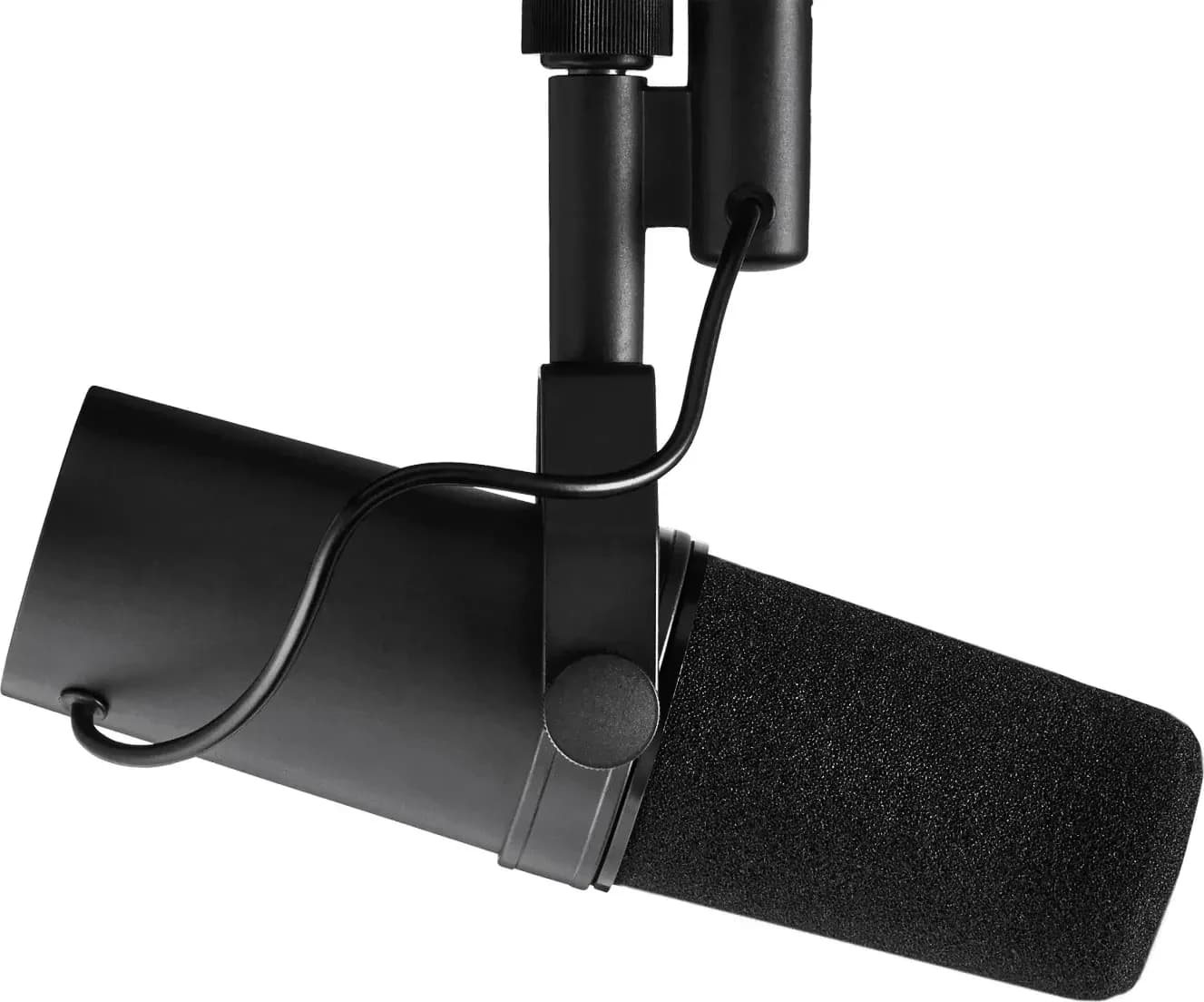
Shure SM7B at an angle, hanging from its yoke

Photos: Shure Incorporated

All retailers and the price history

We may earn commission from links on this page. This does not affect our editorial independence.

100%

of 7 reviews recommend it4.9/5 from 60 Guitar Center owners

See reviews
Best for
Podcasters and streamers with an interface or mixer that has gain to spare.
Skip it if
Your interface has under 60 dB of gain and you won't add a booster.

The Internet’s Opinion

From 7 professional reviews and 82 owner reviews: plenty of evidence.

All seven professional reviews recommend it, and owners at Thomann and Guitar Center agree, for a rich voice sound, strong rejection of room noise and a build that lasts. The caveat almost everyone repeats is gain: it is a quiet microphone that needs a strong preamp or an in-line booster, which adds cost, and a few find the tone dark.

7 recommend0 mixed0 avoid

What people praise

  • Rich, warm sound on speech and vocals
  • Rejects room and background noise, so it works in untreated rooms
  • Built to last
Show 2 more
  • Also works on guitar amps, drums and other instruments
  • Bass roll-off and presence boost switches are useful

What to know first

  • Needs a lot of clean gain, often a Cloudlifter-style booster
  • Dark tone that can need EQ
  • Expensive once a preamp or booster is added
Show 3 more
  • Noise or static when the gain is turned up
  • Heavy: needs a sturdy stand or boom arm
  • Stand mount and thread adapter are fiddly

Owner ratings, as the retailers publish them

See the 7 reviews behind this

7 professional reviews (7 recommend, 0 mixed, 0 avoid); 82 owner reviews read at Thomann (38) and Guitar Center (44 of 60 posted; 16 under 20 words skipped)Compiled 2026-10-14How this is compiled

Prices

Before you buy

Released
2001
Status
Current

Works with

  • An interface or preamp with 60 dB of gain60 dB or more

    Shure asks for at least 60 dB of clean gain for speech and warns that many interfaces have only 40 to 50 dB Manufacturer spec sheet (Shure (support article)), checked 2026-10-14

  • Shure MVX2U60 dB of gain

    Shure names its MVX2U XLR-to-USB interface, with 60 dB of total gain, as a way to connect the SM7B to a Mac or PC Manufacturer spec sheet (Shure (support article)), checked 2026-10-14

  • An in-line booster (Cloudlifter, FetHead, sE DM1/DM2)+25 to 28 dB

    Phantom-powered in-line preamps between the mic and an interface add 25 to 28 dB when the interface falls short Manufacturer spec sheet (Shure (support article)), checked 2026-10-14

You’ll also need

  • An XLR cableNot in the box

    The box holds the SM7B, the A7WS close-talk windscreen and a switch cover plate Manufacturer spec sheet (Shure), checked 2026-10-14

  • A boom arm or mic standNot in the box

    It ships set up for a boom; the yoke can be turned round for a stand, and a 5/8" to 3/8" thread adapter is included Manufacturer spec sheet (Shure (SM7B user guide)), checked 2026-10-14

  • An audio interface or mixerXLR only

    It has an XLR output and no USB, so it needs an interface, mixer or preamp to reach a computer Manufacturer spec sheet (Shure (support article)), checked 2026-10-14

Key specs

Capsule
Dynamic (moving coil)
Polar pattern
Cardioid
Output
3-pin XLR only (no USB)
Frequency response
50 Hz to 20 kHz
Sensitivity
-59 dBV/Pa (1.12 mV) at 1 kHz
Preamp gain needed
At least 60 dB for speech; many interfaces have only 40 to 50 dB
All 13 specifications
Output impedance
150 Ω
Response switches
Bass roll-off and presence boost, on the back
Hum pickup
11 dB equivalent SPL/mOe at 60 Hz, shielded against monitor and lighting hum
Windscreens
Standard windscreen fitted, plus the larger A7WS for close talking
Mount
Yoke for a boom or stand, with a 5/8" to 3/8" thread adapter
Weight
764 g (1.69 lb)
In the box
SM7B, A7WS windscreen, switch cover plate

13 of 13 figures sourced; hover one for its source

Our take

Rory TassellWritten from the sources on this page, not from a loan unit.

All seven professional reviews recommend it, and owners agree: a rich voice sound, strong rejection of room noise and a build that lasts. The caveat 43 sources repeat is gain. Shure asks for at least 60 dB, so many interfaces need a Cloudlifter-style booster, which adds cost, and a few owners find the tone dark. Buy it if your preamp can drive it; otherwise budget for a booster or look at the SM7dB.

What it is

Status, October 2026: current. Shure still lists the SM7B.

What it is

The SM7B is a cardioid dynamic microphone from Shure for broadcast, podcasting and studio vocals (Shure product page). Its line goes back to the SM7 of 1973. The SM7A added a bigger humbucking coil against interference from monitors, and in 2001 Shure began supplying a larger windscreen with it, which made it the SM7B (Shure).

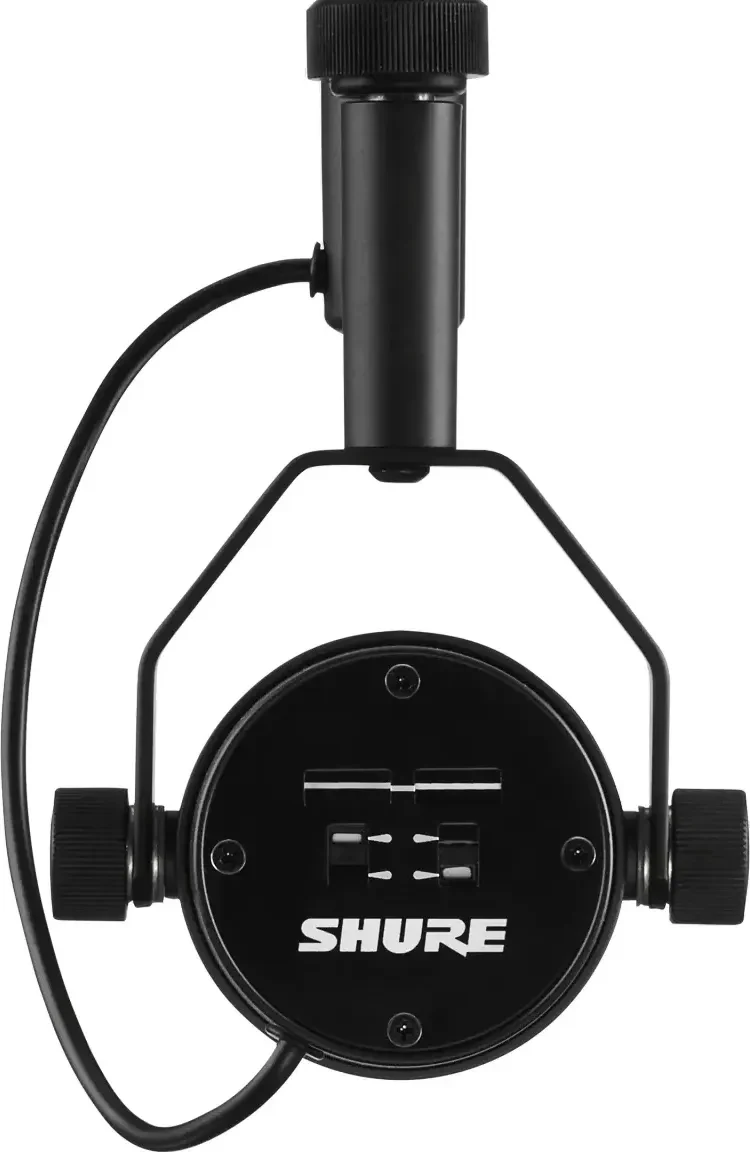
It has a frequency response of 50 Hz to 20 kHz and two switches on the back: a bass roll-off, which Shure suggests for hum from air conditioning or traffic, and a presence boost for clearer speech. Shure says to speak 2.5 to 15 cm from it, and that it is shielded against hum from computer monitors and lighting (SM7B user guide).

It has an XLR output only, with no USB, so it needs an audio interface, mixer or preamp. It is also a quiet microphone: Shure's support article asks for at least 60 dB of clean gain and warns that many interfaces have only 40 to 50 dB. Shure names its MVX2U interface, with 60 dB, or a phantom-powered in-line booster such as a Cloudlifter or FetHead, which adds 25 to 28 dB. Since 2023 Shure has also sold the SM7dB, an SM7B with a built-in preamp adding 18 or 28 dB.

It weighs 764 g and hangs from a yoke set up for a boom arm, which can be turned round for a stand. The box holds the microphone, the larger A7WS windscreen and a switch cover plate; a cable and stand are extra. For a microphone that plugs straight into a computer, Shure's MV7+ has USB-C as well as XLR, and the streaming microphone guide compares them.