
DJ Tech Reviews

Shure SM7dB

An SM7B with a built-in +18 or +28 dB preamp, so it works on any interface with phantom power; it costs more.

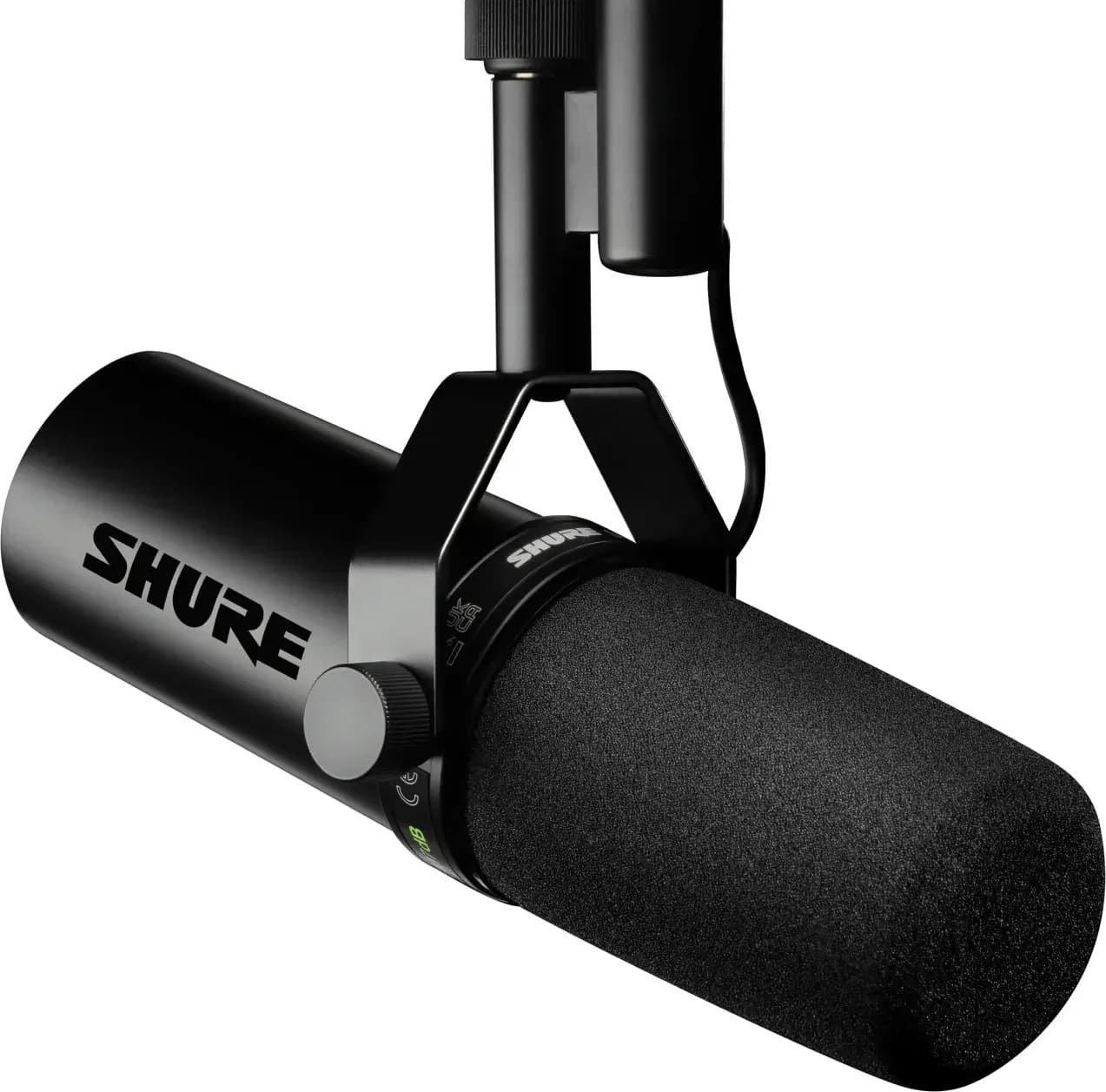
Shure SM7dB at an angle, hanging from its yoke

Photos: Shure Incorporated

All retailers and the price history

We may earn commission from links on this page. This does not affect our editorial independence.

82%

of 11 reviews recommend it5.0/5 from 64 Thomann owners

See reviews
Best for
Podcasters and streamers whose interface lacks the gain an SM7B needs.
Skip it if
You own an SM7B and a clean high-gain interface; the sound is the same.

The Internet’s Opinion

From 11 professional reviews and 56 owner reviews: a fair amount of evidence.

Nine of eleven professional reviews recommend it: the SM7B's voice sound with a built-in +18 or +28 dB preamp that removes the need for a booster, and the 56 owner reviews read at Thomann and Guitar Center say the same, though two Guitar Center buyers received a unit that was dead on arrival. The reservations are price, about $100 over an SM7B, the need for +48 V phantom power, and that owners of an SM7B with a clean high-gain interface gain little.

9 recommend2 mixed0 avoid

What people praise

  • The SM7B's voice sound, now with enough output for any interface
  • Built-in preamp removes the need for a Cloudlifter-style booster
  • Rugged build
Show 3 more
  • Rejects room noise and interference
  • Bypass switch turns it back into a stock SM7B
  • Switches are easier to set than the SM7B's recessed ones

What to know first

  • Expensive, about $100 or 200 euros over an SM7B
  • Needs +48 V phantom power and an XLR interface; no cable in the box
  • Little gain for SM7B owners with a clean, high-gain interface
Show 4 more
  • Large and heavy on a desk
  • Very directional, so mic technique matters
  • Windscreen fitting instructions are confusing
  • Two units arrived dead, passing only hiss

Owner ratings, as the retailers publish them

  • Thomann5.0/5from 64 ratings · read Oct 15, 2026
  • Guitar Center4.8/5from 55 ratings · read Oct 15, 2026
See the 11 reviews behind this

11 professional reviews (9 recommend, 2 mixed, 0 avoid); 56 owner reviews read at Thomann (UK and German sites; 24 read, 3 under 20 words skipped) and Guitar Center (55 posted, 20 under 20 words skipped)Compiled 2026-10-15How this is compiled

Video reviews

  • PodcastageOct 2023Mixed

    Shure SM7dB Review / Test (vs. Dynacaster, Sona, & More)

    Shure SM7dB Review / Test (vs. Dynacaster, Sona, & More)

    PodcastageOct 2023Mixed

Plays from YouTube when you press play. Picked from the reviews counted above, including one that disagrees where there is one.

Prices

Before you buy

Released
September 2023
Status
Current

Works with

  • Any interface or mixer with +48 V phantom power+48 V needed

    The built-in preamp runs on phantom power from the interface or mixer; Shure says it delivers levels suitable for any interface Manufacturer spec sheet (Shure), checked 2026-10-15

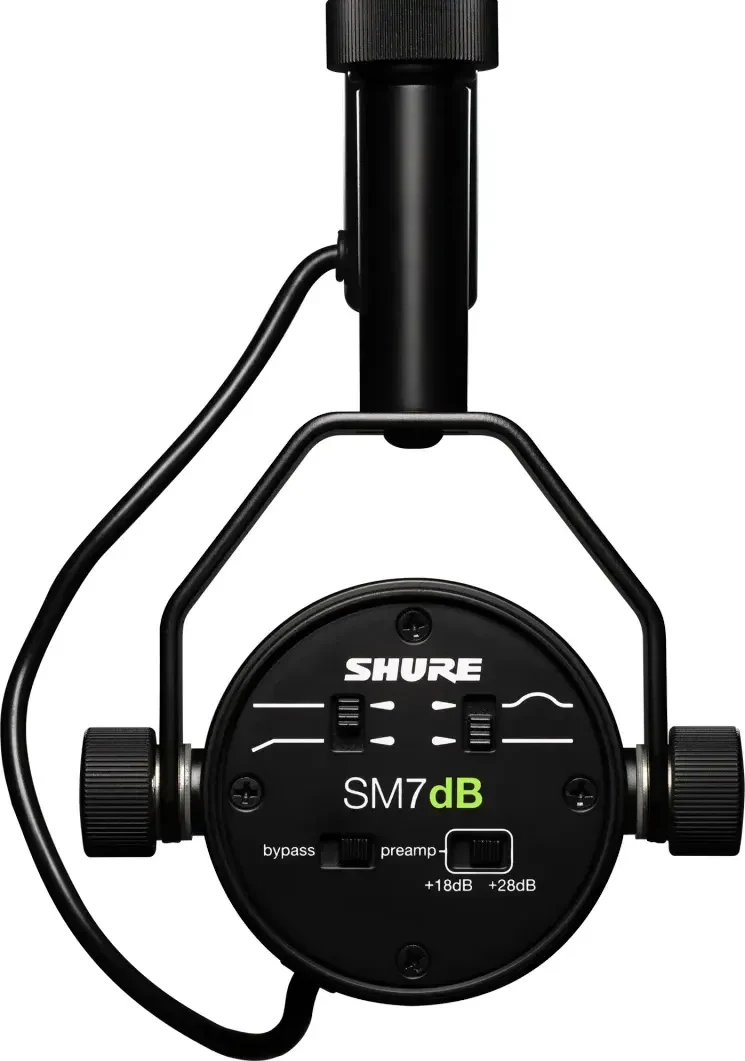
  • Two gain settings, +18 dB or +28 dBSwitch on the back

    Shure says the extra clean gain avoids the hiss many interfaces add when their own preamps are pushed hard to drive an SM7B Manufacturer spec sheet (Shure (newsroom)), checked 2026-10-15

  • Bypass modeWorks as an SM7B

    A switch turns the preamp off and, Shure says, returns the mic to original SM7B performance, so it also works on inputs without phantom power Manufacturer spec sheet (Shure), checked 2026-10-15

  • Boom arms and standsYoke mount

    The yoke has a captive stand nut, and a 3/8" thread adapter comes in the box Manufacturer spec sheet (Shure), checked 2026-10-15

You’ll also need

  • An XLR cableNot in the box

    Shure lists the box contents as the SM7dB, a close-talk windscreen and a 3/8" thread adapter Manufacturer spec sheet (Shure), checked 2026-10-15

  • An audio interface or mixerXLR only

    It is an XLR dynamic microphone with no USB, so it needs an interface, mixer or preamp to reach a computer Manufacturer spec sheet (Shure (newsroom)), checked 2026-10-15

  • A boom arm or mic standNot in the box

    It mounts by its yoke; no arm or stand is supplied Manufacturer spec sheet (Shure), checked 2026-10-15

Key specs

Capsule
Dynamic (moving coil)
Polar pattern
Cardioid
Built-in preamp
Active, switchable +18 dB or +28 dB, with a bypass switch that returns it to original SM7B performance
Phantom power
+48 V required from the interface or mixer to run the preamp; not needed in bypass
Output
XLR only (no USB)
Frequency response
50 Hz to 20 kHz
All 13 specifications
Sensitivity (1 kHz)
-59 dBV/Pa in bypass; -41 dBV/Pa at +18 dB; -31 dBV/Pa at +28 dB
Output impedance
150 Ω in bypass mode; 27 Ω in preamp mode
Switches
Preamp bypass, +18/+28 dB gain, bass roll-off, presence boost
Shielding
Electromagnetic hum shielding, optimised against broadband interference from computer monitors; internal air-suspension shock isolation
Mount
Yoke mount with captive stand nut; 3/8" thread adapter supplied
Weight
837 g
In the box
SM7dB, close-talk windscreen, 3/8" thread adapter; no cable

13 of 13 figures sourced; hover one for its source

Our take

Rory TassellWritten from the sources on this page, not from a loan unit.

Nine of eleven professional reviews recommend it, and the 56 owner reviews read agree: the SM7B's voice sound with a built-in +18 or +28 dB preamp that removes the booster many interfaces needed. Ten sources call it expensive next to the SM7B, it needs +48 V phantom power, and four reviews say an SM7B owner with a clean high-gain interface gains nothing. Buy it instead of an SM7B plus booster; keep the SM7B if your preamp already copes.

What it is

Status, October 2026: current. Shure still lists the SM7dB.

What it is

The SM7dB is a cardioid dynamic microphone from Shure for podcasting, streaming and vocals, announced on 27 September 2023 to mark 50 years of the SM7 line (Shure announcement, Shure product page). It is an SM7B with a Shure-designed active preamp built in, using technology licensed from Cloud, and Shure says it keeps the SM7B's sound signature and construction. The SM7B stays on sale beside it.

The difference is output. The SM7B is a quiet microphone: Shure asks for at least 60 dB of clean gain and warns that many interfaces have only 40 to 50 dB, so owners add a phantom-powered in-line booster such as a Cloudlifter. The SM7dB's preamp adds +18 or +28 dB, chosen with a switch on the back, and draws +48 V phantom power from the interface or mixer. A bypass switch turns the preamp off, and Shure says the microphone then performs as an original SM7B, so it also works on inputs without phantom power. Shure rates sensitivity at -59 dBV/Pa in bypass, -41 dBV/Pa at +18 and -31 dBV/Pa at +28 (SM7dB specification sheet).

The rest matches the SM7B: a 50 Hz to 20 kHz response, a bass roll-off switch and a presence boost, internal air-suspension shock isolation, a pop filter in the windscreen and shielding against hum from computer monitors. It has an XLR output only, so it needs an interface or mixer. It weighs 837 g, and the box holds the microphone, a close-talk windscreen and a 3/8" thread adapter; a cable and a boom arm are extra. For a microphone that plugs straight into a computer, Shure's MV7+ has USB-C beside its XLR output, and the streaming microphone guide compares them.