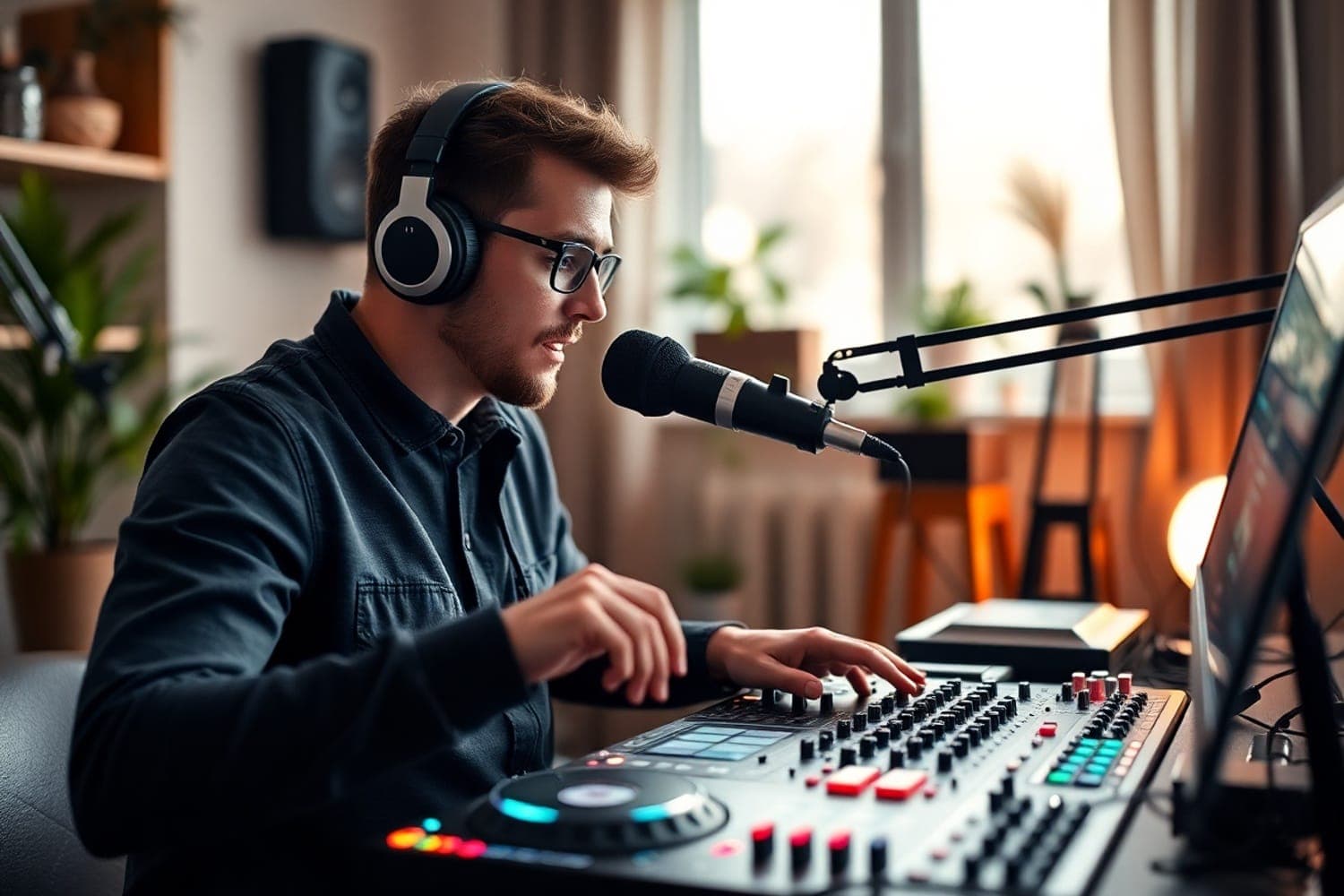
A quality microphone transforms your stream from amateur to professional. Your audience hears your voice more than anything else — if it sounds thin, distant, or noisy, viewers leave. A good streaming mic captures your voice clearly while rejecting background music, room noise, and keyboard sounds.
The choice between USB and XLR determines your setup complexity. USB mics plug directly into your computer — simple and effective. XLR mics require an audio interface or streaming mixer but offer better sound quality and more control. Below are the best options for DJ streamers.
What to Look For
Polar pattern. Cardioid is the standard for streaming — it picks up sound from in front of the mic and rejects noise from the sides and rear. Multi-pattern mics (like the Blue Yeti) offer additional options for interviews or ambient recording, but cardioid is what you'll use 90% of the time.
Connection type. USB mics connect directly to your computer — no additional hardware needed. XLR mics require an audio interface or mixer but offer better sound quality, lower noise, and more flexibility. Choose based on your existing setup and willingness to add hardware.
Built-in processing. Some mics include noise gates, compressors, or gain control that improve your sound without external software. The Elgato Wave:3's Clipguard technology prevents distortion from sudden loud sounds. Built-in processing simplifies your streaming setup.
Build quality and aesthetics. Your mic is on camera. Metal construction is more durable and looks more professional than plastic. Consider how the mic looks in your stream frame — some streamers prefer low-profile designs that don't block their face.
1. Blue Yeti
Editor's Choice
Blue Yeti
| Spec | Detail |
|---|---|
| Type | USB condenser |
| Patterns | Cardioid, figure-8, stereo, omnidirectional |
| Resolution | 16-bit / 48 kHz |
| Features | Gain control, mute button, headphone monitoring |
| Build | Metal body, desk stand included |
The Blue Yeti is the most popular streaming microphone for good reason. Four selectable polar patterns cover every use case — cardioid for solo streaming, figure-8 for interviews, stereo for ambient recording, and omnidirectional for group discussions. The 16-bit/48 kHz resolution captures your voice with clarity and detail.
USB connectivity means zero-latency monitoring through the built-in headphone jack. The gain control knob adjusts sensitivity on the fly — turn it down when your DJ mix is loud, turn it up for quieter moments. The instant mute button is essential for streaming.
The metal construction is durable and looks professional on camera. The included desk stand works out of the box, though most streamers eventually add a boom arm for better positioning. Available in multiple colours to match your setup aesthetic. At a competitive mid-range price, it's the best value streaming mic available.
2. Shure SM7B
Premium Choice
Shure SM7B
| Spec | Detail |
|---|---|
| Type | XLR dynamic |
| Pattern | Cardioid |
| Frequency | 50 Hz – 20 kHz |
| Features | Bass roll-off, presence boost toggles |
| Build | Professional broadcast-grade |
The Shure SM7B is the broadcast industry standard — used by radio hosts, podcasters, and streamers worldwide. The dynamic capsule handles everything from quiet speech to loud reactions without distortion. The cardioid pattern rejects background noise exceptionally well, keeping your DJ mix out of the mic feed.
Built-in bass roll-off and presence boost switches let you shape your voice without external EQ. The electromagnetic shielding prevents hum from nearby computer monitors and electronics — a common problem with sensitive condenser mics.
The SM7B requires an XLR audio interface or mixer with enough gain (the mic needs more gain than most condensers). This adds cost and setup complexity but gives you the highest sound quality on this list. For DJ streamers who invest in their audio chain, the SM7B is the endgame mic.
3. Rode PodMic
Best Value
Rode PodMic
| Spec | Detail |
|---|---|
| Type | XLR dynamic |
| Pattern | Cardioid |
| Frequency | 20 Hz – 20 kHz |
| Output | XLR (balanced) |
| Build | Metal body, internal pop filter |
The Rode PodMic delivers broadcast-quality sound at a fraction of the SM7B's price. The dynamic cardioid capsule provides clear, warm voice reproduction with excellent background noise rejection. The internal pop filter reduces plosive sounds without needing an external screen.
The all-metal body is built for daily use and looks professional on camera. The integrated swing mount makes positioning on a boom arm straightforward. XLR output provides balanced audio that's compatible with any audio interface or mixer.
The PodMic requires an audio interface (it's XLR, not USB). If you already have an interface or streaming mixer, this is the best-sounding mic at a budget price. The sound is slightly thinner than the SM7B but significantly better than most USB mics at the same price.
Other Streaming Mics Worth Considering
Elgato Wave:3 — A premium USB condenser with proprietary Clipguard technology that prevents distortion from sudden loud sounds. Wave Link software mixes up to 8 audio sources into your stream. Internal pop filter. 96 kHz / 24-bit resolution. The most feature-rich USB mic for streamers.
Sennheiser MKE 400 — A compact shotgun mic for mobile streaming. Super-cardioid pattern rejects ambient noise aggressively. TRRS connectivity for smartphones and tablets. Lightweight and portable. Best for DJs who stream from different locations or on the go.
FAQs
Do I need a microphone for streaming DJ sets?
If you interact with your audience during streams (chat, announcements, shoutouts), yes. A quality microphone makes your voice clear and professional. If you only stream your DJ mix without talking, your DJ mixer's USB output is sufficient. Most successful DJ streamers interact with chat, which requires a dedicated mic.
USB or XLR microphone for streaming?
USB microphones are simpler — plug directly into your computer with no additional hardware needed. XLR microphones require an audio interface or mixer but offer better sound quality and more flexibility. For beginners and solo streamers, USB is the easiest choice. For DJs with existing audio interfaces or streaming mixers, XLR provides the best audio quality.
What polar pattern is best for streaming?
Cardioid is best for streaming. A cardioid polar pattern picks up sound from directly in front of the microphone and rejects sound from the sides and rear — ideal for isolating your voice from background music and room noise. Avoid omnidirectional patterns for streaming, as they pick up everything in the room.
How do I reduce background noise in my stream?
Use a cardioid microphone positioned close to your mouth (6–12 inches). Enable noise gate settings in your streaming software (OBS, Streamlabs) to cut audio when you're not speaking. A physical pop filter reduces plosive sounds. Some microphones (like the Elgato Wave:3) include built-in noise processing that helps automatically.
Can I use my streaming microphone for podcasting?
Yes. Any microphone suitable for streaming works equally well for podcasting. The Blue Yeti and Rode PodMic are both popular choices for podcasters and streamers. The main difference is setup — podcasting typically benefits from a boom arm to position the mic closer to your mouth, while streaming setups often use desk stands.
Verdict
The Blue Yeti is the best streaming microphone for most DJs. USB simplicity, four polar patterns, built-in monitoring, and a metal build at a competitive price make it the most versatile and practical option. Plug in and start streaming.
For the best possible sound quality, the Shure SM7B is the broadcast standard — but requires an XLR audio interface with adequate gain. For budget-conscious streamers who already have an audio interface, the Rode PodMic delivers excellent sound at a fraction of the SM7B's price.
Your microphone is the single biggest audio quality upgrade you can make to your stream. Invest here before spending on cameras, lighting, or streaming software upgrades.