A keyboard is the most versatile instrument a beginner can learn. The layout is logical, the feedback is immediate, and the skills transfer directly to music production, DJing, and understanding music theory. Modern beginner keyboards pack impressive sound quality, built-in lessons, and connectivity features at affordable prices.
The right keyboard depends on your goal. If you want to learn piano, look for 61+ keys with touch sensitivity and lesson modes. If you want to produce beats and make music on a computer, a MIDI controller with pads and knobs is more useful. Below are the best options across both categories.
What to Look For
Key count. 61 keys covers most learning and playing needs. 88 keys replicates a full piano for serious students. 25–49 keys is standard for MIDI production controllers. More keys means more range but also more size and weight.
Touch sensitivity. Touch-sensitive keys respond to how hard you press — play softly for quiet notes, press harder for loud notes. This is essential for expressive playing and realistic piano feel. Keyboards without touch sensitivity play every note at the same volume.
Sound quality and variety. Built-in sounds range from 100 to 800+ across different keyboards. Quality matters more than quantity — a keyboard with 200 excellent sounds is better than one with 800 mediocre ones. Listen to piano, organ, and string sounds when comparing.
Learning features. Built-in lessons, LCD displays showing notes, and app connectivity help beginners learn faster. Some keyboards include lesson modes that split the keyboard into student and teacher sections. Others connect to learning apps for guided instruction.
Connectivity. USB output enables MIDI connectivity for music production on a computer. AUX input lets you play along with music from your phone. Headphone output is essential for practice without disturbing others. Line output connects to speakers or a PA system.
1. Yamaha PSR-E373
Editor's Choice
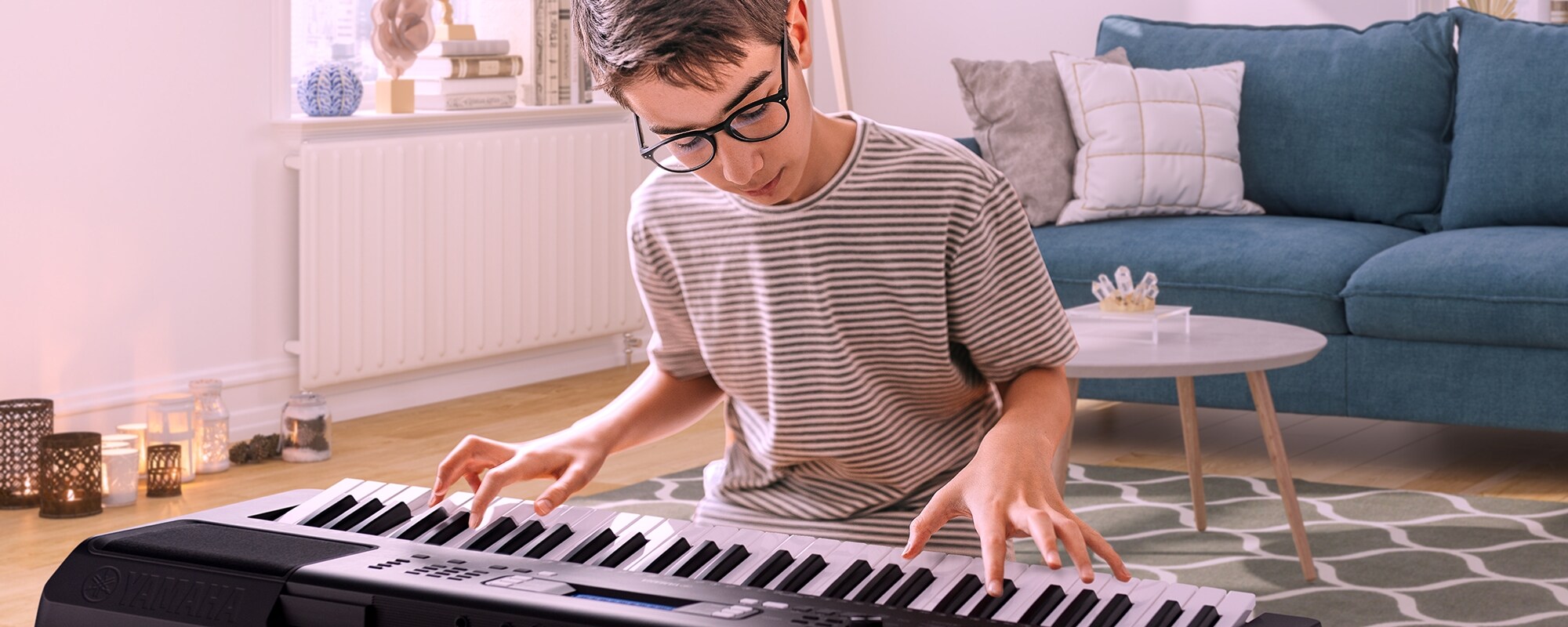
Image: Yamaha Corporation
| Spec | Detail |
|---|---|
| Keys | 61 (touch-sensitive) |
| Sounds | 622 voices |
| Features | Lesson mode, LCD display, AUX input |
| Connectivity | USB MIDI, headphone, line out |
| Power | AC adapter or batteries |
The Yamaha PSR-E373 is the best all-round beginner keyboard. 61 touch-sensitive keys cover the full range needed for learning. 622 built-in voices include excellent piano, organ, and orchestral sounds. The lesson mode with LCD display guides beginners through fundamentals step by step.
USB MIDI connectivity lets you use the keyboard as a controller for music production software — a natural progression as skills develop. The AUX input lets you play along with music from your phone. Battery operation makes it portable for practice anywhere.
Yamaha's build quality is consistently reliable. The keyboard is lightweight and compact enough for a desk or bedroom setup but feature-rich enough to remain useful as skills grow beyond the beginner stage. At a mid-range price, it offers the best balance of features, sound quality, and value.
2. Novation Launchkey Mini
Best for Production
Novation Launchkey Mini MK3
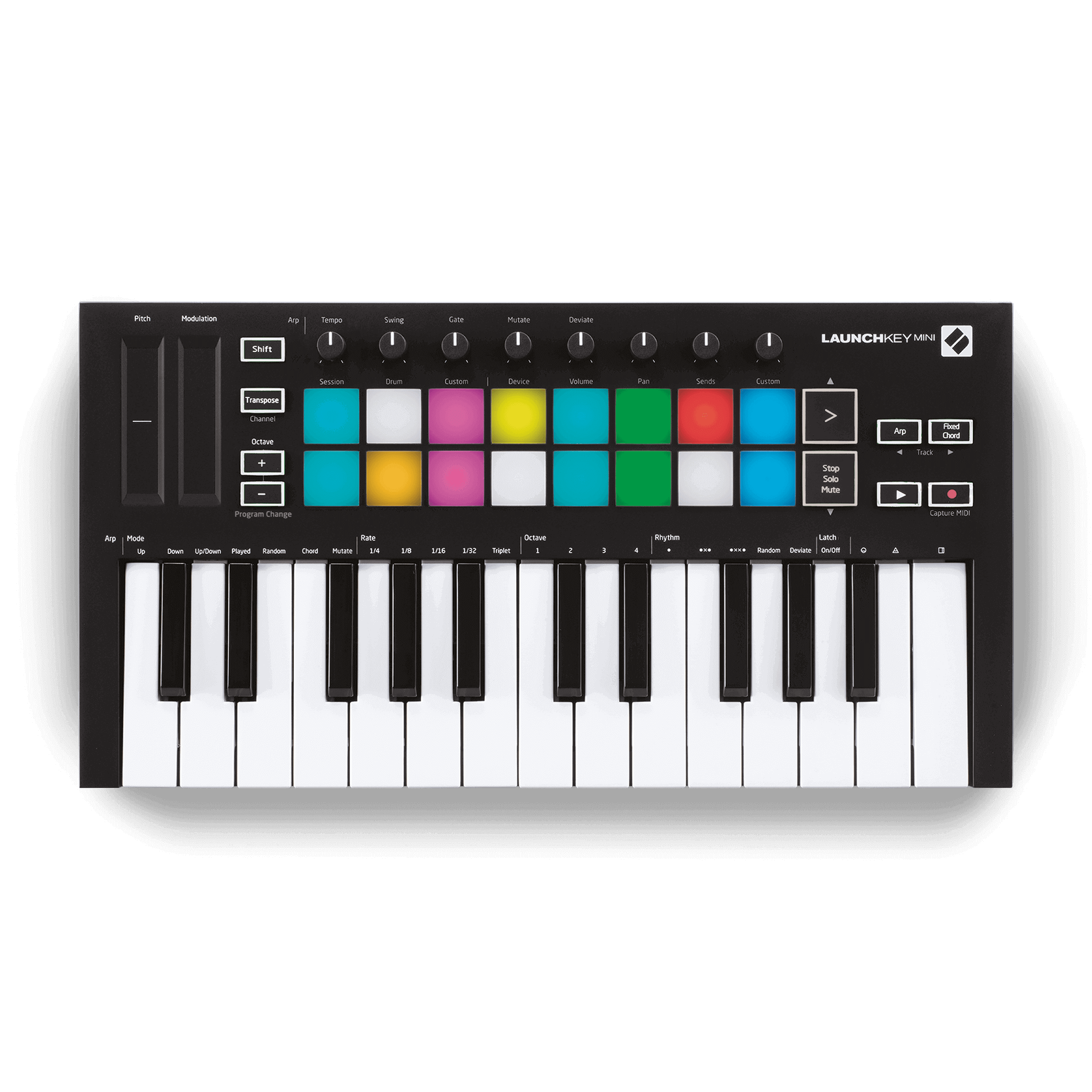
Image: Novation / Focusrite Group
| Spec | Detail |
|---|---|
| Keys | 25 (mini, velocity-sensitive) |
| Pads | 16 velocity-sensitive RGB pads |
| Controls | 8 knobs, transport controls |
| Software | Ableton Live Lite, Pro Tools included |
| Connectivity | USB (bus-powered) |
The Novation Launchkey Mini is the best keyboard for DJs and producers who want to make beats and control production software. 25 mini keys with velocity sensitivity handle melody and chord input. 16 RGB pads trigger samples, drums, and clips. 8 programmable knobs control effects and parameters.
Includes Ableton Live Lite and Pro Tools — complete production software to get started immediately. Plug-and-play USB connection (bus-powered, no adapter needed). Arpeggiator mode creates rhythmic patterns from held chords. Deep integration with Ableton, Logic, and other DAWs.
This isn't a piano practice keyboard — the 25 mini keys are too small and too few for learning traditional piano. It's a production tool designed for finger drumming, sample triggering, and controlling virtual instruments. For DJs moving into production, it's the ideal bridge.
3. Casio SA-77
Best Budget
| Spec | Detail |
|---|---|
| Keys | 44 (non-weighted) |
| Sounds | 100 voices |
| Features | 5 drum pads, 50 rhythms |
| Power | 6x AA batteries or AC adapter |
| Size | Compact, kid-friendly |
The Casio SA-77 is the most affordable entry point for keyboard beginners, particularly children. 44 keys and 100 sounds provide enough range and variety for learning basics. 5 built-in drum pads and 50 rhythm tracks let beginners play along with accompaniment.
Battery operation (6x AA) makes it completely portable — practice anywhere without needing an outlet. The compact size fits on any desk or table. The price makes it a low-risk purchase for parents testing whether their child will stick with keyboard practice.
The limitations are expected at this price: fewer keys (44 vs. 61), no touch sensitivity, and sound quality that doesn't match Yamaha or Casio's higher models. But as a first keyboard for young beginners, it delivers enough to build foundational skills at a minimal investment.
Other Keyboards Worth Considering
Casio Casiotone CT-S500 — 61 touch-sensitive keys with 800+ sounds, Bluetooth speaker capability, and Casio's Horizontal Bass-Reflex speaker system. Line-out ports for connecting to a PA. App-connected lessons. A feature-packed step up from the SA-77 at a mid-range price.
Donner DEP-20 — A full 88-key digital piano with weighted hammer-action keys and three pedals. 238 sounds. USB MIDI output. Includes a wooden furniture stand. The most piano-like experience on this list — ideal for beginners committed to learning traditional piano technique.
Alesis Recital — 88 touch-adjustable weighted keys with 5 premium sounds and 60 built-in lessons. Battery or AC powered. USB MIDI output. Lesson modes split the keyboard for teacher/student practice. The best 88-key option for beginners who want a full-size piano experience on a budget.
FAQs
How many keys do I need on a beginner keyboard?
61 keys is the standard for beginner keyboards — enough to learn piano basics and play most songs. 88-key keyboards replicate a full piano and are better for serious piano students who want to develop proper technique. 25–44 key keyboards are designed for MIDI production rather than piano learning.
Do I need weighted keys on a beginner keyboard?
Not necessarily. Weighted keys simulate the feel of an acoustic piano, which is important for developing proper finger technique. However, they add cost and weight. Semi-weighted or synth-action keys are fine for beginners exploring music and production. If the goal is specifically to learn piano, weighted keys are a worthwhile investment.
What is a MIDI keyboard?
A MIDI keyboard sends note and control data to a computer rather than producing sound on its own. It's used for music production — playing virtual instruments, programming beats, and controlling DAW parameters. MIDI keyboards like the Novation Launchkey Mini are designed for production workflows, not piano practice.
Can I learn piano on a keyboard?
Yes. A keyboard with at least 61 keys and touch-sensitive action is sufficient for learning piano basics. Many beginner keyboards include built-in lessons and display guides. For serious classical piano study, an 88-key keyboard with weighted or hammer-action keys more closely replicates the acoustic piano experience.
What is the best keyboard for music production?
For music production, a MIDI controller like the Novation Launchkey Mini or Akai MPK Mini is more useful than a traditional keyboard. These include pads, knobs, and DAW integration alongside keys. They're designed for triggering samples, playing virtual instruments, and controlling your production software rather than playing piano.
Verdict
The Yamaha PSR-E373 is the best beginner keyboard for most people. 61 touch-sensitive keys, 622 sounds, built-in lessons, and USB MIDI connectivity cover learning, playing, and production needs at a fair price.
For DJs and producers who want to make beats, the Novation Launchkey Mini provides keys, pads, knobs, and DAW software in a compact, affordable package. For the tightest budgets, the Casio SA-77 gets kids and absolute beginners started at minimal cost.
Choose based on your goal: piano learning (61+ keys, touch sensitivity, lessons) or music production (MIDI controller with pads and knobs). Either path develops musical skills that enhance your DJing.