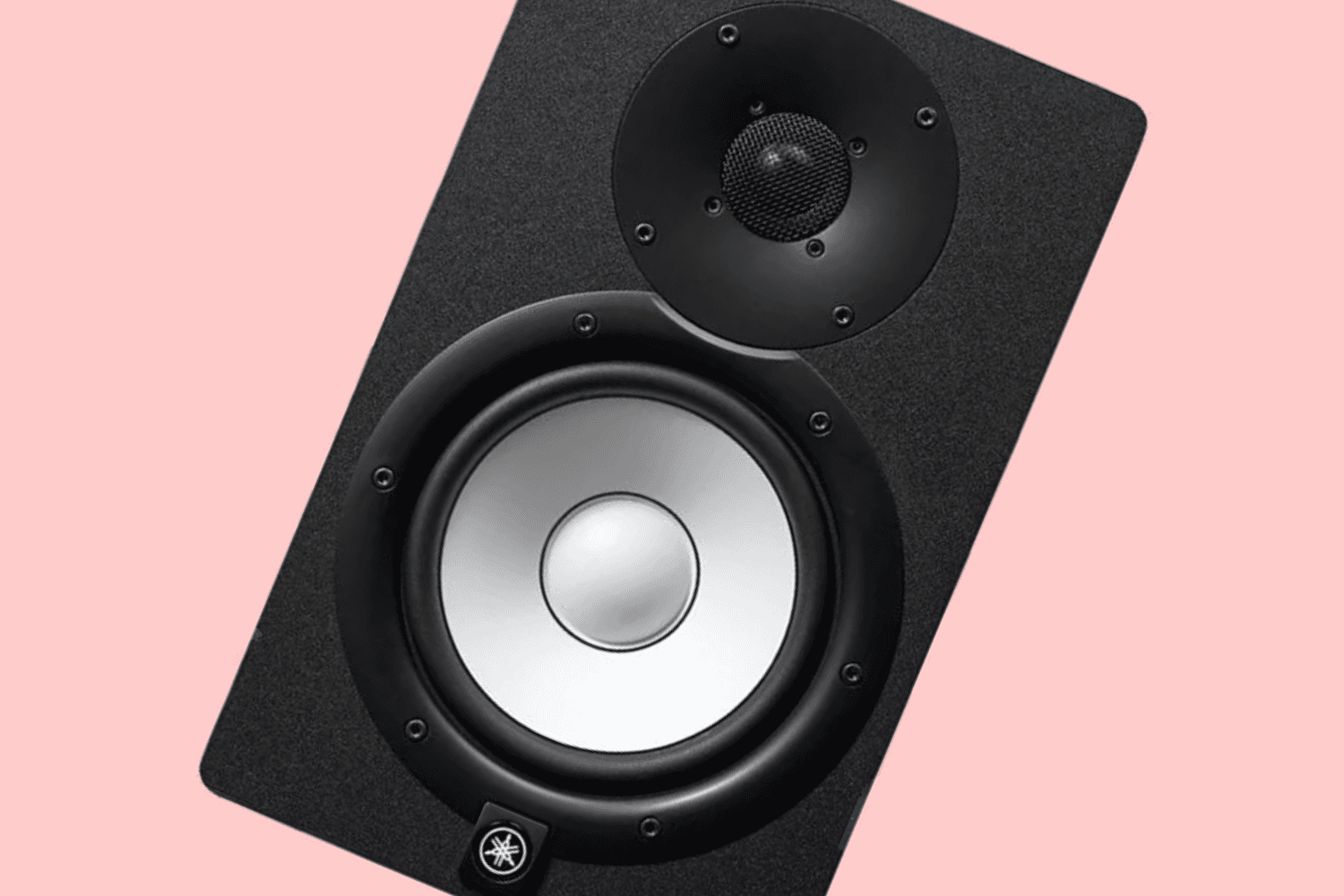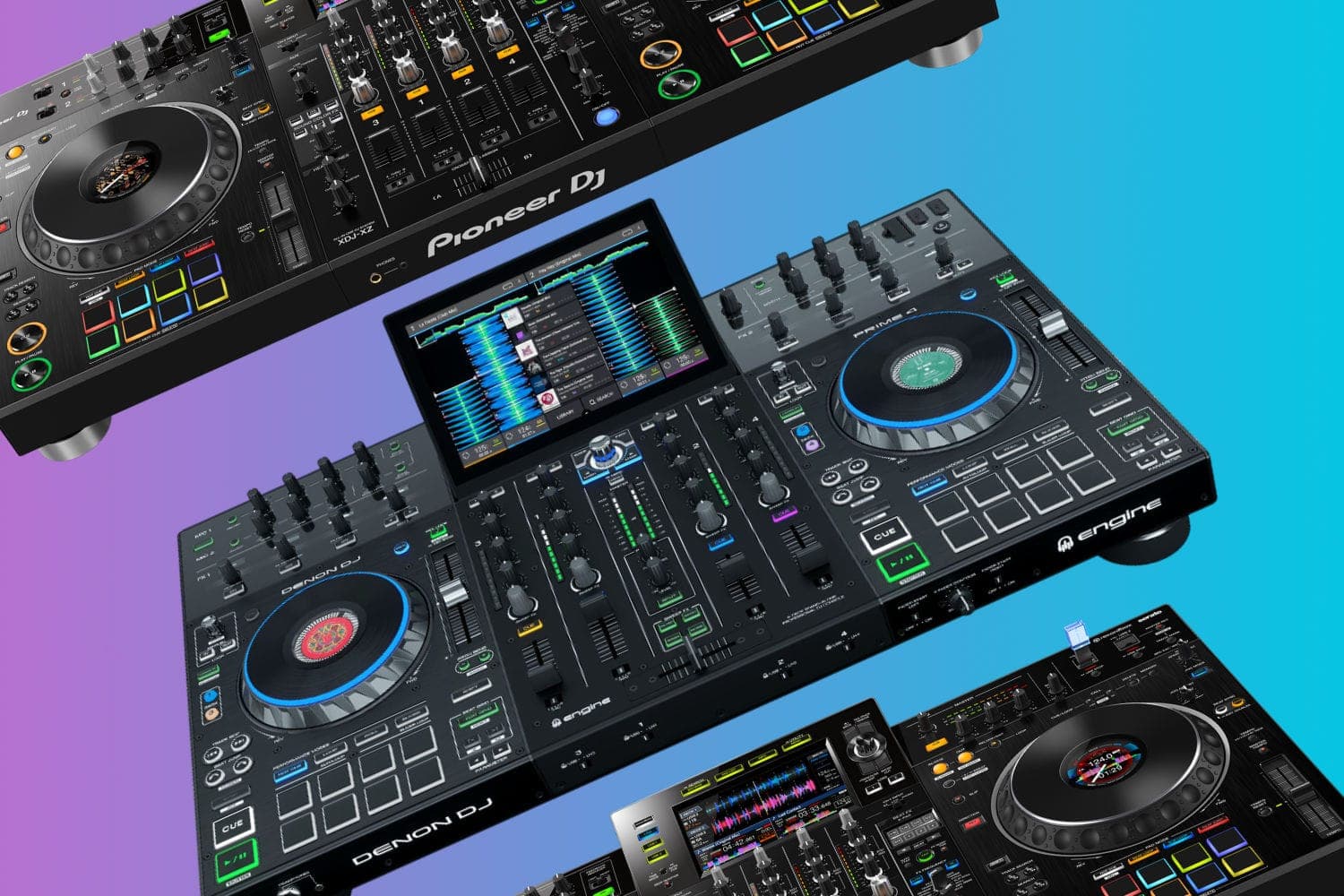
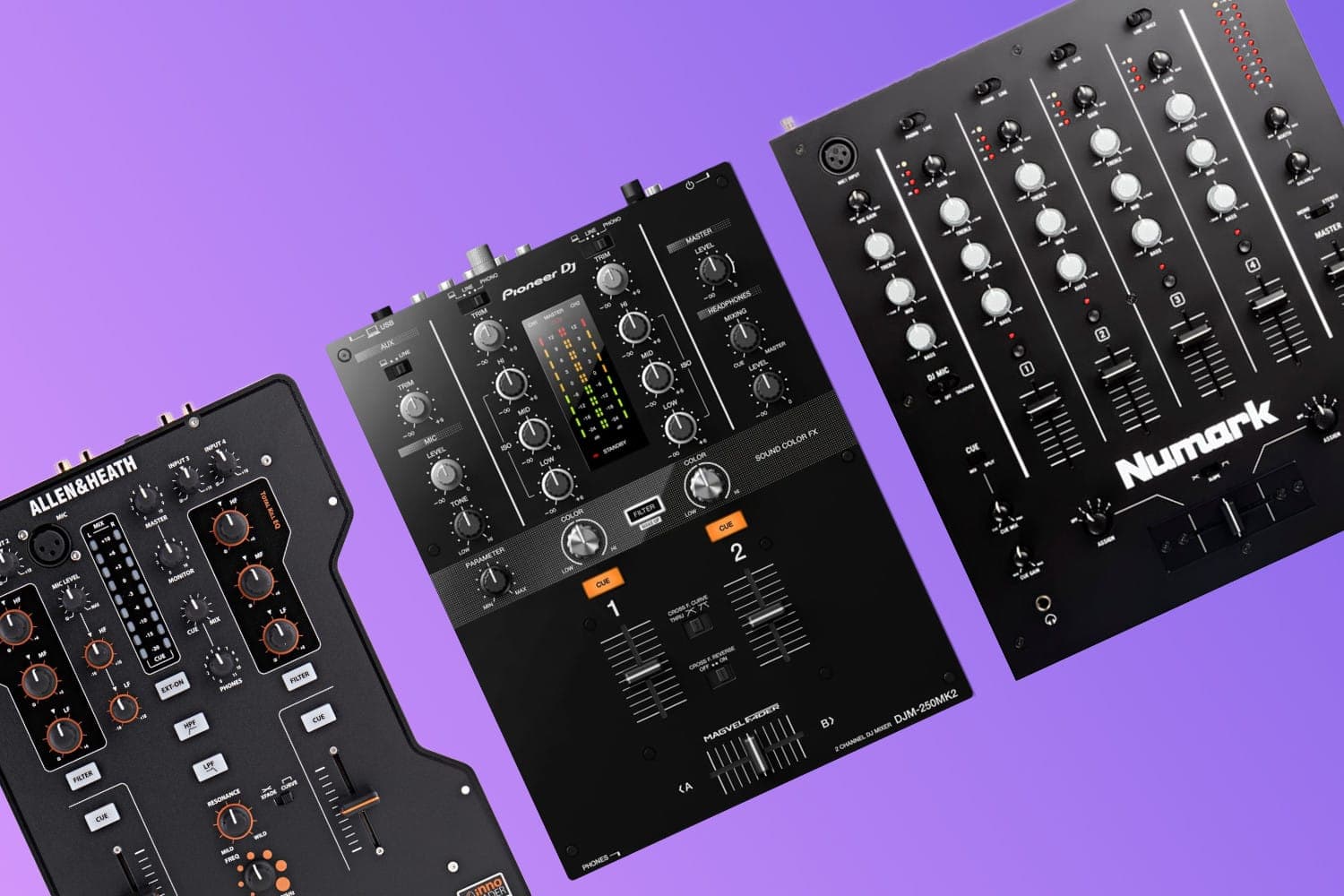
A DJ mixer is the control centre of a turntable or CDJ setup. It lets you blend audio from two or more sources, control volume and EQ per channel, apply effects, and shape transitions between tracks. If you use turntables, CDJs, or media players, the mixer is where everything comes together.
Note: if you use a DJ controller, you don't need a separate mixer — controllers have the mixer built in. Standalone mixers are for setups where the playback devices and mixer are separate units.
What to Look For
Channel count. Two channels is enough for most beginners — you mix between two sources, which is how the vast majority of DJing works. Four channels are useful if you want to layer tracks or connect additional sources like a sampler or microphone, but they add complexity. Start with two.
Crossfader quality. The crossfader is the most-used component on any mixer. Cheap crossfaders feel scratchy, introduce audio bleed, and wear out quickly. Pioneer's Magvel fader and Rane's magnetic faders are the industry standards. At minimum, look for a mixer with a replaceable crossfader.
EQ type. Most beginner mixers have 3-band EQ (low, mid, high) per channel. Some offer isolators, which can cut a frequency band completely rather than just reducing it — useful for clean transitions and scratching. EQ isolators are a significant upgrade over basic EQ knobs.
Built-in sound card. A USB sound card lets you connect the mixer to a laptop for recording mixes, using DJ software, or running DVS (Digital Vinyl Systems). This is increasingly standard but not universal at entry-level prices.
Effects. Some mixers include onboard effects (reverb, delay, echo, filter). Built-in effects are a nice bonus but not essential for beginners — focus on mastering EQ and transitions before adding effects to your workflow.
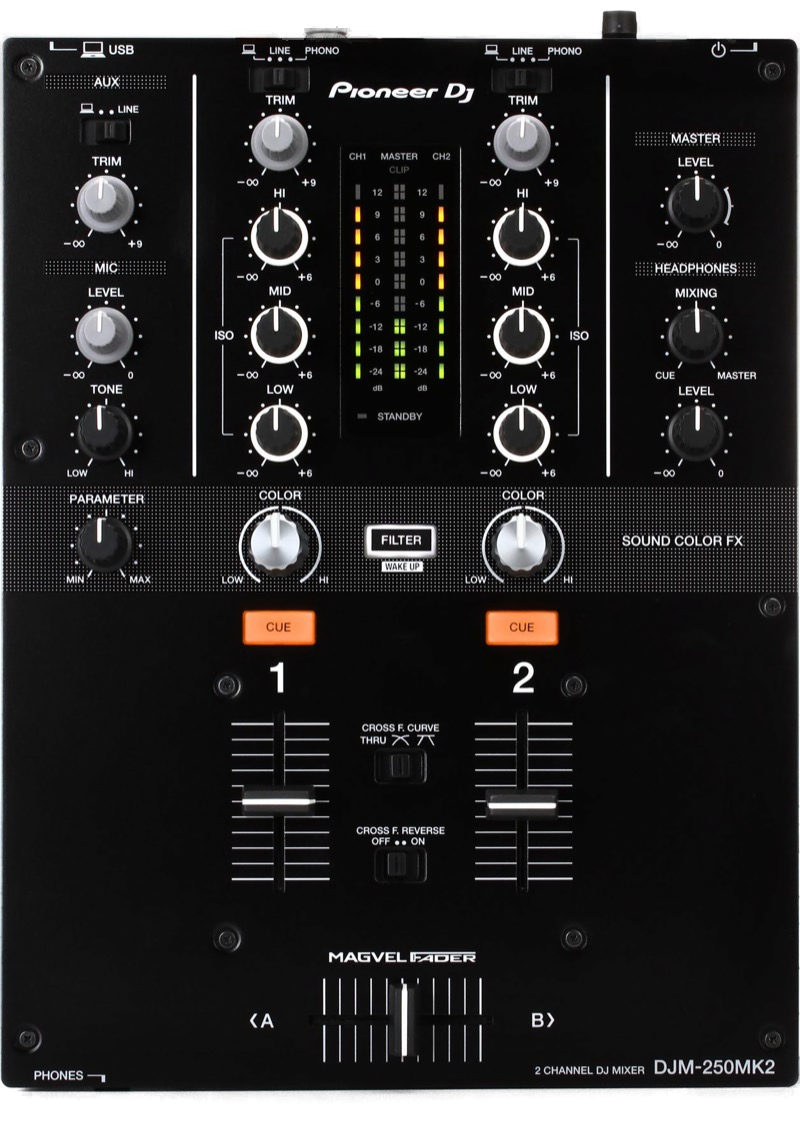
1. Pioneer DJ DJM-250 MK2
Editor's Choice
| Spec | Detail |
|---|---|
| Channels | 2 |
| Crossfader | Magvel |
| EQ | 3-band isolator |
| Sound Card | USB (Rekordbox DVS ready) |
| Connectivity | 2x phono/line, master XLR, headphone |
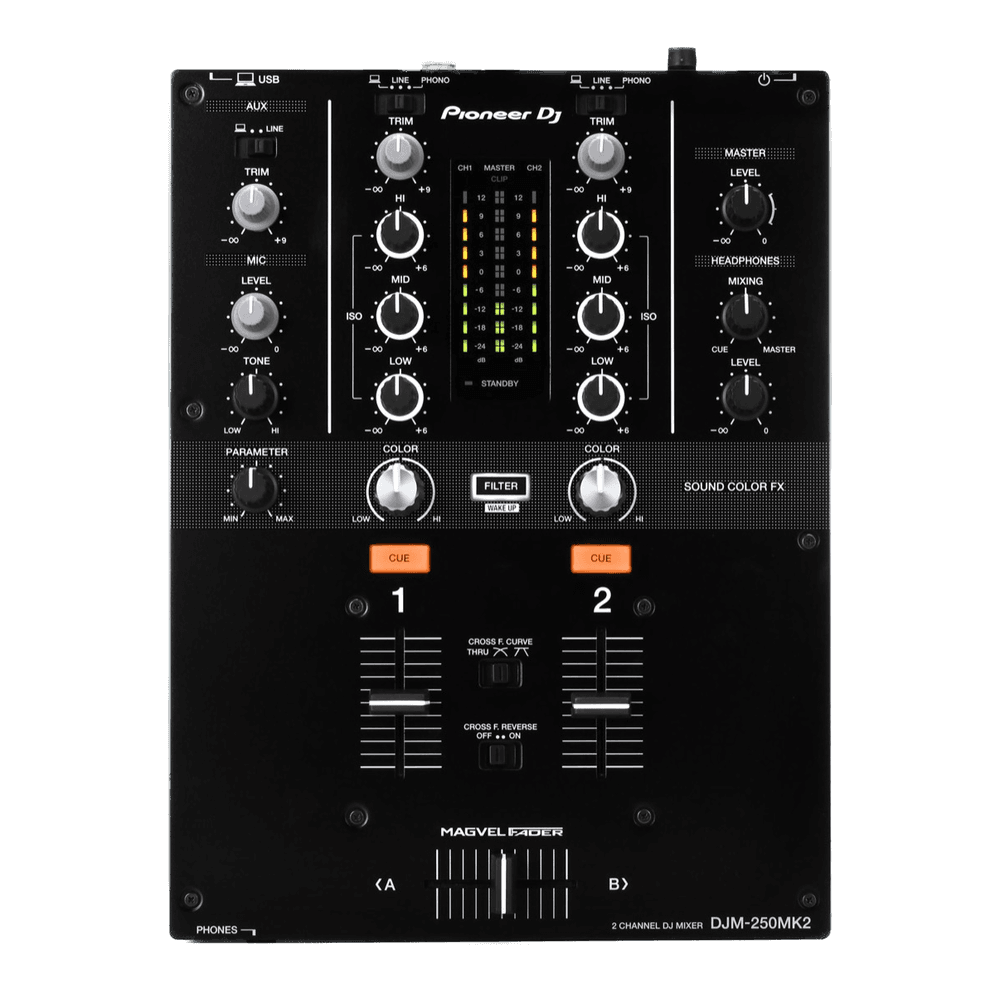
The Pioneer DJ DJM-250 MK2 is the natural entry point for DJs who plan to play on Pioneer equipment at clubs. The layout, EQ behaviour, and sound characteristics mirror Pioneer's professional DJM lineup, so every technique you develop transfers directly to club gear.
The Magvel crossfader is the same design used in Pioneer's flagship mixers — smooth, durable, and precise. Three-band isolators (not just EQ) let you fully cut frequencies during transitions, which sounds dramatically cleaner than basic EQ knobs. The Sound Colour FX filter gives you one-knob access to filter sweeps.
The built-in USB sound card supports Rekordbox DVS, meaning you can use timecode vinyl or CDs to control digital tracks through the mixer. This is included at no additional cost — competing setups require separate hardware. The sound card also functions as an audio interface for recording mixes.
At north of $400 as of mid-2026, it's the most cost-effective way to get Pioneer's professional sound quality and build in a 2-channel mixer. There's nothing here that will hold you back as your skills develop.
Pioneer DJ DJM-250MK2
Outstanding value for beginners — flagship Magvel crossfader and rekordbox DVS at a home-friendly price.
2. Allen & Heath Xone:24
Best Sound Quality
| Spec | Detail |
|---|---|
| Channels | 2 + 1 (mic/aux) |
| Crossfader | Mini innoFADER, fitted as standard |
| EQ | 3-band with kill |
| Filter | Xone VCF (analogue, resonant) |
| Sound Card | None — use an external interface |
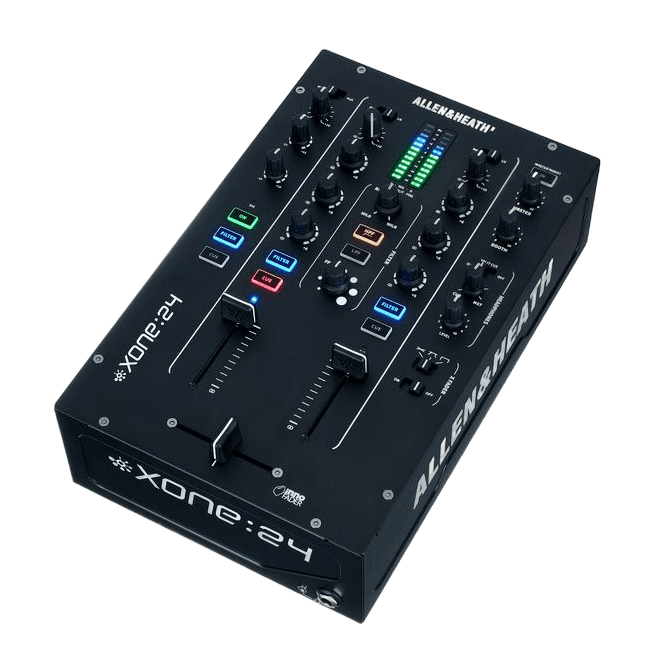
Allen & Heath built its reputation on analogue sound quality, and the Xone:24 — the current version of the classic Xone:23 — carries it at an entry-level price. The real draw is the VCF (Voltage Controlled Filter) with resonance: filter sweeps that sound richer and more musical than the digital filters on rival mixers, which is exactly why the Xone line is a long-standing favourite for house and techno. The 2+1 layout — two full channels plus a third mic/aux channel — gives you more routing flexibility than a plain 2-channel box, and build quality is excellent — solid faceplate, reassuring knobs, backlit controls.
The trade-off is connectivity. There's no USB sound card built in, so if you want to run DVS or record to a laptop you'll need a separate audio interface. That's a real consideration if an all-in-one setup matters to you. But for DJs who care most about how the mix actually sounds — filter and EQ character over brand ecosystem — nothing else here comes close.
Allen & Heath Xone:24
Class-leading analogue sound and filter character at a beginner price — just bring your own audio interface.
3. Numark M6 USB
Best 4-Channel
| Spec | Detail |
|---|---|
| Channels | 4 |
| Crossfader | Replaceable |
| EQ | 3-band per channel |
| USB | Audio interface |
| Connectivity | 2x phono/line, 4x line, mic, booth, record |
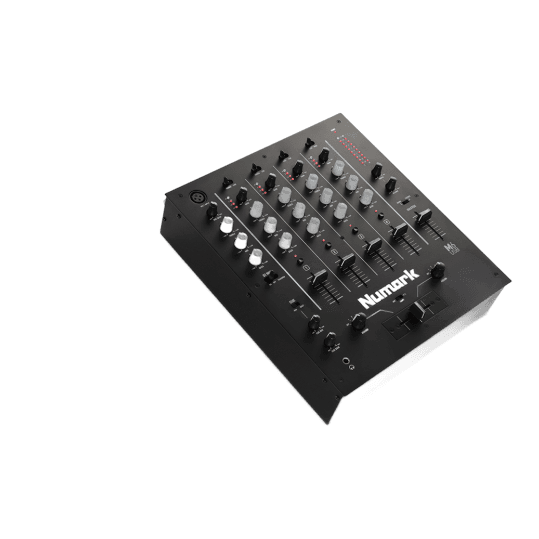
The Numark M6 USB is the most affordable way to get a genuine 4-channel DJ mixer. Four independent channel strips with dedicated faders give you full hardware mixing capability for four audio sources simultaneously — turntables, CDJs, media players, or a combination.
Each channel has 3-band EQ, and all four accept line-level sources — but only two channels have switchable phono/line inputs, so a maximum of two turntables can connect directly. A dedicated microphone input with its own gain control makes it useful for mobile DJs who MC events. Master, booth, record, and headphone outputs cover all standard connectivity needs. The USB connection functions as an audio interface for recording.
The replaceable crossfader is a practical feature — when faders wear out (and they will with heavy use), you can swap them without replacing the entire mixer. LED level monitoring on each channel provides visual feedback during mixing.
Build quality and fader feel are basic — this is a do-the-basics box, not a refined one — and there's no DVS certification or onboard effects. But for beginners who want four channels for layering tracks or connecting multiple sources for around $219 as of mid-2026, nothing else gets you there for the money.
Numark M6 USB
The most affordable real four-channel mixer — do-the-basics, but unbeatable value if you need the channels.
4. Reloop RMX-10 BT
Best for Mobile
| Spec | Detail |
|---|---|
| Channels | 2 |
| Input | Bluetooth + line/phono |
| EQ | 3-band per channel |
| Crossfader | Replaceable 45mm, fixed curve |
| Best for | Casual and mobile gigs |
The Reloop RMX-10 BT is a straightforward 2-channel mixer with one feature that punches above its price: Bluetooth input. Being able to pull audio wirelessly from a phone or laptop is genuinely useful for casual sets, warm-ups, and mobile gigs where hauling a second source or fiddling with cables isn't worth it. The rest is sensible and beginner-friendly — 3-band EQ per channel, a user-replaceable 45mm crossfader (fixed curve, with an Innofader upgrade path), standard line and phono connectivity.
Bluetooth adds a little latency — and owners report the link can occasionally drop out — so it's not something you'd beat-match on for a club set, and the feature list is light on pro extras like onboard effects or a sound card. That's the point, though — this is aimed at hobbyists and mobile DJs who value convenience over club-grade specs. If wireless input solves a real problem for how you play, nothing else here does it as cheaply.
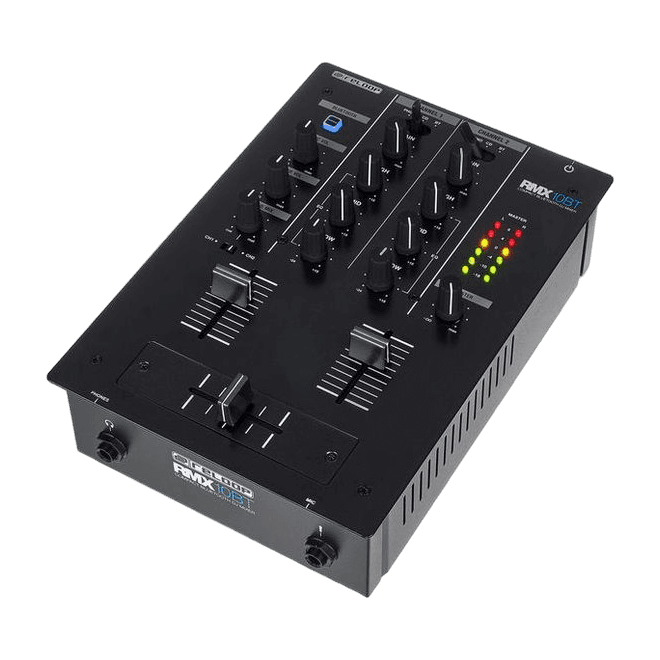
Reloop RMX-10 BT
Wireless input makes it a smart, cheap pick for hobbyists and mobile DJs — not a club mixer.
5. Numark M2
Cheapest
| Spec | Detail |
|---|---|
| Channels | 2 |
| Crossfader | Replaceable, reverse + slope |
| EQ | 3-band per channel |
| Sound Card | None |
| Best for | Pure practice setups |
The Numark M2 is the cheapest way to get a real 2-channel mixer with the controls that matter for scratching — a replaceable crossfader plus fader reverse and slope adjustment, so you can dial in a sharp cut for scratch work. For a first practice mixer paired with a couple of turntables, it does the job without asking for much money.
The compromises are exactly what you'd expect at this price. There's no USB, no effects, and the components feel their price point — knobs and faders that get you started rather than ones you'll keep forever. It's not a mixer you'll gig on for years, but as a low-risk way to learn the fundamentals before spending more, it's hard to argue with.
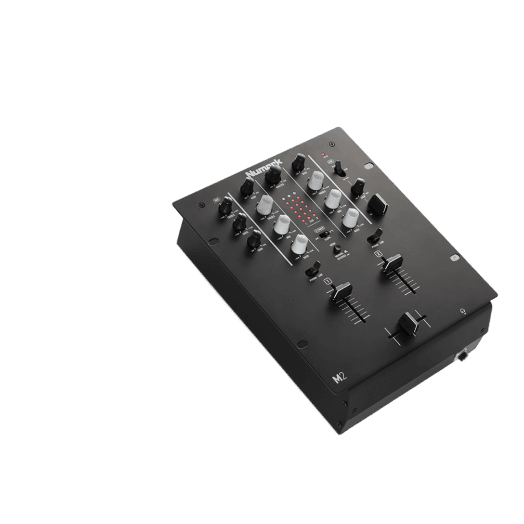
Numark M2
A low-risk first scratch mixer — cheap, simple and honest about what it is.
6. Pioneer DJ DJM-450
Best Step-Up
| Spec | Detail |
|---|---|
| Channels | 2 |
| Crossfader | Magvel |
| EQ | 3-band isolator |
| Sound Card | USB (DVS-ready) |
| Effects | Beat FX |
If your budget stretches further, the Pioneer DJ DJM-450 is effectively a 2-channel version of the club-standard DJM-900. You get Beat FX, dual USB-capable DVS support, the Magvel crossfader, and — crucially — the layout and feel of a proper club mixer, so everything you learn transfers straight to the gear you'll find in a booth. For a beginner who already knows they're serious, it's the one on this list you're least likely to outgrow.
The catch is simply price and channel count: it's the most expensive mixer here and, like the DJM-250 MK2, still only two channels. If you want Pioneer's club sound and effects without stepping up to a four-channel flagship, this is the sweet spot.
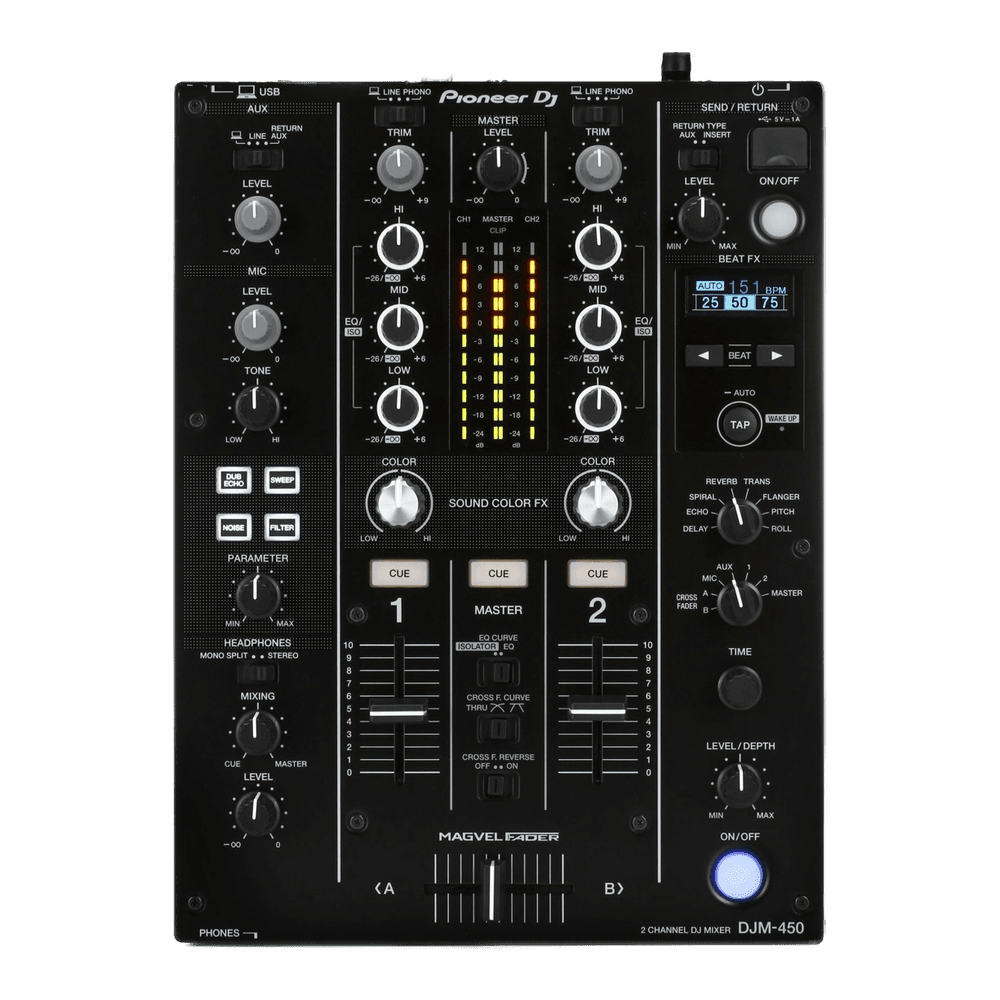
Pioneer DJ DJM-450
DJM-900NXS2 DNA in a budget-friendly 2-channel package — the best value pro mixer available.
Also Worth Considering
Behringer DJX750 — A 5-channel mixer with built-in effects (flanger, phaser, echo, filter) at a budget price. Good for DJs who want onboard effects without buying a separate unit, though the sound and build are a step below the picks above.
Reloop RMX-22i — A 2+1 channel mixer with tablet connectivity and four DSP colour effects, Innofader-upgradeable. Interesting for DJs blending an iPad-based setup with traditional sources.
FAQs
What is the best DJ mixer for beginners?
The Pioneer DJ DJM-250 MK2 is the best overall beginner mixer. It offers professional sound quality from Pioneer's Magvel crossfader, a built-in sound card with Rekordbox DVS support, and a clean 2-channel layout that's intuitive to learn without being limiting. It's the natural choice for DJs who plan to play on Pioneer equipment at clubs.
Do I need a DJ mixer if I have a controller?
No. A DJ controller has a mixer built in. Standalone mixers are for DJs using separate turntables, CDJs, or media players as their audio sources. If you use a controller like the DDJ-FLX4 or DDJ-1000, you don't need a separate mixer — it's already integrated into the controller.
What is the difference between a 2-channel and 4-channel mixer?
A 2-channel mixer lets you connect and mix between two audio sources (e.g., two turntables or CDJs). A 4-channel mixer supports four sources simultaneously, which is useful for DJs who layer multiple tracks or use additional inputs like samplers. Beginners should start with 2 channels — you'll spend months learning to blend two tracks before needing four.
How much should I spend on a beginner DJ mixer?
Budget $150–$400 for a quality beginner mixer. Under $150 gets you basic functionality but often with compromised sound quality. The $200–$400 range delivers clean audio, reliable crossfaders, and features that won't hold you back as your skills develop. Spending more than $400 is unnecessary until you're regularly gigging.
Can I use a DJ mixer as an audio interface?
Many modern DJ mixers include a built-in USB audio interface, allowing you to connect directly to a laptop for recording or running DJ software. The Pioneer DJM-250 MK2 includes a sound card with Rekordbox DVS support. Check that any mixer you're considering has USB audio output if you plan to record mixes or use DVS.
Verdict
The Pioneer DJ DJM-250 MK2 is the best DJ mixer for beginners. Pioneer's Magvel crossfader, 3-band isolators, built-in Rekordbox DVS sound card, and a layout that mirrors professional club gear make it the most well-rounded choice at north of $400 as of mid-2026.
For DJs who prioritise audio quality and analogue filter character, the Allen & Heath Xone:24 delivers professional sound at entry-level pricing. The Numark M6 USB is the best budget option if you need four channels, the Numark M2 is the cheapest way to start scratching, and the Reloop RMX-10 BT adds wireless input for mobile sets. If your budget stretches, the Pioneer DJ DJM-450 gives you a genuine club feel you won't outgrow.
Start with two channels, master your transitions and EQ technique, and upgrade when the gear — not your skills — becomes the limiting factor.