Your first turntable
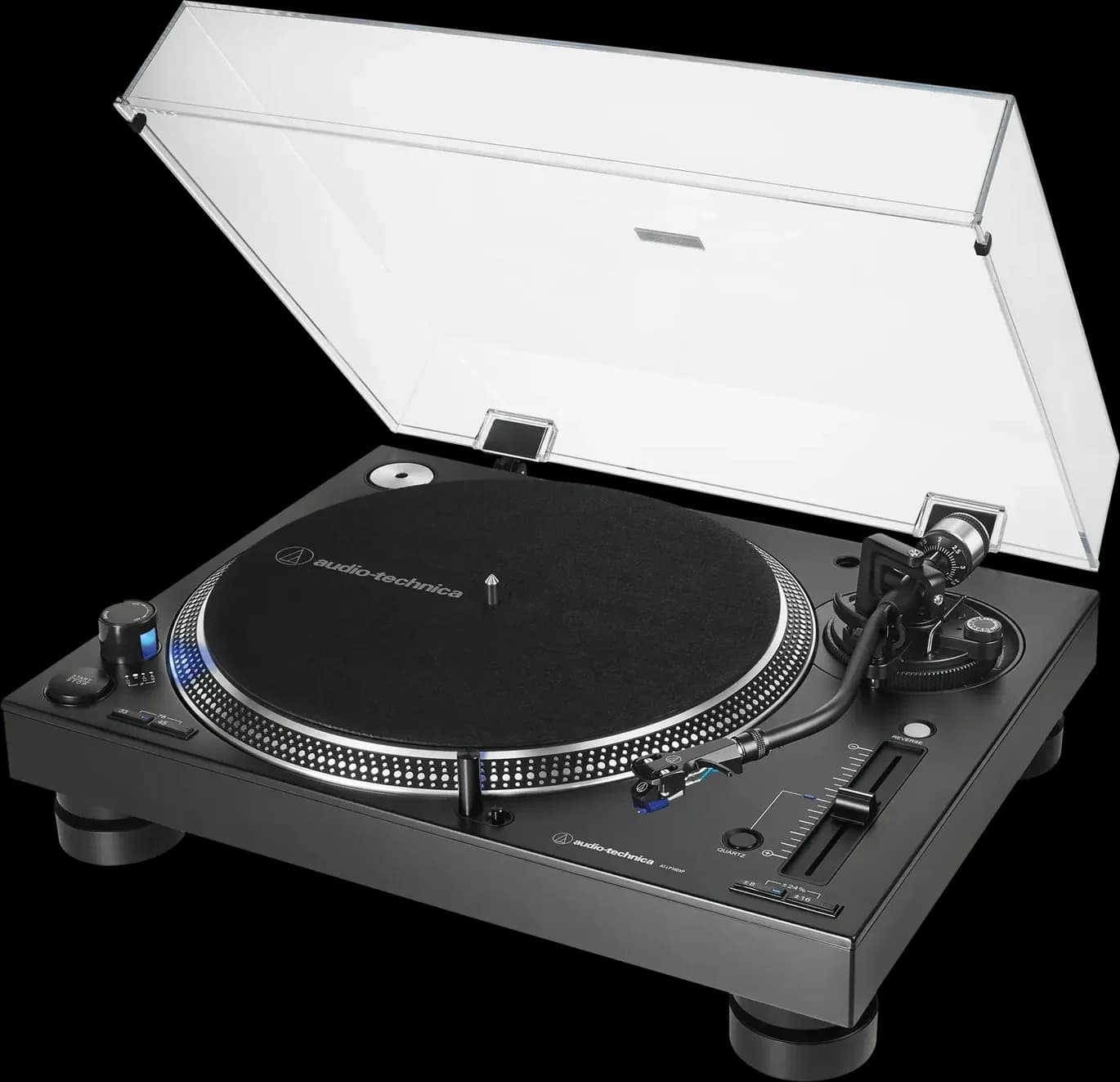
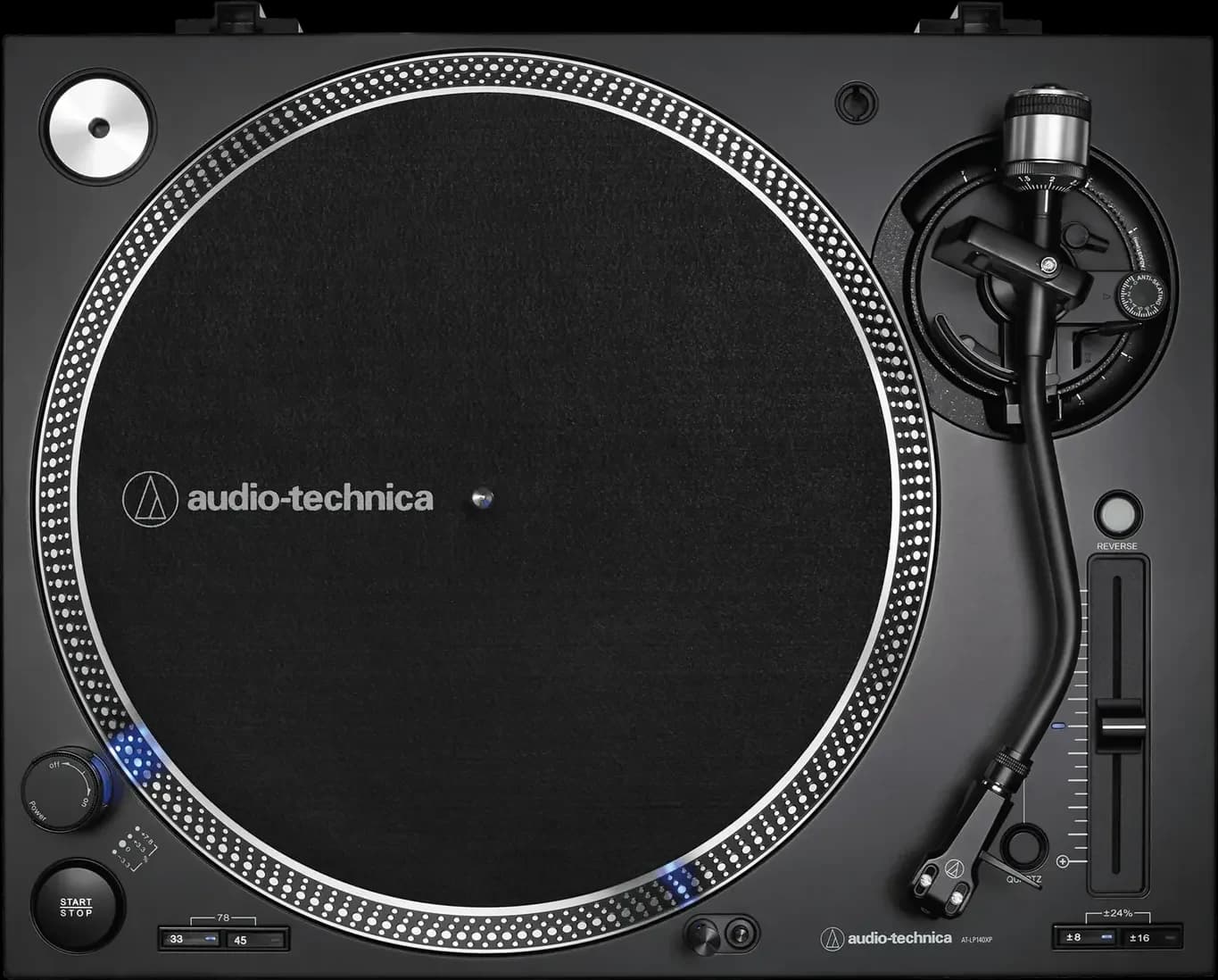
Audio-Technica AT-LP140XP
A solid direct-drive deck with a Technics layout; the fitted cartridge and the tonearm lift are its weak spots.
Photos: Audio-Technica
of 6 reviews recommend itand 37 owner reviews
Choose it over the RP-7000 MK2 if you are starting out at home and want to play records the day it arrives: it is the only pick with a cartridge, an AT-XP3 fitted to its headshell. Its output is phono level only, with no preamp or USB, so it needs a mixer with phono inputs or a separate phono stage. Owners say the supplied cartridge is basic and not one for scratching, and the lighter body suits a bedroom more than a loud club. For scratching or gigs, the RP-7000 MK2 is the step up.
- Best for
- Home practice and listening on a Technics-style deck you can upgrade.
- Skip it if
- You need a club-proof deck, a built-in preamp, USB or auto-return.
What people praise
- Solid, heavy and well finished for the price
- Removable headshell and adjustable arm make cartridge upgrades easy
What to know first
- Supplied AT-XP3 cartridge is basic; many owners replace it, and it is not one for scratchingReplaceable part
- Tonearm lift drifts or drops too fast, and one failed within a year
Video reviews
- Andrew RobinsonJan 2021Recommends
The Technics feel for less
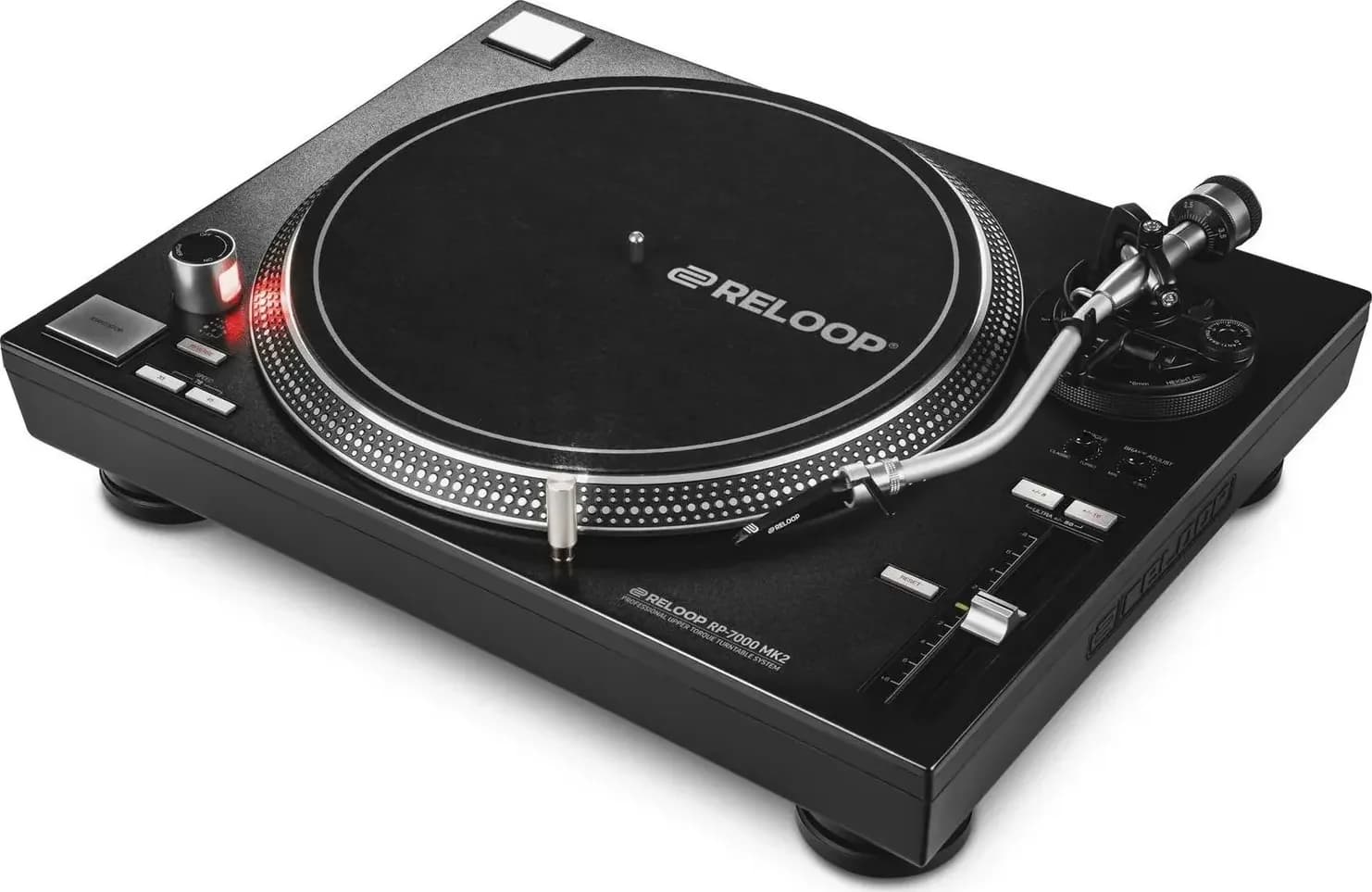
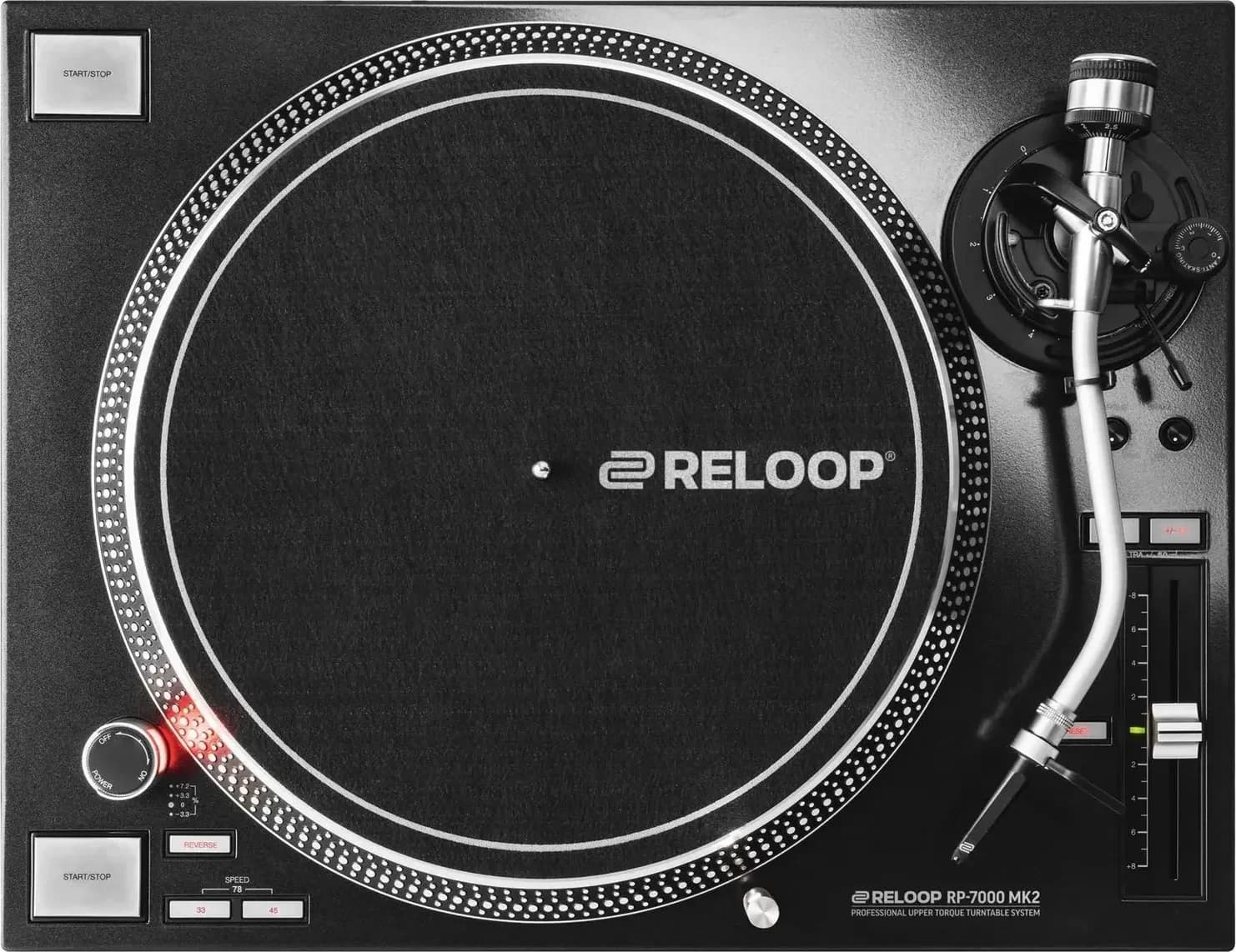
Reloop RP-7000 MK2
A heavy, high-torque deck that mixes like a Technics for less; the box is bare and some units ship with loose bearings.
Photos: Reloop
3 of 3 reviews recommend it27 owner reviews read
Choose it over the AT-LP140XP once you scratch or play out: owners rate its heavy chassis and a motor whose torque and brake you can set, and reviewers say it mixes much like a Technics 1200. A switchable preamp lets it feed a line input as well as a phono channel. The box is bare, so budget for a cartridge and headshell, and check the tonearm bearings when it arrives. If you want the exact 1200 feel, the SL-1200MK7 is the one; reviewers and owners find the Reloop takes some adjusting to.
- Best for
- Club-style mixing and scratching on a heavy, high-torque deck without Technics money.
- Skip it if
- You need a lid and cartridge included, or the exact Technics feel.
What people praise
- Heavy, solid build that stands up to gigs and scratching
- Technics-style deck for much less money
What to know first
- Bare box: no dust cover, cartridge or 45 adapter, and no well to keep an adapter
- Raised platter and different feel take adjusting to after a Technics
The club standard
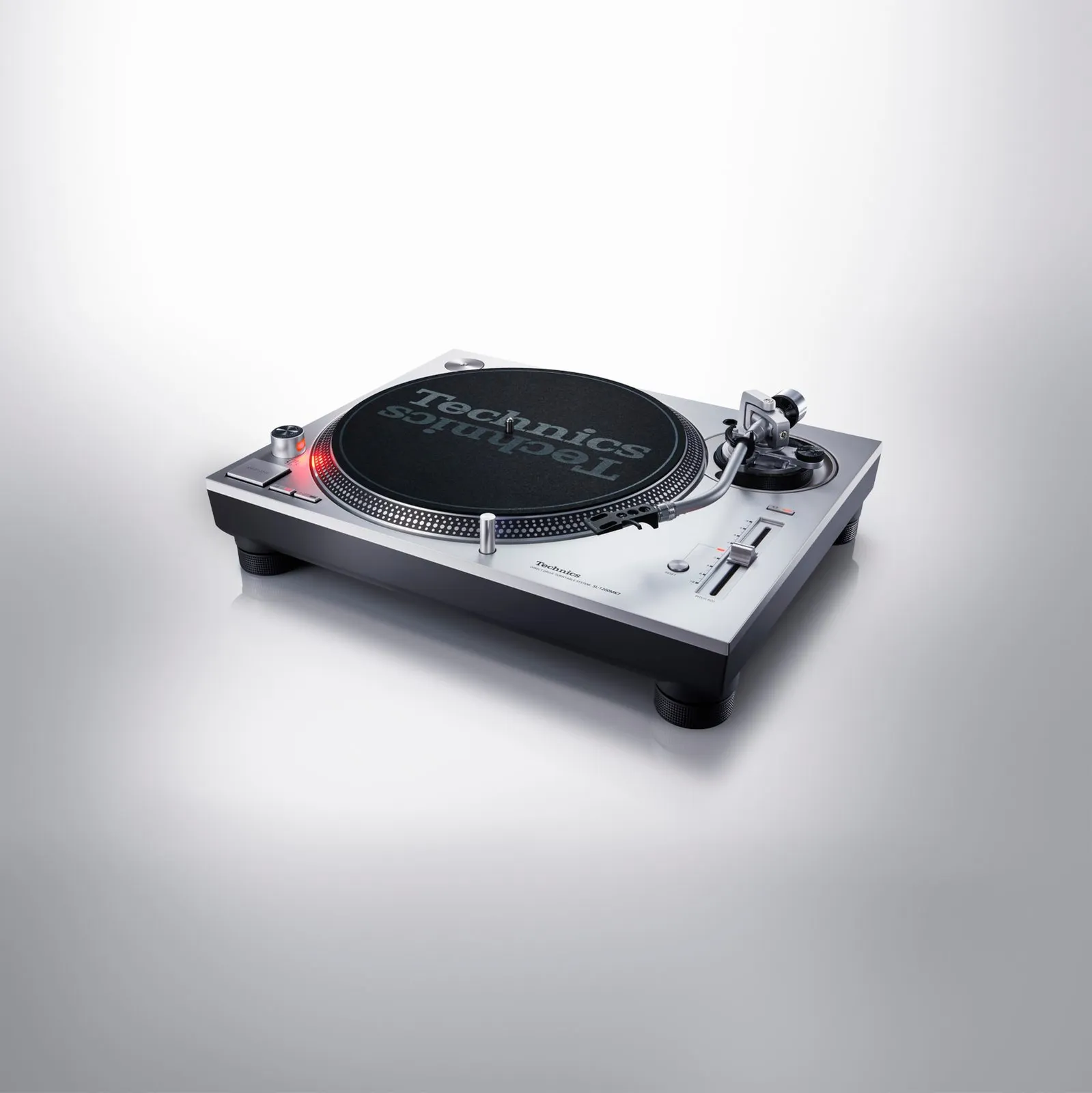
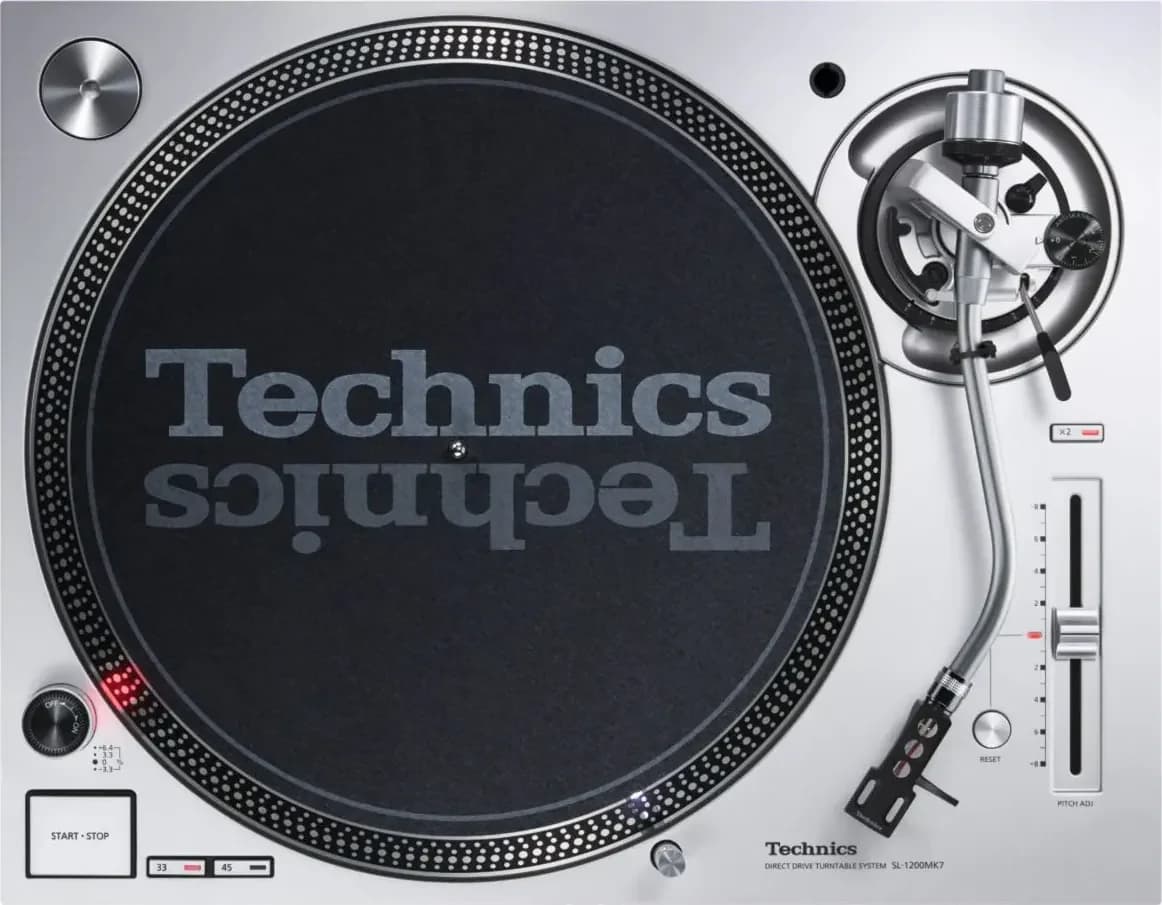
Technics SL-1200MK7
The club-standard 1200 with a coreless motor: steadier and more precise, but lighter and more plastic than the MK2.
Photos: Technics
of 9 reviews recommend itand 26 owner reviews
Choose it over the RP-7000 MK2 if you want the deck whose layout the others copy, with speed that holds steady through long blends and a precise pitch fader. It is lighter and more plastic than the old MK2, and the dust cover just sits on top; reviewers and owners mention both often. Like every pick except the AT-LP140XP, it needs a cartridge and a mixer with phono inputs. To control Serato DJ Pro or rekordbox without a timecode record, look at the PLX-CRSS12.
- Best for
- Vinyl DJs who want steady speed, precise pitch and the standard 1200 layout.
- Skip it if
- You want MK2-weight build, a hinged lid, or scratch features for less money.
What people praise
- Speed holds steady and the pitch fader is precise through long blends
- Sounds good enough for home listening as well as the booth
What to know first
- Lighter and more plastic than the old MK2; buttons and finish feel cheaper
- Dust cover just sits on top, with no hinges
Scratching with DVS
Pioneer DJ PLX-CRSS12
A PLX-1000-based direct-drive deck that also runs DVS with no tonearm or control vinyl; costly, especially in pairs.
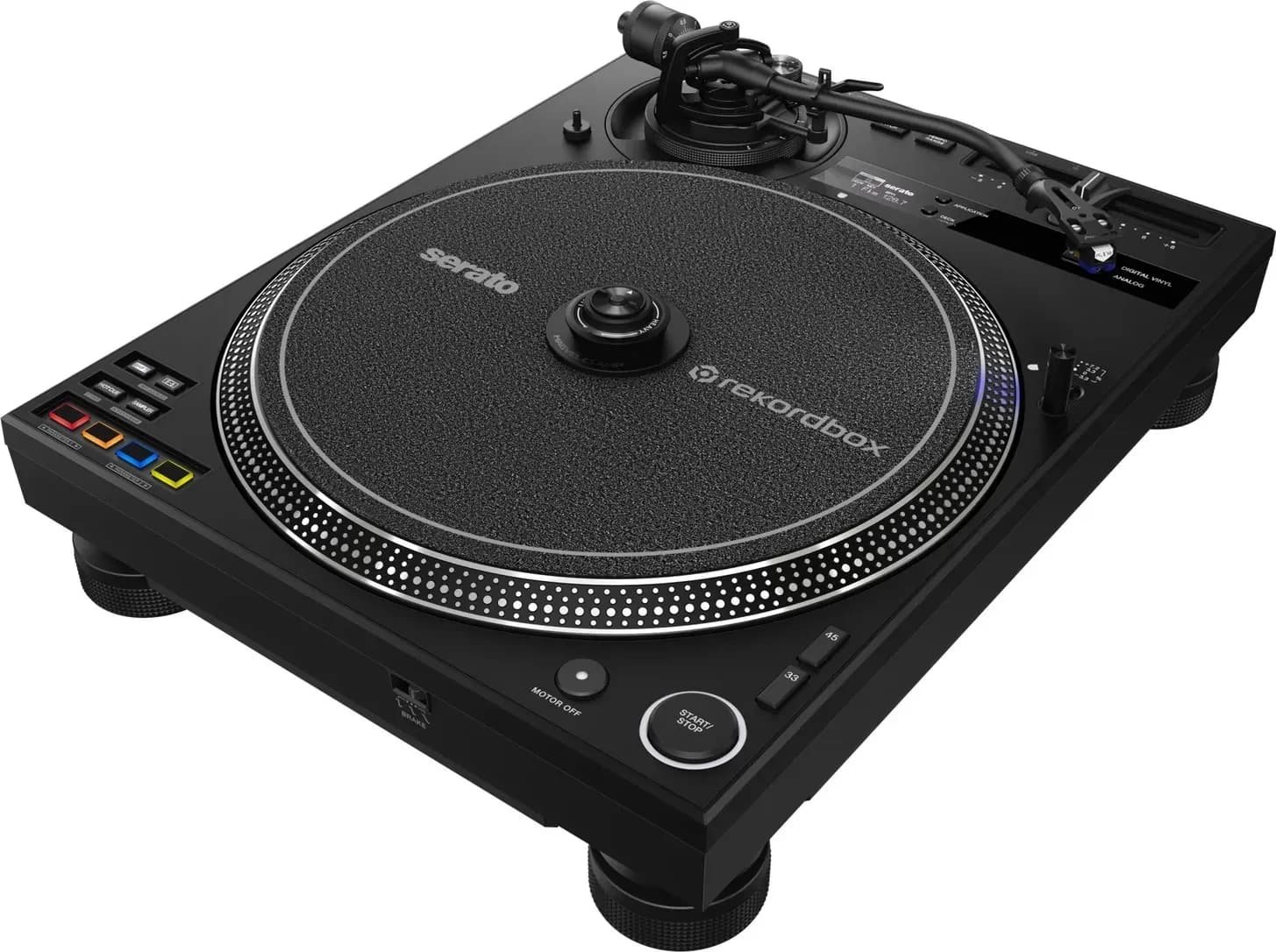
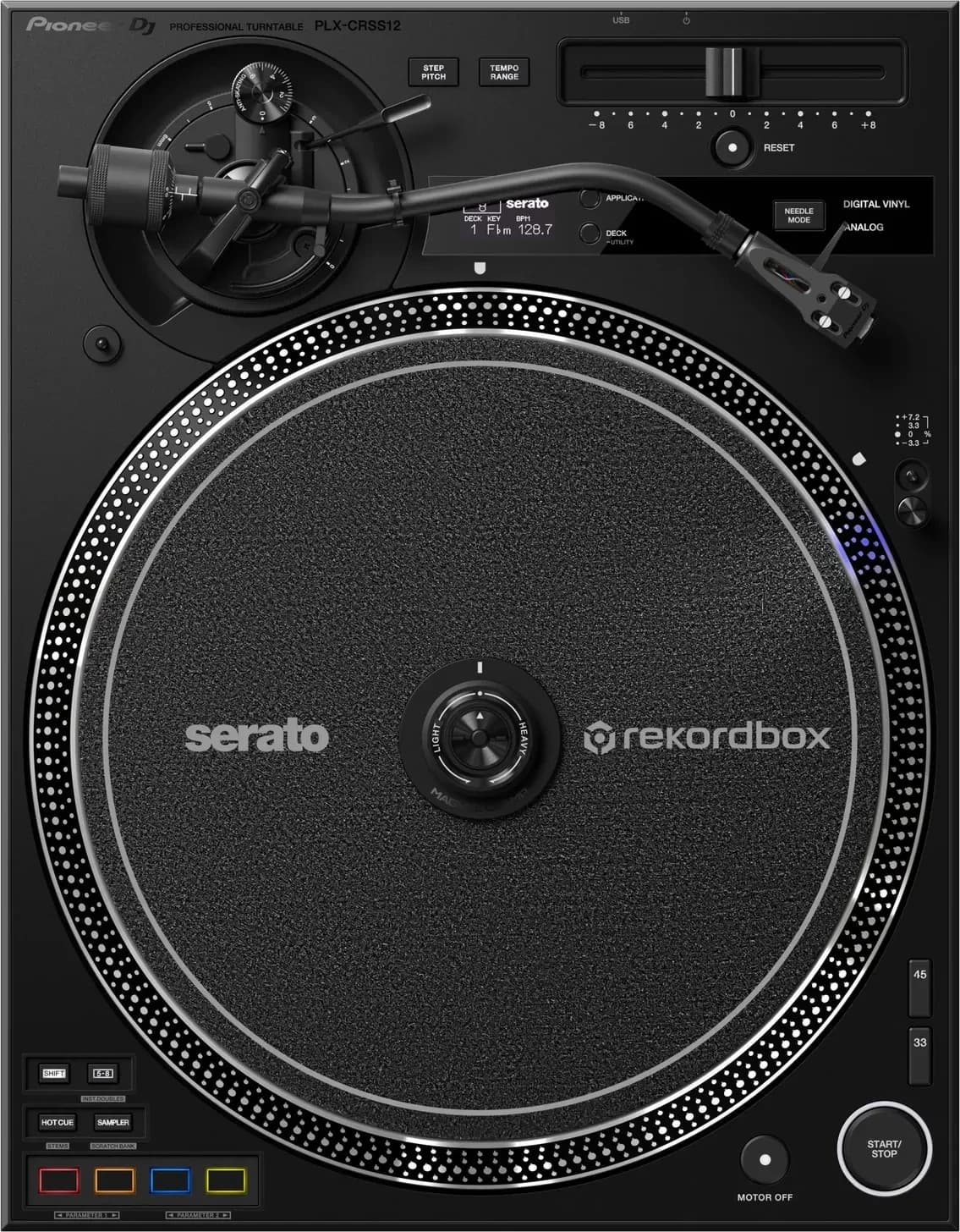
Photos: Pioneer DJ / AlphaTheta Corporation
of 11 reviews recommend itand 1 owner review
Choose it over the SL-1200MK7 if you scratch with Serato DJ Pro or rekordbox. In Digital Vinyl mode its Magvel Clamp reads the movement of any record, so the tonearm stays parked and nothing can skip; in Analog mode it plays records like a PLX-1000, once you fit a cartridge, which isn't in the box. Digital Vinyl mode needs a laptop and a DVS-capable mixer such as the DJM-S5 or DJM-S11. If you only play vinyl, it is more deck than you need.
- Best for
- Scratch and open-format DJs who switch between vinyl and Serato or rekordbox DVS.
- Skip it if
- You only play vinyl, or have no DVS-capable mixer to pair it with.
What people praise
- Tonearm-free DVS: no needle skipping, and any record works as the control
- High-torque direct-drive motor with adjustable torque and three brake speeds
What to know first
- Expensive, and twice that for the usual pair
- Layout quirks: sideways battle-style labels, front brake switch, side power socket, fiddly step pitch
Video reviews
- Passionate DJSep 2023Recommends
Also considered
- Pioneer DJ PLX-1000. The closest new deck to a Technics 1200 in layout and feel, with a heavier chassis and a stronger motor. Pioneer DJ still lists it, but it launched in 2014, Thomann no longer lists it, and three of five reviews recommend it: the reservations are few features for the price, with no reverse, 78 rpm or adjustable torque, all of which the RP-7000 MK2 has.
- Pioneer DJ PLX-500. Pioneer DJ's entry deck, with a cartridge in the box, a phono/line switch for powered speakers and a USB output for recording. It has no record yet, so it can't be compared with the AT-LP140XP on equal terms.
- Reloop RP-8000 MK2. The RP-7000 MK2's sibling with eight performance pads for Serato DJ Pro and a Platter Play mode that sets the platter's pitch from the pads in musical scales. It suits hybrid DVS setups more than pure vinyl, and has no record yet.
- Reloop RP-5000 MK4. A refresh of Reloop's lower-priced club deck with a new motor, on sale since February 2026. The coverage found so far is launch news, with no independent reviews yet, and it has no record.
How to choose a DJ turntable
How much to spend
The AT-LP140XP is the cheapest pick in every market tracked here, and the only one with a cartridge in the box, which is why it is the first-deck pick. The RP-7000 MK2 is the next step up, then the SL-1200MK7, with the PLX-CRSS12 the dearest of the four. Mixing takes two decks and a mixer, so budget for twice the price of a deck before the mixer, cartridges and headphones. Today's price for each is in the table above.
Direct drive
Every pick here is direct drive: the motor sits under the platter, so the deck reaches speed almost at once and holds it while you work the record. Belt-drive decks take longer to get up to speed and suit listening more than mixing. A stronger motor pulls back harder against your hand, which scratch DJs tend to want, and each product page lists its starting torque. The direct drive and belt drive explainer covers the difference.
Turntables for scratching
Scratching asks the most of a deck: the motor has to pull the record back against your hand, and the deck has to take the knocks. Starting torque is the figure to compare. The RP-7000 MK2's is 2.8 – 4.5 kg/cm (adjustable), and reviews say its heavy build stands up to gigs and scratching. The PLX-CRSS12 reaches 4.5 kgf·cm on its High setting and, in digital mode, has no needle to skip; its labels read sideways, the way scratch DJs turn their decks, which some reviewers count among its layout quirks. The SL-1200MK7 starts at 0.18 N·m (1.8 kg·cm) with adjustable torque and brake, and the AT-LP140XP at over 2.2 kgf·cm, though its AT-XP3 cartridge isn't one for scratching. Learning to scratch covers the technique.
Cartridges
Only the AT-LP140XP comes with a cartridge, and owners say its AT-XP3 is basic and not one for scratching. The SL-1200MK7 and PLX-CRSS12 come with a headshell but no cartridge, and Reloop lists no headshell in the RP-7000 MK2's box, so budget for both. You need one cartridge per deck, and each tonearm takes a set range of cartridge weights, listed on its product page. If you scratch, choose a cartridge made for it rather than a hi-fi model.
A mixer with phono inputs
A turntable has no mixer or speakers built in. The AT-LP140XP, the SL-1200MK7 and the PLX-CRSS12 in Analog mode send a phono-level signal, so they plug into a mixer's phono channels or a separate phono stage. The RP-7000 MK2's switchable preamp also lets it feed a line input. For scratching, a two-channel battle mixer is built around the crossfader. The best DJ mixers compares them, and what a mixer does covers the basics.
Vinyl or DVS
DVS lets turntables control DJ software, so you can play your digital library with the feel of vinyl. Usually a timecode record on each deck tells Serato DJ Pro or rekordbox where and how fast to play; Serato's DVS is a paid expansion unless your mixer or interface unlocks it. The PLX-CRSS12 needs no timecode record and unlocks rekordbox's DVS itself. That makes it a digital turntable as much as a vinyl one: in digital mode no tonearm is involved, so the needle can't skip and any record on the platter works as the control. Either way you need a laptop and a mixer that supports DVS. The guide to digital vinyl systems explains the setup, and CDJs vs turntables compares the two ways to play.
What else you'll need
Mixing takes two decks, so budget for a pair, plus the mixer, headphones and speakers. How to DJ with vinyl walks through the setup, and learning to scratch covers the next step. For the rest of the setup, see the best DJ headphones and best DJ speakers.
How these picks are made
Each pick is the turntable with the strongest evidence for its situation. The evidence is what professional reviews conclude and what owners report on retailer sites, compiled for each product, with every source linked on its product page. No turntable here was tested in a lab. Prices come from daily tracking across the retailers we link to, and the status beside each one compares today's price with the lowest recorded. The methodology explains the whole process.