Studio monitors are the most important piece of gear in your home studio after your ears. Unlike consumer speakers that flatter your music, monitors reveal it — every muddy low-end, harsh high, and unbalanced mix becomes audible. That's the point.
5-inch monitors are the sweet spot for home studios. They're small enough to work in a bedroom without exciting room modes, affordable enough that you're not spending your entire budget on speakers, and accurate enough to make mixing decisions you can trust.
We've tested every major 5-inch monitor we could source and ranked the four best based on frequency accuracy, low-end response, build quality, and value.
What to Look For
Before choosing your monitors, understand these key factors.
Frequency response. The numbers on the spec sheet (e.g. "43Hz–40kHz") tell you the range, but not the accuracy. What matters is how flat the response is across that range. A monitor that accurately reproduces 50Hz–20kHz is more useful than one that technically reaches 40Hz but with a 6dB boost.
Room correction. Most home studios have acoustic problems — bass buildup near walls, reflections from desks, uneven frequency response. Monitors with built-in EQ switches or DSP correction (like the KRK's app-driven system) let you compensate without buying acoustic treatment first.
Port design. Rear-ported monitors need space behind them to breathe. If your desk sits against a wall, look for front-ported designs or models with wall-proximity EQ switches. This matters more than most buyers realise.
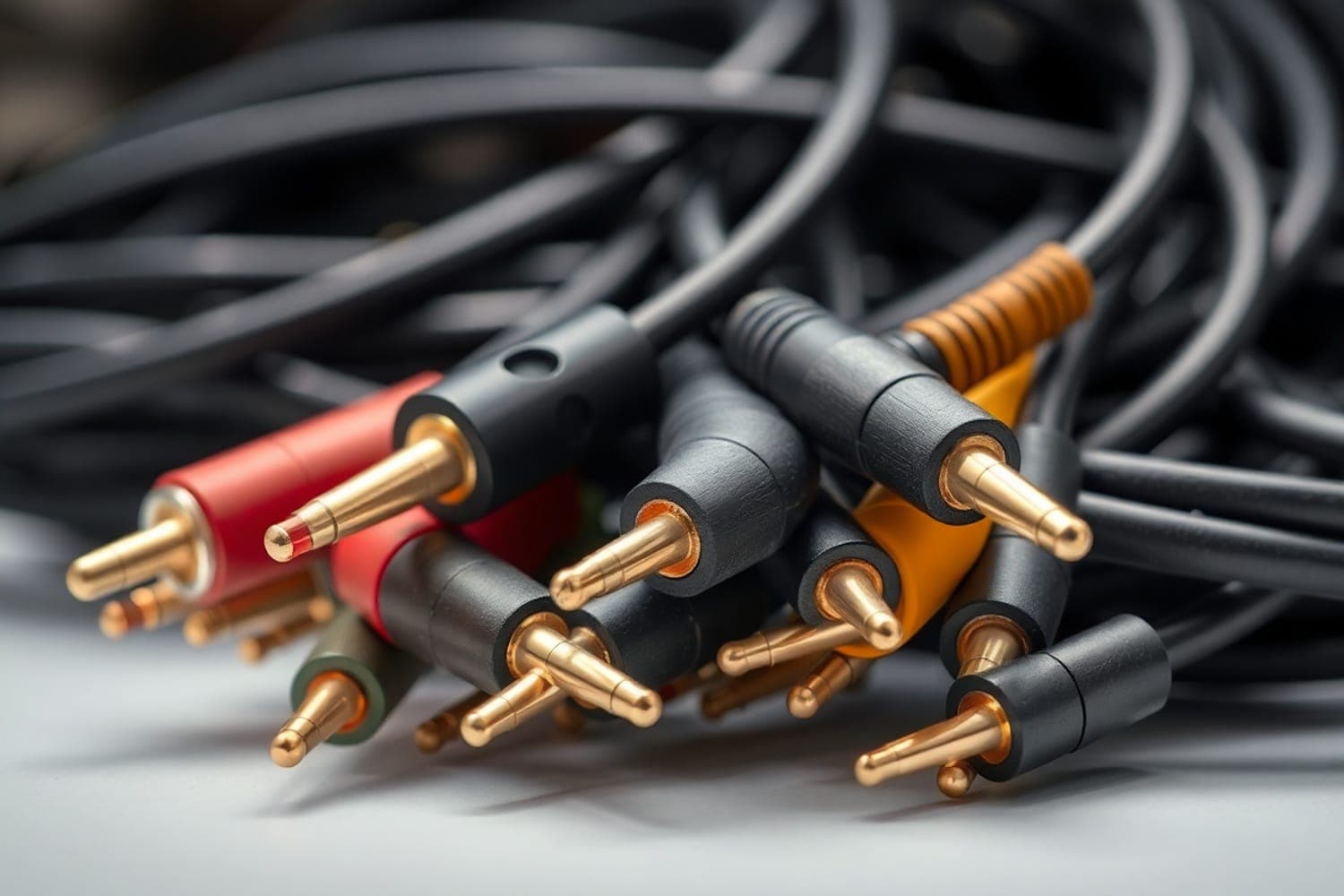
Input options. Balanced XLR and TRS connections give you cleaner signal than unbalanced RCA. If your audio interface has balanced outputs, make sure your monitors can accept them.
1. Yamaha HS5
Editor's Choice
| Spec | Detail |
|---|---|
| Woofer | 5" polypropylene |
| Tweeter | 1" dome |
| Frequency Response | 54Hz – 30kHz |
| Max SPL | 107dB |
| Inputs | XLR, TRS |
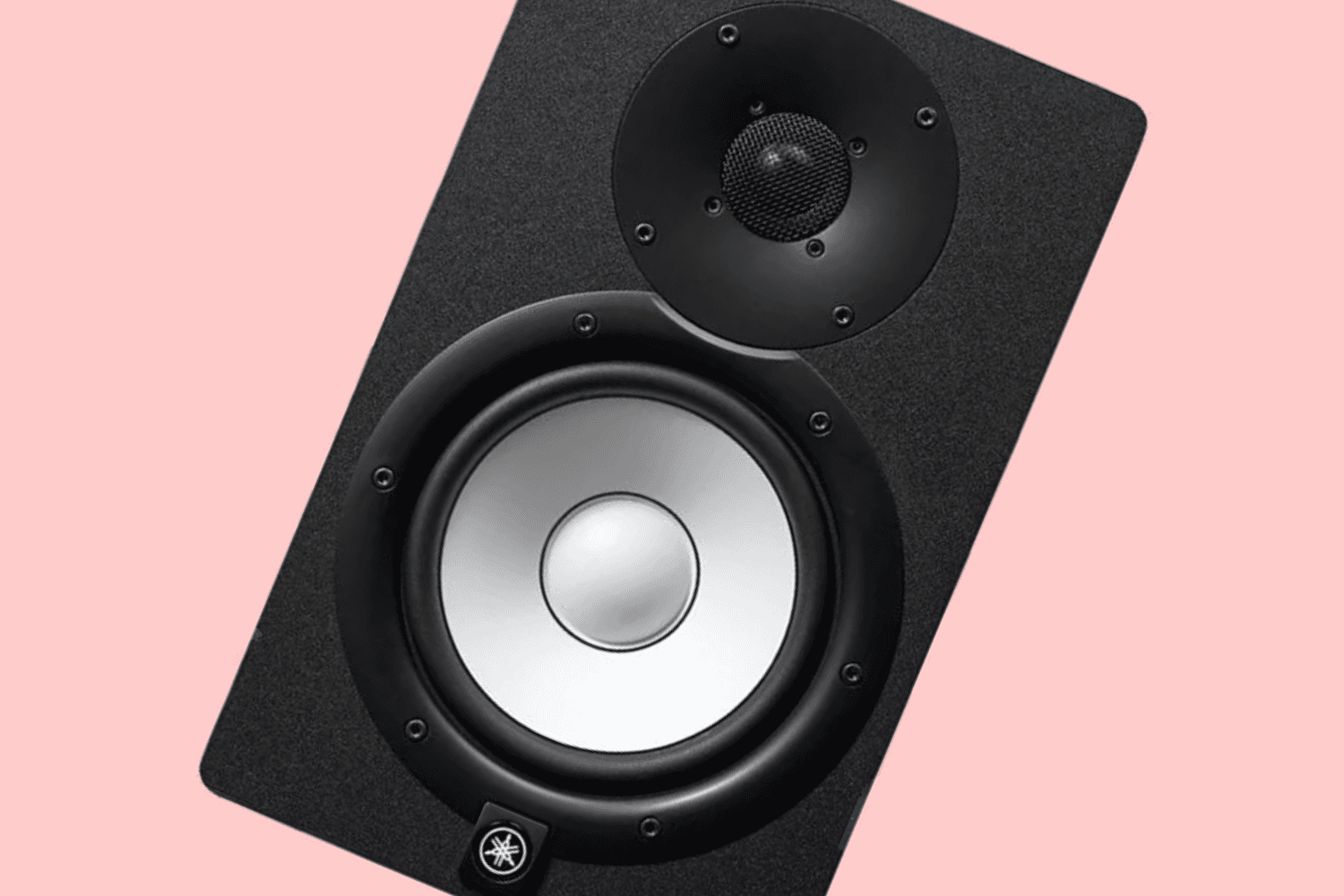
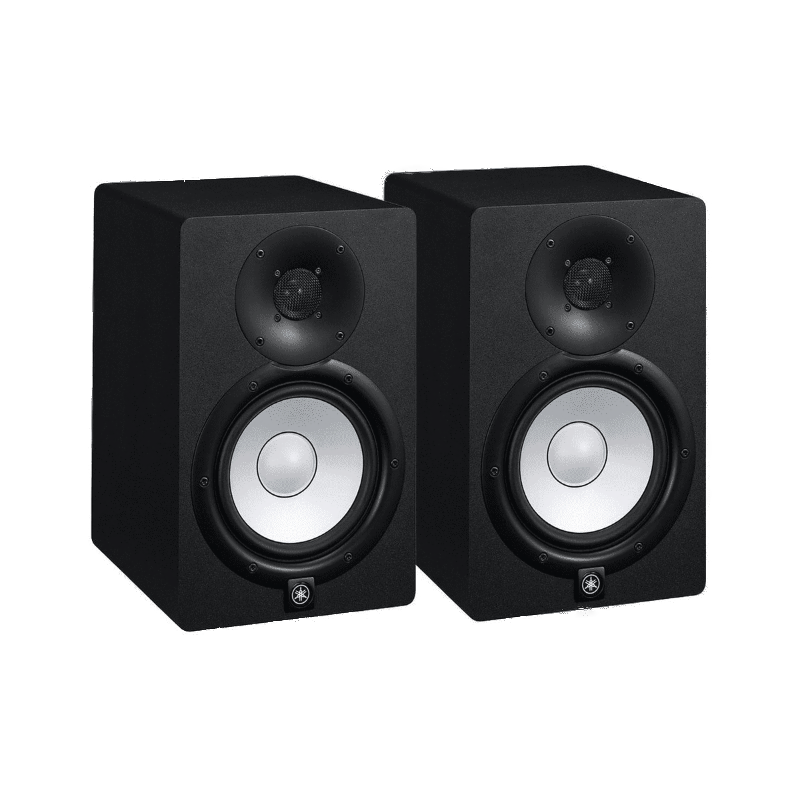
The Yamaha HS5 is the monitor against which all other 5-inch speakers are measured. Its frequency response is remarkably flat — what you hear is what's actually in your mix, with minimal colouration. The white-cone woofer design is descended from Yamaha's legendary NS-10, the most widely used studio monitor in recording history.
The build quality is solid for the price, with a dense MDF cabinet that resists resonance. The rear panel includes room correction switches for high and low frequency adjustment, which helps compensate for common desk and wall placement issues.
The trade-off is bass extension. The HS5 rolls off below 54Hz, which means you won't hear deep sub-bass. For most mixing and DJing work that's fine — you're making decisions in the range that matters. If you need more low end, Yamaha's HS8S subwoofer is designed to pair with the HS5.
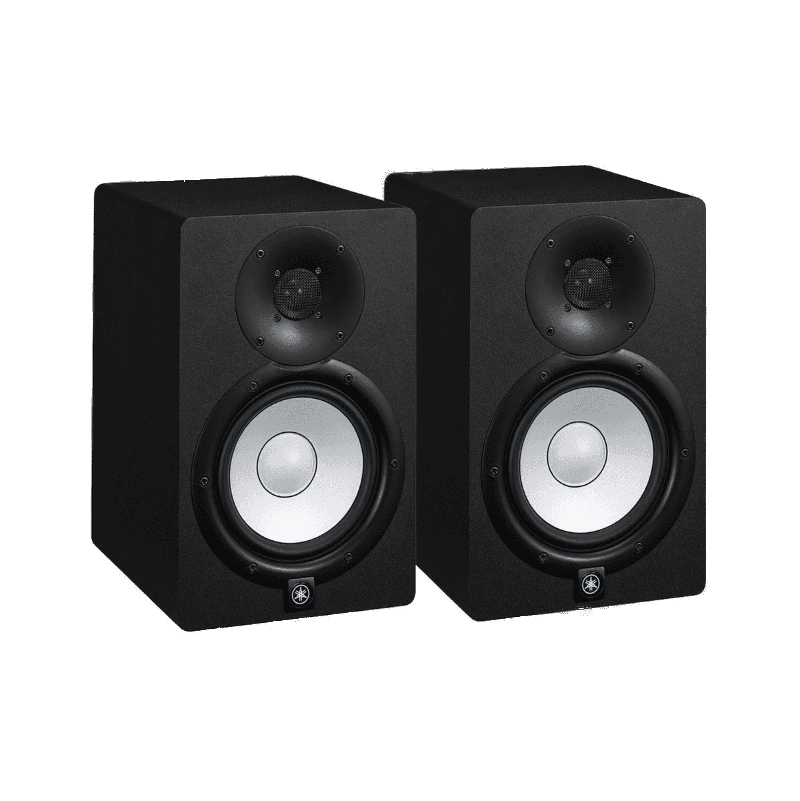
Yamaha HS5
Industry-standard clarity and flat response — the benchmark 5-inch monitor for home studios.
2. JBL 305P MkII
Best Value
| Spec | Detail |
|---|---|
| Woofer | 5" |
| Tweeter | 1" |
| Frequency Response | 49Hz – 20kHz |
| Max SPL | 108dB |
| Inputs | XLR, TRS |
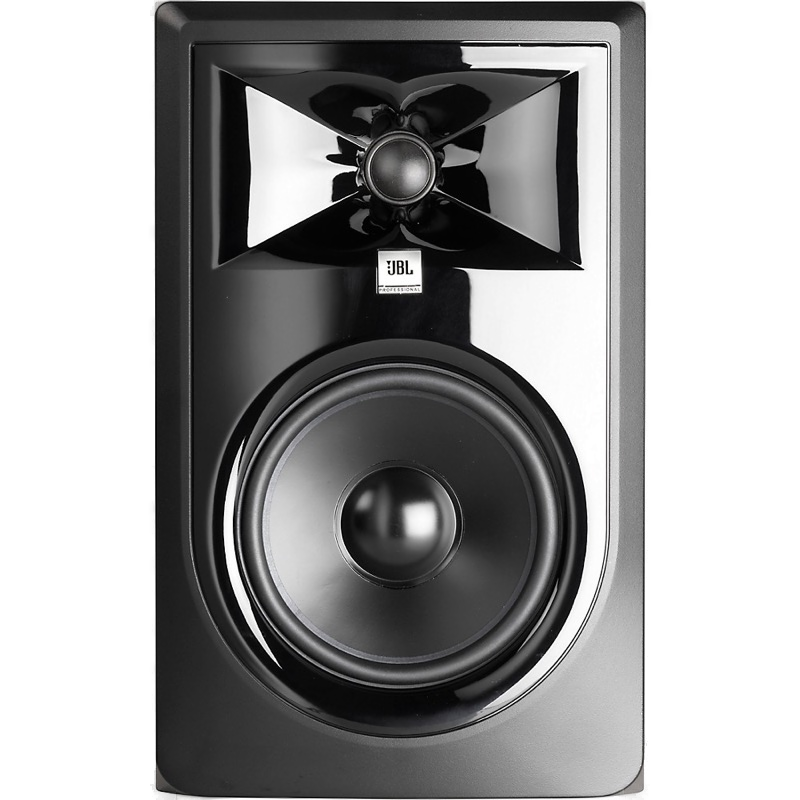
The JBL 305P MkII delivers performance that competes with monitors costing significantly more. JBL's Image Control Waveguide creates a wider sweet spot than most competitors — you don't need to be locked into an exact listening position to get an accurate stereo image.
Bass response reaches down to 49Hz, noticeably deeper than the Yamaha HS5, thanks to the double-flared bass port. The Boundary EQ and HF Trim switches let you tune for room placement. Build quality is sturdy — JBL subjects these to a 100-hour power test before shipping.
The downside is a noticeable amp hiss when no audio is playing, which can be distracting in quiet environments. The midrange isn't quite as neutral as the Yamaha's. But for the price, the 305P MkII is exceptionally difficult to beat.
JBL 305P MkII
The JBL 305p MkII certainly brings some of that legendary JBL performance and impressive dynamic range into any studio...
3. Pioneer DJ VM-50
Best for DJs
| Spec | Detail |
|---|---|
| Woofer | 5.25" aramid fibre |
| Tweeter | 1" DECO convex diffuser |
| Frequency Response | 40Hz – 36kHz |
| Max SPL | 107dB |
| Inputs | XLR/TRS combo, RCA |
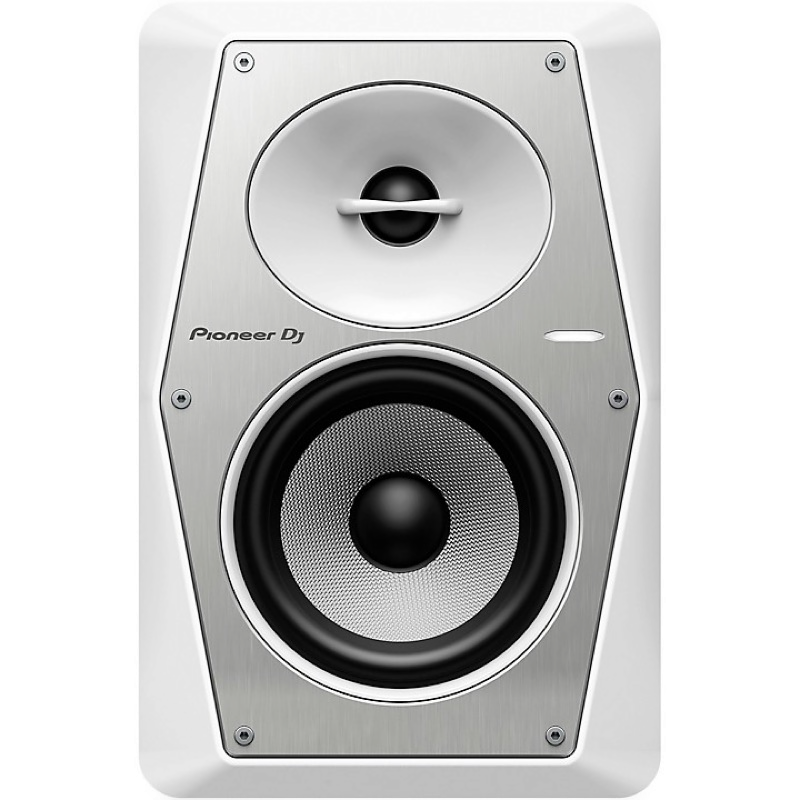
The Pioneer DJ VM-50 is designed specifically for DJ booth and home studio environments. Pioneer built these after years of understanding what DJs need from their monitors — tight, punchy playback that translates well to club systems. The internal DSP includes room correction that adapts to different room shapes and speaker positions.
The 5.25-inch aramid fibre woofer extends impressively low at 40Hz, the deepest in this guide. The DECO tweeter uses a convex diffuser for wide, even high-frequency dispersion. And the RCA input alongside the combo XLR/TRS means you can connect both a DJ mixer and an audio interface without swapping cables.
Bass can lack weight at higher volumes, and there's some distortion when pushed hard. But for DJs who want monitors that speak the same language as club sound systems, the VM-50 is the obvious choice.
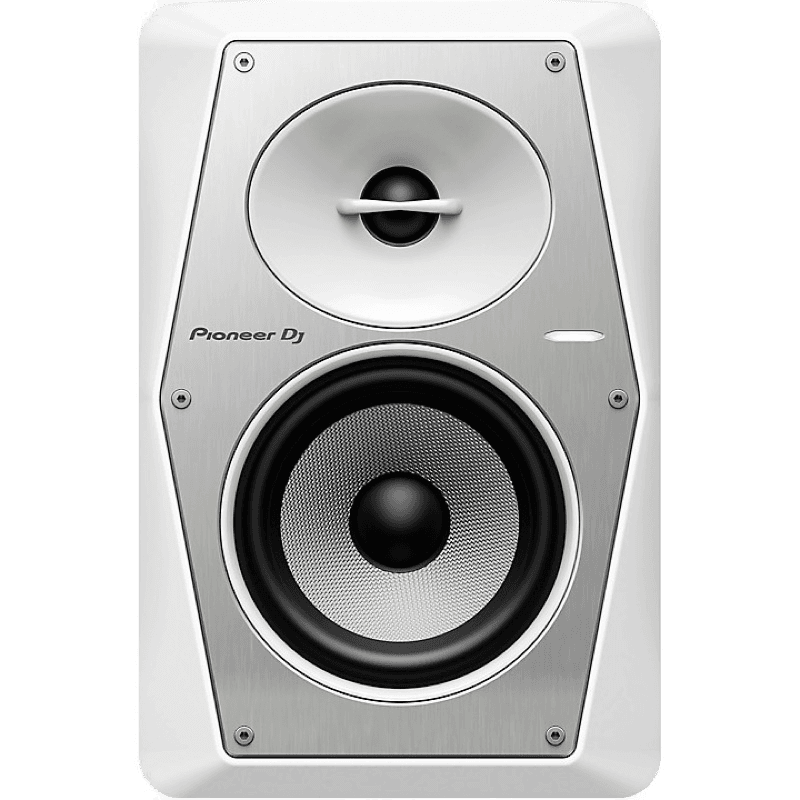
Pioneer DJ VM-50
DJ-tuned accuracy with DSP room correction — Pioneer's sleek entry into studio monitoring.
4. KRK Rokit 5 G4
Best for Bass
| Spec | Detail |
|---|---|
| Woofer | 5.25" Kevlar |
| Tweeter | 1" Kevlar |
| Frequency Response | 43Hz – 40kHz |
| Max SPL | 104dB |
| Inputs | XLR/TRS combo |
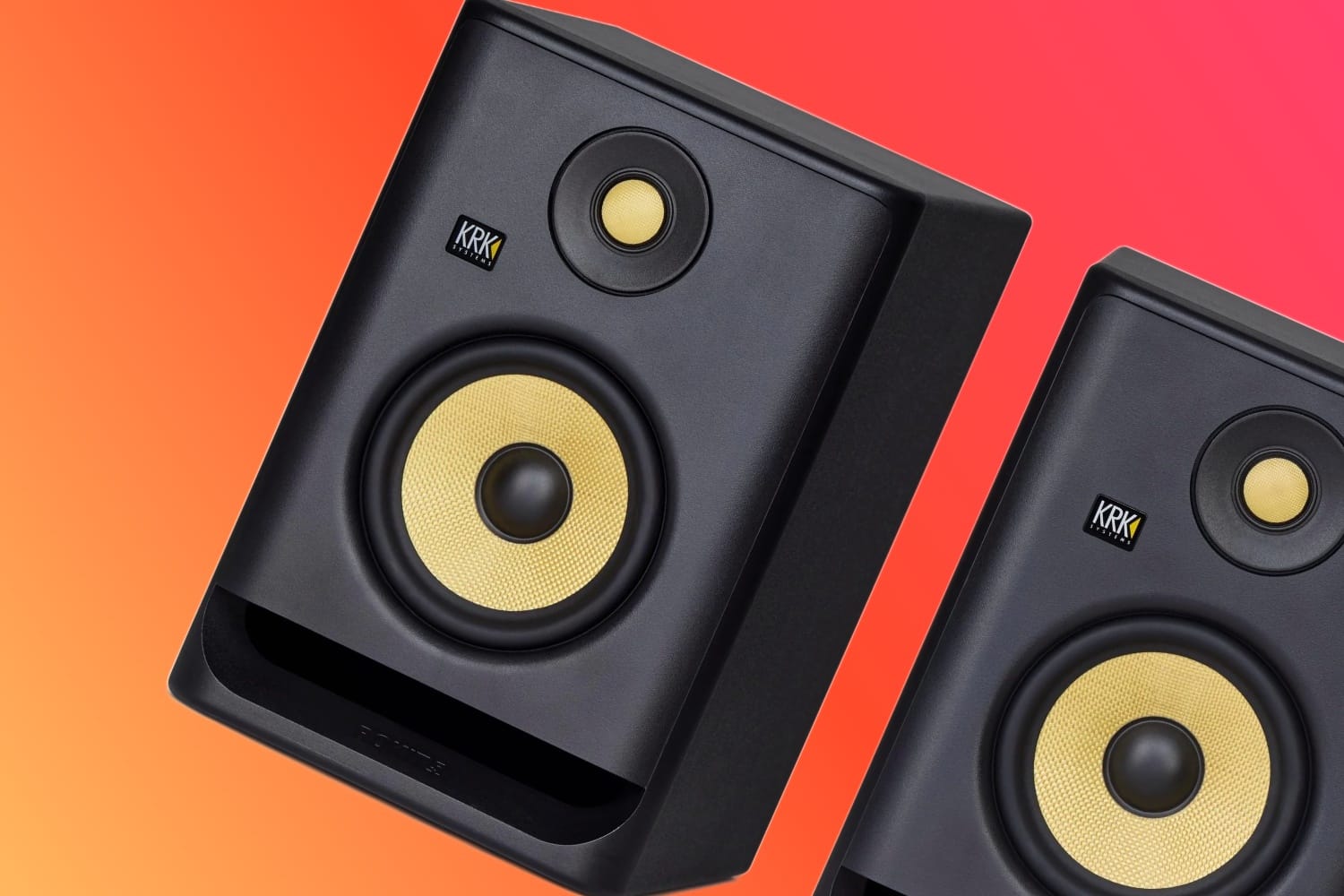
The KRK Rokit 5 G4 has the most low-end punch of any 5-inch monitor in this guide. The Kevlar woofer delivers tight, controlled bass that extends down to 43Hz — making it particularly well-suited for electronic music production where you need to hear what's happening in the sub-bass region.
The standout feature is the 25-preset DSP-driven graphic EQ, accessible via an LCD screen on the back panel and controllable through the KRK companion app on your phone. This gives you far more room correction flexibility than the simple switches on the Yamaha or JBL. Included iso-acoustic pads help decouple the monitors from your desk.
The mids are slightly recessed compared to the highs and lows, which means the KRK sounds more "exciting" than strictly flat. That's a trade-off — it's great for enjoyable listening but requires awareness when mixing. The single combo input also means less connection flexibility than some alternatives.
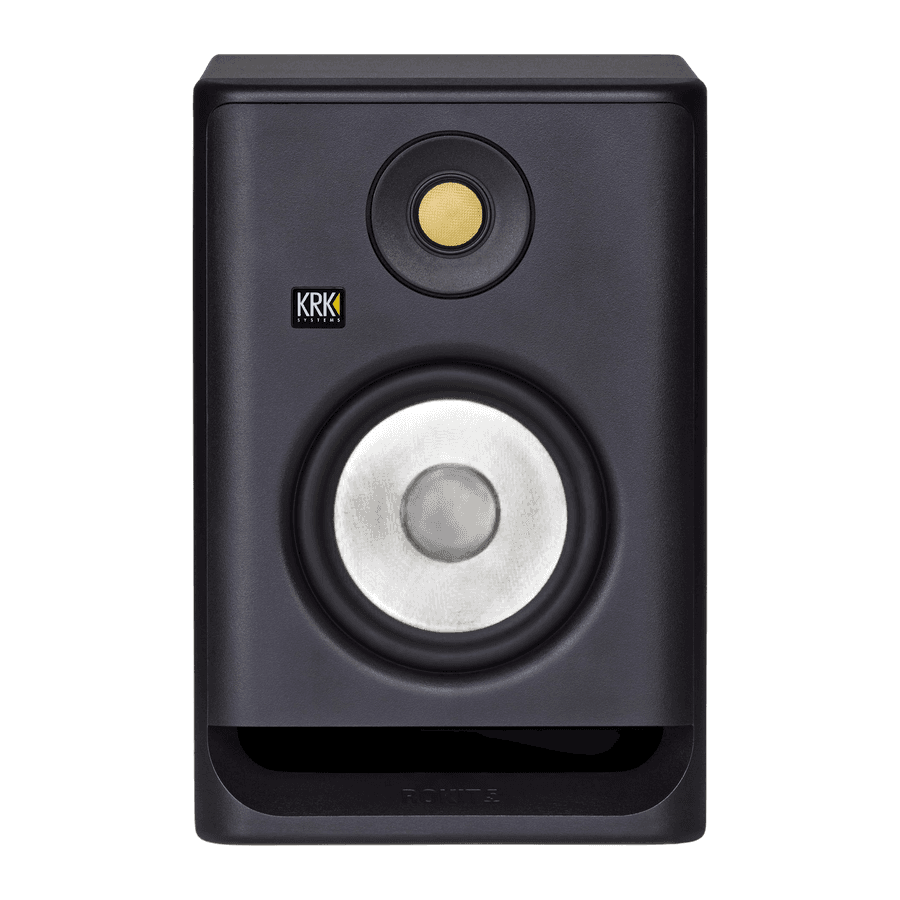
KRK Rokit 5 G4
Punchy Kevlar drivers with app-driven DSP tuning — a KRK classic that delivers above its price.
Other Monitors Worth Considering
If the four above don't fit your needs, two other 5-inch options are worth a look:
Focal Alpha 50 Evo — a premium French-made monitor with an aluminium/magnesium inverted dome tweeter that delivers exceptional high-frequency clarity. More expensive than everything else on this list, but the build quality and accuracy justify it for serious producers. Three input options (XLR, RCA, TRS) give maximum flexibility.
PreSonus Eris E5 — a budget-friendly option that punches above its price with a surprisingly flat frequency response and Acoustic Tuning controls for room correction. The 5.25-inch Kevlar woofer handles bass well, and the three-input design matches monitors at twice the price. Best for beginners who want accuracy without a large investment.
FAQs
Why 5-inch monitors instead of larger ones?
5-inch monitors are designed for nearfield listening in small to medium rooms. They produce accurate sound at close range without overwhelming the space with bass. In a bedroom or home studio under 15 square metres, 5-inch monitors typically give you a more honest mix than larger speakers that excite room modes.
Do I need a subwoofer with 5-inch monitors?
For mixing and DJing, 5-inch monitors usually provide enough low-end to make informed decisions. If you produce bass-heavy music (drum and bass, dubstep, hip-hop) and need to hear below 50Hz accurately, a dedicated subwoofer helps. But for most home studios, start without one and add later if needed.
Should I buy monitors in pairs or individually?
Most studio monitors are sold individually — you buy two for a stereo pair. This is standard across professional brands. Budget and multimedia speakers are more commonly sold as pairs. Always check the listing before purchasing.
What cables do I need for studio monitors?
Most studio monitors accept balanced TRS (1/4-inch) or XLR cables. Balanced connections reduce noise and interference, especially over longer cable runs. If your audio interface has balanced outputs, use balanced cables. Avoid unbalanced RCA connections for critical listening whenever possible.
How far should monitors be from the wall?
Rear-ported monitors (like the Yamaha HS5) need at least 15–20cm from the wall to avoid bass buildup. Front-ported designs are more forgiving. Many monitors include room correction EQ switches to compensate for wall proximity — check your manual and adjust accordingly.
Verdict
The Yamaha HS5 is the best 5-inch studio monitor for most home studios. Its flat, honest frequency response is the benchmark that other monitors are measured against, and the build quality ensures they'll last for years.
For budget-conscious buyers, the JBL 305P MkII delivers near-reference performance at a lower price, with a wider sweet spot thanks to JBL's waveguide technology. DJs should look at the Pioneer DJ VM-50 for its DJ-tuned sound and DSP room correction. And if bass response is your priority, the KRK Rokit 5 G4 has the deepest, punchiest low end of any 5-inch monitor at this price.