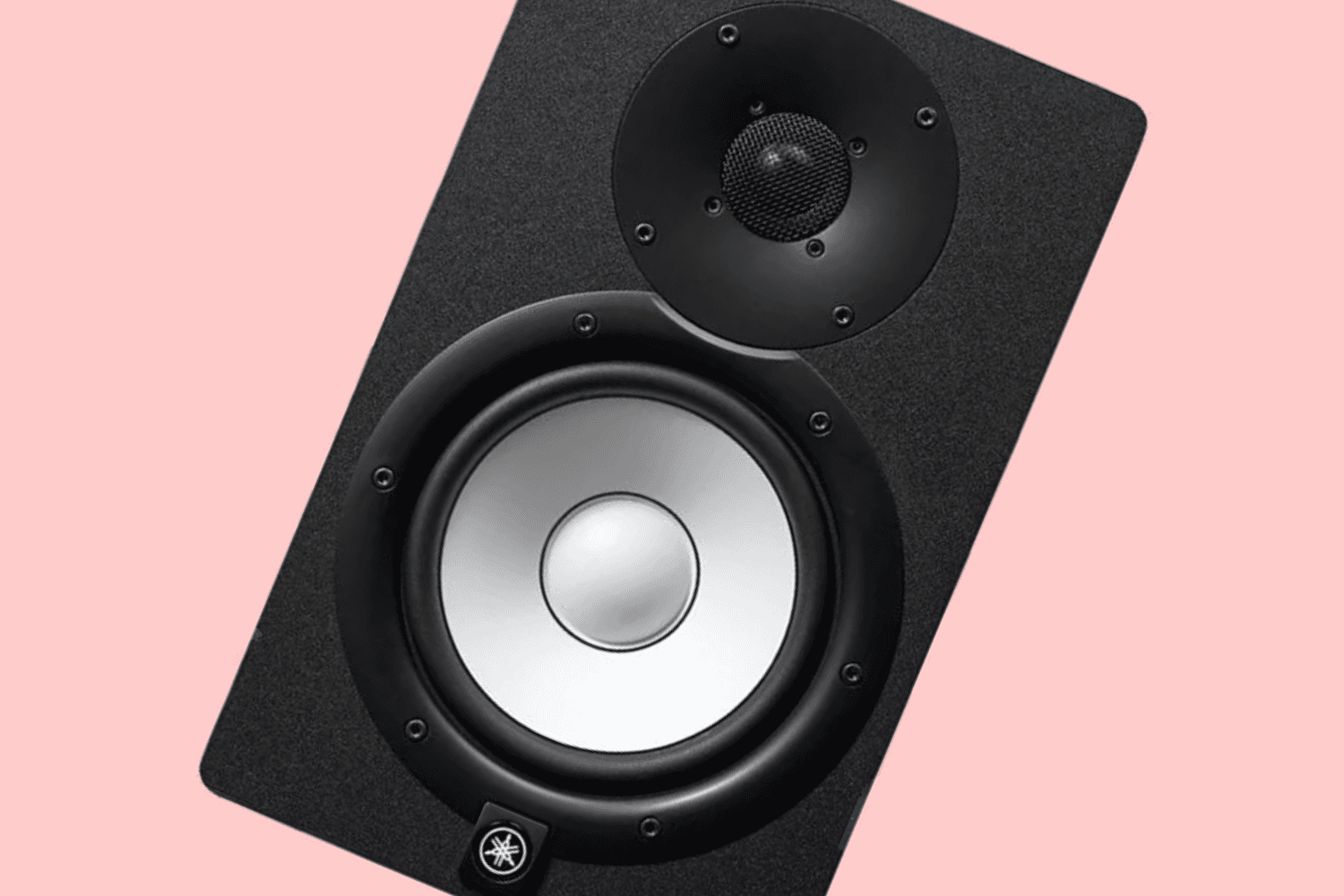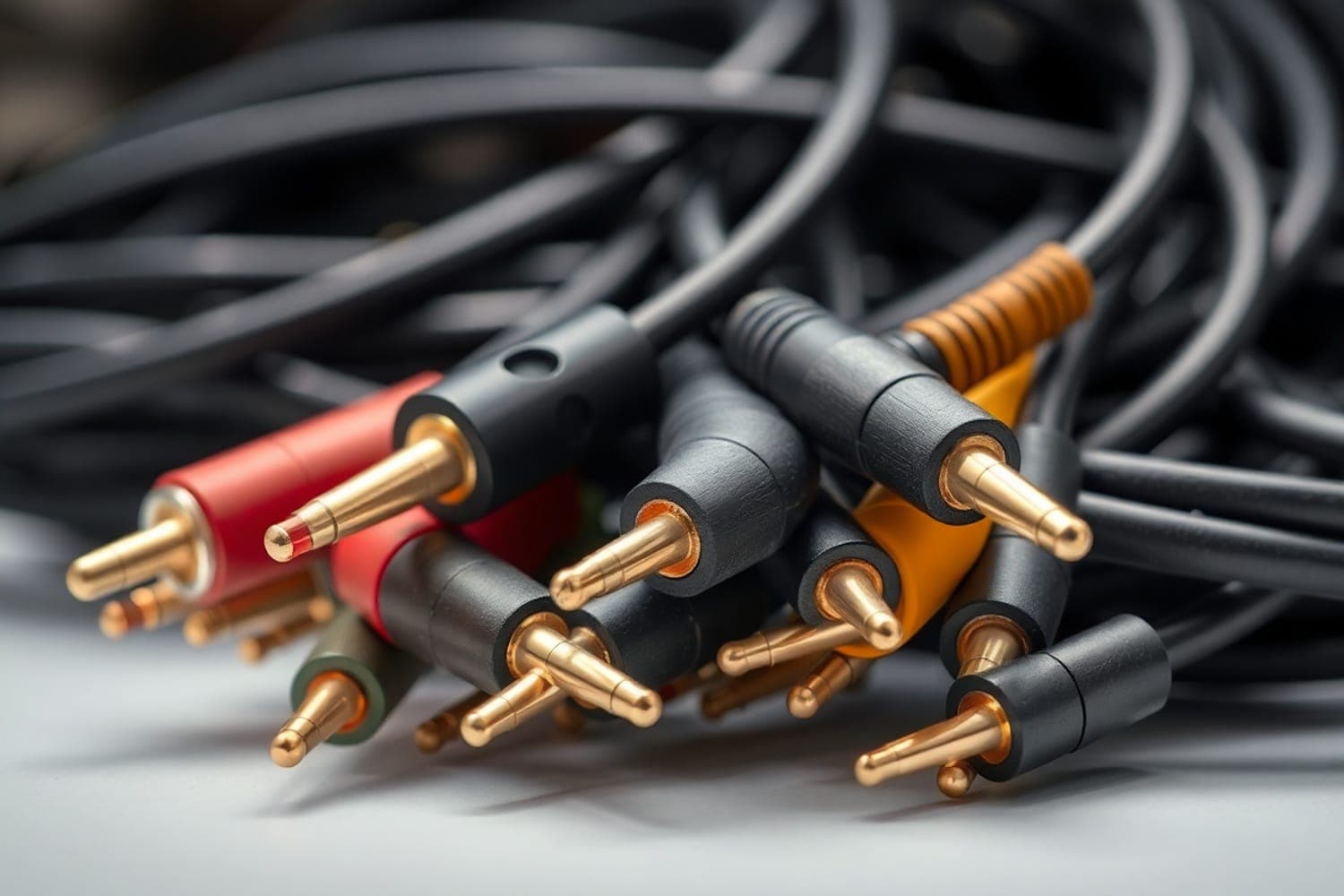
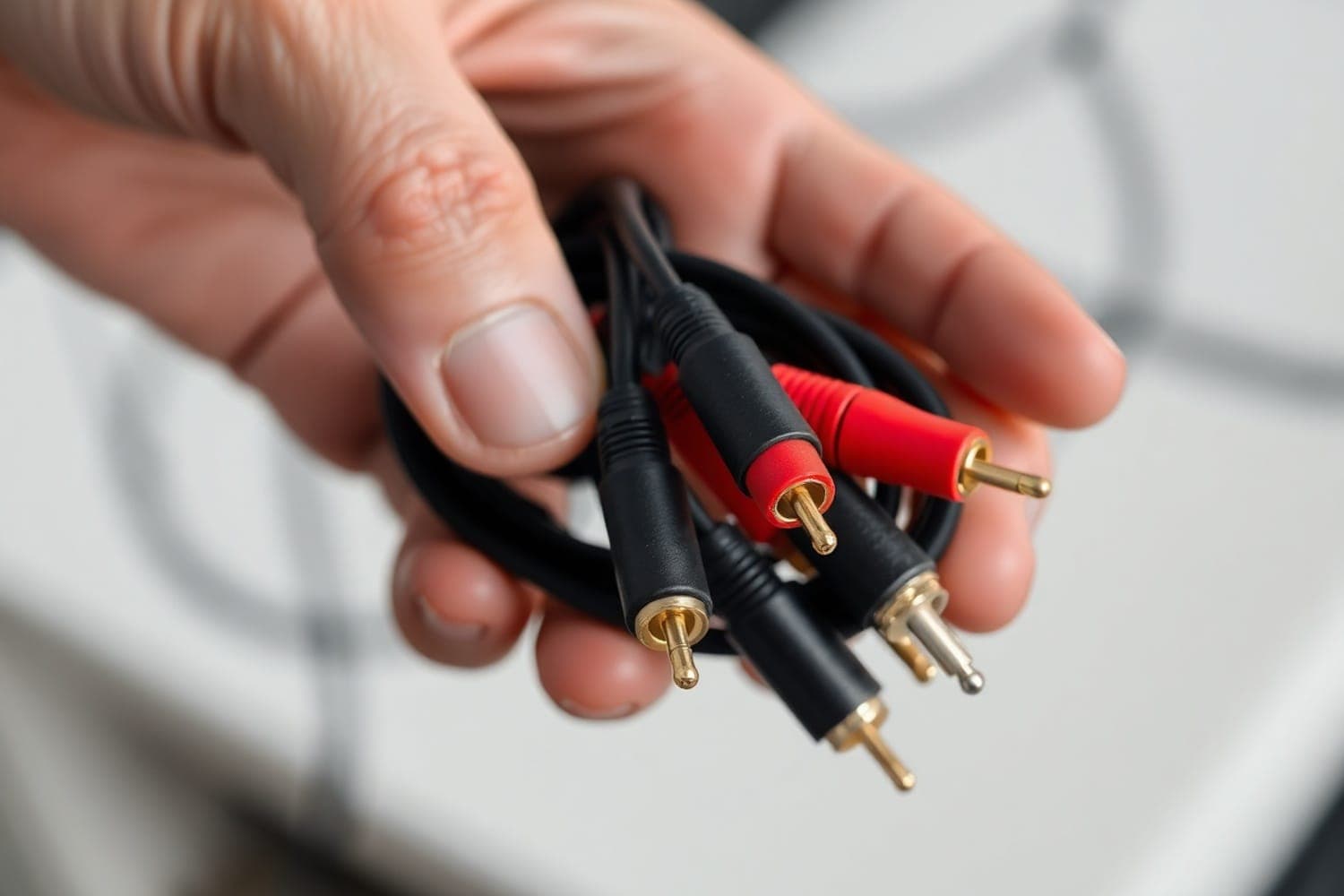
Speaker wire is the last link in your audio chain — it carries the amplified signal from your amplifier to your speakers. While it's tempting to treat it as an afterthought, using the wrong gauge or poor-quality wire can introduce resistance that degrades your sound, especially over longer runs.
The good news: speaker wire is inexpensive and the decisions are straightforward. Get the right gauge for your run length, choose decent copper, and you're set. No need to overthink it.
What to Look For
Wire gauge (AWG). This is the most important specification. Lower numbers mean thicker wire with less resistance. 16 AWG handles most home studio runs under 50 feet. 14 AWG is better for longer runs or higher-power systems. 12 AWG is overkill for most setups but ideal for PA applications or very long runs.
Conductor material. Oxygen-free copper (OFC) is the standard for quality speaker wire — it resists corrosion and maintains conductivity over time. Copper-clad aluminium (CCA) is cheaper but has higher resistance and corrodes faster. Pure copper or OFC is worth the modest premium.
Jacket quality. The outer insulation protects the conductors and affects flexibility. PVC jackets are standard and durable. Clear jackets let you see the conductors and verify polarity. For outdoor or in-wall runs, look for UV-resistant or CL2/CL3-rated jackets.
Polarity marking. Speaker wire has positive and negative conductors that must be connected consistently. Clear polarity marking — colour coding, a stripe, or printed text — prevents accidental reverse wiring, which causes phase cancellation and degraded bass response.
1. Monoprice 102747 12 AWG
Editor's Choice
Monoprice 12AWG Speaker Wire (102747)
| Spec | Detail |
|---|---|
| Gauge | 12 AWG |
| Material | 99.95% oxygen-free copper |
| Jacket | Transparent PVC |
| Polarity | Colour-coded conductors |
| Available Lengths | 50–500 ft |
The Monoprice 102747 is a thick 12-gauge OFC wire that handles any DJ or home studio application with headroom to spare. At 99.95% oxygen-free copper, conductivity is excellent and corrosion resistance is strong. The transparent PVC jacket allows visual verification of conductor integrity.
At 12 AWG, it's thick enough for long PA runs and high-power systems while performing equally well for shorter studio monitor connections. The price per foot is competitive with far thinner options from other brands.
The thickness that makes it great for sound quality also makes it harder to route through tight spaces and coil for storage. For most DJ home studios, this is more wire than you need — but it ensures zero compromises on signal quality.
2. Monoprice Access Series 4-Conductor
Premium Choice
Monoprice Access Series 4-Conductor
| Spec | Detail |
|---|---|
| Gauge | 16 AWG per conductor |
| Conductors | 4 (for bi-amping) |
| Jacket | White PVC |
| Colour Coding | 4 distinct colours |
| Use Case | Bi-amp speakers, long runs |
The Monoprice Access Series 4-Conductor wire is designed for bi-amp speaker setups — systems where separate amplifiers drive the high-frequency and low-frequency drivers independently. Four colour-coded conductors in a single jacket let you run a single cable instead of two separate runs.
Each conductor is 16 AWG, which is adequate for moderate run lengths. The white PVC jacket is clean-looking for visible installations. Colour coding across all four conductors makes termination straightforward.
This is a specialist product — if your speakers don't support bi-amping, you don't need four conductors. But for studio monitors or PA speakers with bi-amp capability, it simplifies wiring significantly.
3. AmazonBasics 16 AWG
Best Value
Amazon Basics 16AWG Speaker Wire
| Spec | Detail |
|---|---|
| Gauge | 16 AWG |
| Material | Copper-clad aluminium |
| Jacket | Clear plastic with polarity stripe |
| Available Lengths | 50–100 ft |
| Price | Budget |
The AmazonBasics 16 AWG is the most affordable functional speaker wire available. A 16-gauge construction handles home studio runs under 50 feet adequately. The clear jacket with a white polarity stripe provides basic polarity identification.
The copper-clad aluminium construction is the trade-off — CCA has higher resistance than pure copper and is more prone to corrosion at connection points over time. For a home studio setup that won't see heavy use or environmental exposure, this is acceptable.
At this price, you can afford to buy extra length and replace wire when connections degrade. For a first studio setup or temporary installations, the AmazonBasics wire gets the job done without any financial commitment.
Other Options Worth Considering
InstallGear 14 AWG — A mid-gauge wire with dual-coloured jacket for easy polarity identification. Soft PVC jacket is flexible for routing under carpets and through walls. Good all-rounder for DJ home studios that need moderate gauge at a reasonable price.
GearIT 14 AWG Outdoor — UV-resistant all-black PVC jacket designed for direct burial and outdoor installations. Sequential foot markings on the jacket for accurate measurements. Available in gauges from 16 to 10 AWG and lengths from 50 to 500 feet. The choice for outdoor PA setups and permanent installations.
FAQs
What gauge speaker wire do I need?
For most DJ and home studio setups, 16 AWG wire is sufficient for runs under 50 feet. For longer runs (50–100 feet) or high-power systems, step up to 14 AWG or 12 AWG. The lower the gauge number, the thicker the wire and the lower the resistance. When in doubt, go one gauge thicker than you think you need.
Does expensive speaker wire sound better?
In most practical listening environments, the difference between mid-range and premium speaker wire is negligible. What matters most is using the correct gauge for your run length and speaker impedance. Oxygen-free copper (OFC) wire is a worthwhile upgrade over basic CCA wire, but gold-plated or silver-clad cables offer diminishing returns for most users.
What is the difference between speaker wire and speaker cable?
The terms are often used interchangeably. Technically, "speaker wire" refers to the bare conductor pair, while "speaker cable" implies a finished product with connectors (banana plugs, spade connectors) on the ends. For most DJ applications, you'll buy bulk speaker wire and either strip the ends or add your own connectors.
Can I use speaker wire for passive PA speakers?
Yes. Passive speakers (those without built-in amplification) require speaker wire to connect to an external amplifier. Use 12 or 14 AWG wire for PA applications, as these systems typically run higher power over longer distances. For powered/active speakers, you'll use XLR or TRS cables instead — not speaker wire.
Verdict
The Monoprice 102747 12 AWG is the best speaker wire for DJs and home studio owners who want zero compromises. Thick oxygen-free copper, transparent jacket, and competitive pricing make it the most reliable all-round choice.
For bi-amp setups, the Monoprice Access Series 4-Conductor simplifies wiring with four colour-coded conductors in a single jacket. The AmazonBasics 16 AWG is the budget pick for basic home studio connections where cost matters most.
Don't overthink speaker wire. Get the right gauge for your run length, use copper (ideally OFC), and spend your remaining budget on better speakers or studio monitors — that's where the real sound quality gains are.