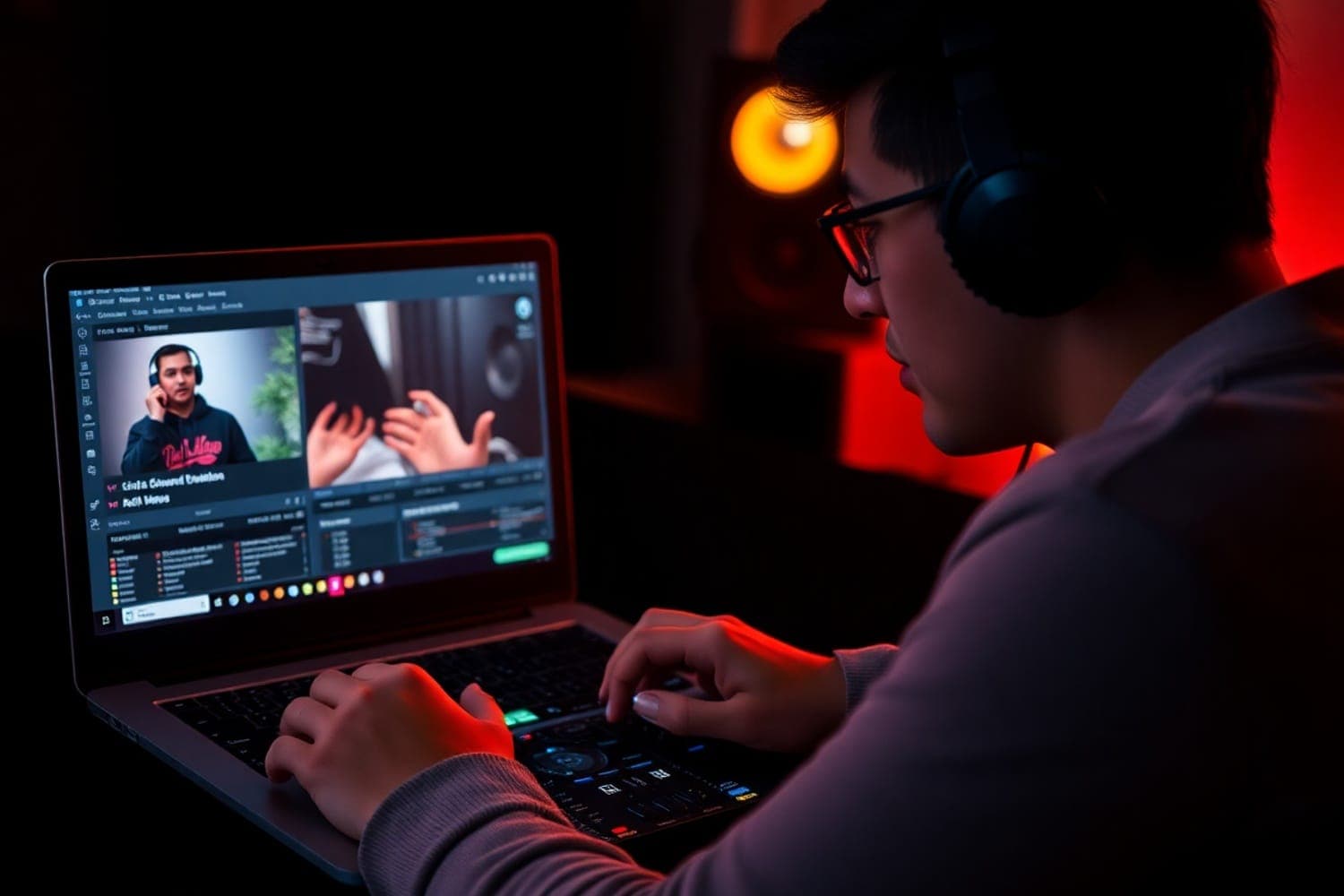
Learning to DJ from YouTube is possible, but it's inefficient. You spend more time searching for the right tutorial than actually practising. Structured online courses solve this — they provide a clear progression from basic beatmatching to advanced performance techniques, with instructors who can explain not just the how, but the why.
The DJ course landscape ranges from affordable subscriptions to premium academies backed by industry names. The right choice depends on where you are in your DJ journey, what you want to learn, and how much you're willing to invest. Below, we've evaluated the leading platforms.
What to Consider
Your current skill level. Most courses target beginners. If you already know how to beatmatch and blend, look for intermediate or advanced courses that cover specific skills — scratching, harmonic mixing, creative FX, or business skills.
Curriculum structure. The best courses build skills progressively, with each lesson building on the previous one. Avoid courses that dump unrelated topics without a logical learning path. Look for homework assignments or practical exercises — watching isn't learning.
Instructor credibility. Working DJs who still perform regularly teach differently from academics. Check whether instructors are active in the industry and whether they play the style of music you want to learn.
Equipment compatibility. Some courses teach on specific controllers or DJ software. Ensure the course matches the gear you own, or at least teaches transferable skills that apply to any setup.
Price and value. Compare not just the price tag, but the depth and breadth of content. A $450 comprehensive course may be better value than five separate $100 courses that cover the same ground.
1. Club Ready DJ School
Best Overall Value
| Detail | Info |
|---|---|
| Price | $95–$135 per course |
| Format | Video lessons with weekly homework |
| Duration | 4 weeks (flagship course) |
| Level | Beginner to intermediate |
| Free Option | Mini-course available |
Club Ready DJ School, run by Andrew Duffield from Sydney, focuses on one thing: getting you confident enough to perform in front of an audience. The flagship four-week course is structured with video lessons and weekly homework assignments that build progressively from fundamentals to full set performance.
Andrew is a 15-year DJ veteran who still performs regularly, which means the teaching is grounded in real-world gigging, not theory. Students are given goal-based assignments each week, and the course builds skills so that by the end, you can mix any genre at a competent level.
Higher-tier bundles include direct feedback from Andrew on your mixes — a feature that significantly accelerates learning compared to self-study. Upon completion, you receive a certificate. The free mini-course is a genuine taster, not a sales pitch.
At $95–$135, it's the best balance of quality and price on this list. The courses are focused and practical rather than sprawling, which suits beginners who want clear direction without information overload.
2. Crossfader
Best for Equipment-Specific Training
| Detail | Info |
|---|---|
| Price | $80–$125 per course |
| Format | Bite-sized video lessons |
| Courses | ~18 available |
| Level | Beginner |
| Software Focus | Serato DJ, Rekordbox |
Crossfader, founded by Jamie Hartley in the UK, takes a different approach — equipment-specific courses built around the controller or software you actually own. Instead of generic lessons, you learn on your exact setup: there are courses for specific Pioneer controllers, Serato workflows, and Pioneer XDJ systems.
The lessons are deliberately small and chronological. Each builds on the last, preventing beginners from accidentally jumping into material they're not ready for. Jamie and his team are active, gigging DJs, and the teaching reflects practical performance experience.
Free tools and downloadable practice packs (beatmatching loops, scratching samples) are available alongside the paid courses. The scratching course in particular is well-regarded.
The per-course pricing model means costs add up if you want comprehensive coverage. There's no subscription option, which limits flexibility. But if you want focused training on your specific gear, Crossfader's targeted approach is effective.
3. Pete Tong DJ Academy
Best Premium Course
| Detail | Info |
|---|---|
| Price | $397–$447 |
| Format | Module-based video course |
| Instructors | Pete Tong, Carl Cox, Nicole Moudaber, Jamie Jones |
| Level | Beginner to advanced |
| Certificate | Completion certificate + talent pool |
The Pete Tong DJ Academy (PTDJA) launched in 2022 and is the most comprehensive structured course available. The modules progress from fundamentals (beatmatching, gear setup) through advanced techniques (effects, looping, scratching, sampling) to non-technical skills (getting gigs, networking, DJ etiquette).
The instructor lineup is the strongest on any DJ course: Pete Tong, Carl Cox, Nicole Moudaber, TSHA, and Jamie Jones. Each brings a distinct perspective from decades of professional performance. This isn't a celebrity name slapped on generic content — the instructors teach their actual craft.
The standout feature is the talent pool. Students who complete the full course and demonstrate strong skills are selected to play at partner clubs and affiliate radio stations. This bridges the gap between learning and performing — a genuine pathway that other courses don't offer.
At $447 for the full course, it's a significant investment. But the instructor quality, curriculum depth, and real-world performance opportunities justify the price for DJs serious about making this their profession.
4. Digital DJ Tips
Best Range of Courses
| Detail | Info |
|---|---|
| Price | $297–$497 per course |
| Format | Video courses with community |
| Courses | 25+ available |
| Instructors | Phil Morse, DJ Jazzy Jeff, James Hype, Laidback Luke |
| Level | Beginner to advanced |
Digital DJ Tips, created by Phil Morse in Manchester in 2010, has trained over 30,000 students. The breadth of their course catalogue is unmatched — 25+ courses covering everything from beatmatching fundamentals to starting a DJ business to mastering specific DJ software.
The "Complete Courses" ($497) are flagship programs designed to take a beginner from zero to competent DJ, covering technique, music theory, gear knowledge, and self-promotion. Guest instructors include DJ Jazzy Jeff, James Hype, and Laidback Luke, adding real industry insight.
The community aspect is a strength — access to other students and mentors extends the value beyond the course material itself. The wide range of specialised courses means you can return for targeted learning as your skills develop.
The pricing is at the higher end. For a single complete course at $497, you're paying more than alternatives that offer similar foundational training. The value proposition improves if you need multiple specialised courses, since the breadth of the catalogue is genuinely useful.
5. Point Blank Music School
Best for Music Production Crossover
| Detail | Info |
|---|---|
| Price | ~$1,000 (6-month DJ Skills in Depth) |
| Format | Online modules (university-style) |
| Physical Locations | London, LA, Ibiza, Mumbai |
| Level | Beginner to professional |
| Accreditation | Accredited qualifications available |
Point Blank is a proper music school, not just a course platform. Operating since the 1990s with physical campuses in London, LA, Ibiza, and Mumbai, their online programs carry institutional weight. The DJ curriculum sits within a broader music education framework that includes production, sound engineering, singing, and music business.
The DJ-specific courses cover technique and music theory alongside practical skills. The "Creative DJ Skills" module (10 weeks) focuses on harmonic mixing, acapella techniques, and creative experimentation. Combined with the foundational course as a 6-month "DJ Skills in Depth" package, it's the most thorough training available.
Point Blank also teaches production with tools like Pioneer DJ equipment, Rekordbox, and Ableton Live. For DJs who also want to produce their own music, this crossover is uniquely valuable.
The price (~$1,000 for the full package) puts it out of reach for casual learners. This is for DJs who are serious about making music a career and want a recognised educational credential alongside their skills.
Other Courses Worth Considering
DJ Courses Online — A subscription-based platform at $19/month with around 10 in-depth courses covering fundamentals through advanced techniques. Tutorials on Serato, Rekordbox, Traktor, and Ableton Live. The cancel-anytime model makes it low-risk. Best used as a supplement to another course. Content isn't updated as frequently as competitors.
Virtuoso — A newer subscription platform (launched 2022) focused exclusively on music industry education. Over 30 DJ-related courses with more added regularly. Strong on fundamentals but still building out advanced content. Worth watching as they develop their library.
FAQs
Are online DJ courses worth it?
Yes, if you choose the right one for your level. A structured course with clear progression saves months of unfocused YouTube browsing. The best courses teach not just techniques, but the why behind mixing decisions, music selection, and set construction. They're most valuable for beginners who need a foundation and intermediate DJs looking to fill specific skill gaps.
Can I learn to DJ without a course?
Absolutely. Many professional DJs are self-taught through practice, YouTube tutorials, and trial and error. However, structured courses provide a faster, more organised learning path. They're particularly helpful for understanding music theory, beatmatching fundamentals, and proper technique — things that are harder to learn from scattered free resources.
What equipment do I need before starting a DJ course?
At minimum, you need a DJ controller and a laptop with DJ software. Most beginner courses are designed around entry-level controllers like the Pioneer DDJ-FLX4 or Numark Mixtrack Platinum FX. Some courses are software-specific (Serato, Rekordbox), so check compatibility before enrolling. A pair of headphones for cueing is essential for practising the techniques taught.
How long does it take to learn DJing?
Basic mixing skills (beatmatching, simple transitions, track selection) can be learned in 4–8 weeks with consistent daily practice. Becoming confident enough to play a full set for an audience typically takes 3–6 months. Developing a personal style and advanced techniques like scratching, harmonic mixing, and creative FX use is an ongoing process that takes years.
What is the best free DJ course?
Club Ready DJ School offers a free mini-course that covers the basics. DJ Courses Online provides a low-cost subscription option. Beyond dedicated courses, YouTube channels like Crossfader, DJ Carlo Atendido, and Phil Harris offer excellent free tutorial content. Mixxx (free DJ software) also includes documentation that doubles as a learning resource.
Verdict
Club Ready DJ School offers the best value for beginners — structured, practical, and priced fairly at $95–$135. The weekly homework and direct feedback options make it more than passive video watching.
For equipment-specific training, Crossfader teaches on the gear you actually own. For DJs willing to invest in a premium experience, the Pete Tong DJ Academy combines world-class instructors with a genuine pathway to performing at real venues.
Digital DJ Tips has the widest course selection for DJs who want to specialise in specific areas over time. And for those who want music production alongside DJ skills, Point Blank Music School offers the most comprehensive education — at a price that reflects its institutional quality.
Start with what you can afford. Even the most basic structured course will accelerate your learning faster than unguided practice. Upgrade to specialised courses as specific skill gaps emerge.