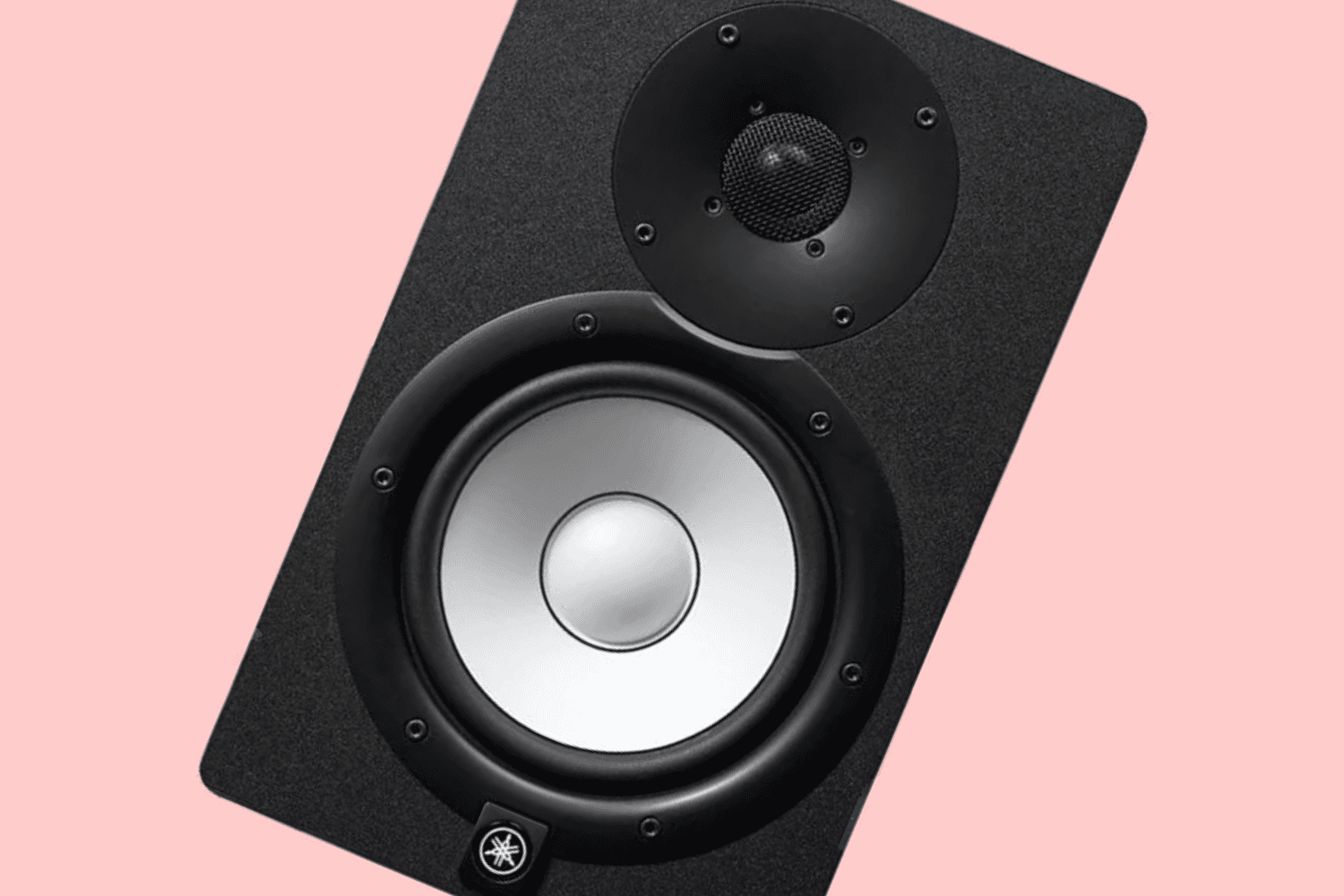
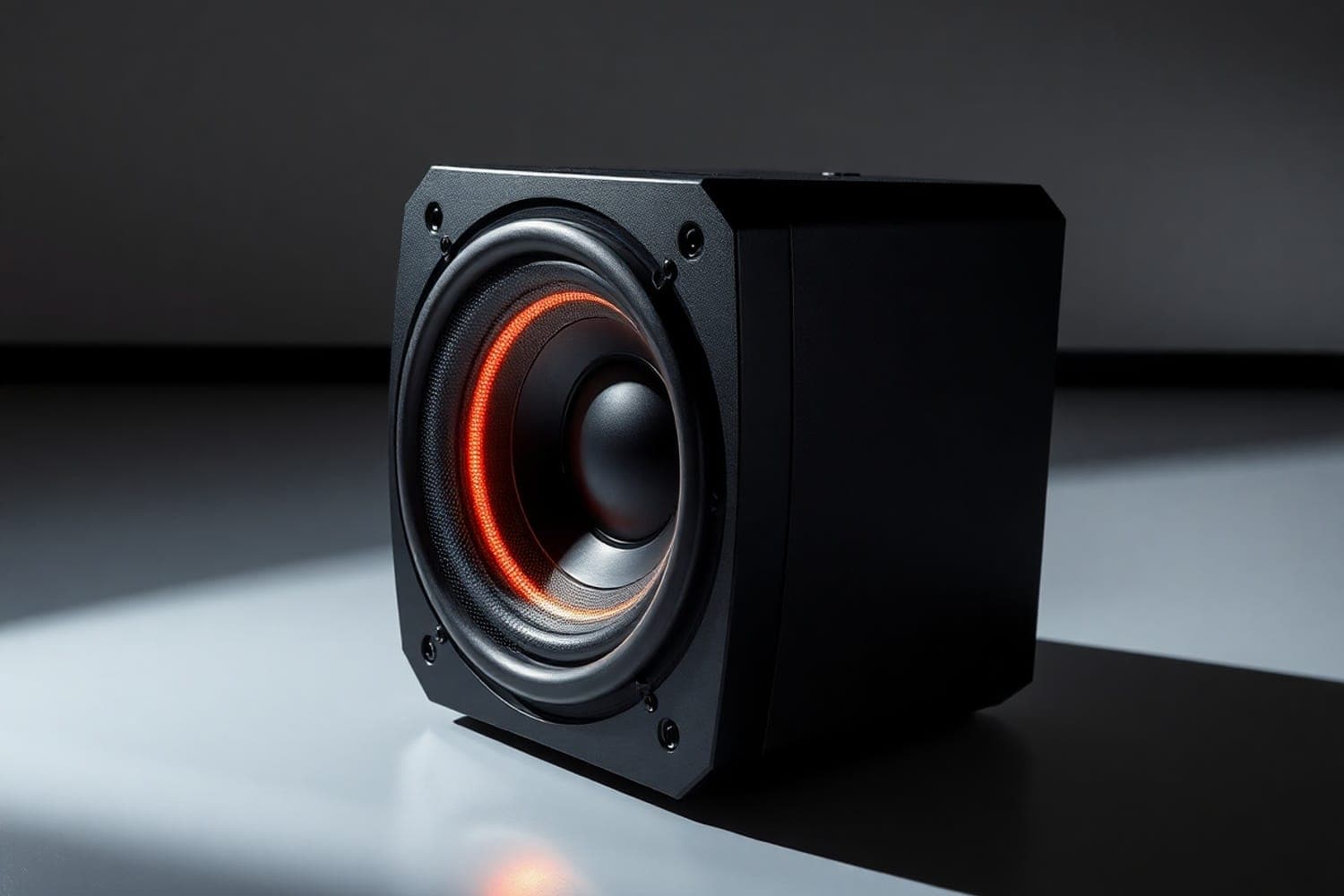
Your main speakers handle mids and highs. A subwoofer handles everything below — the kick drums, bass lines, and low-end weight that makes dance music hit your chest. Without a dedicated sub, your speakers try to do everything and end up doing nothing well at the bottom end.
Powered subwoofers simplify the setup. The amplifier is built in, matched to the driver by the manufacturer for optimal performance. No external amp to buy, no impedance matching to worry about. For DJs, that simplicity matters — especially when you're setting up at a venue under time pressure.
We've tested studio subs for home use and gigging subs for live events, and ranked the best options below.
What to Look For
Before choosing a subwoofer, understand these key factors.
Driver size. The woofer diameter directly affects bass depth and volume. 8-inch subs suit small studios. 10–12 inch subs handle mid-sized rooms and small venues. 15–18 inch subs fill large spaces and outdoor events. Bigger drivers need more power and weigh significantly more.
RMS vs peak power. Manufacturers love to advertise peak wattage, but RMS (root mean square) is what matters — it represents the continuous power output your sub can sustain without distortion. A sub with 500W RMS is more useful than one with 2,000W peak but only 300W RMS. Compare RMS figures, not peak.
Crossover control. A good subwoofer has an adjustable crossover frequency, letting you set where the sub takes over from your main speakers. This prevents frequency overlap and ensures clean, defined bass. Look for crossover controls with a range of at least 50–120Hz.
Build and portability. Studio subs can be heavy — they sit in one place. Gigging subs need to survive transport, so look for reinforced corners, quality handles, and a manageable weight. Plywood enclosures are more durable than MDF; reinforced steel corners protect against drops.
1. KRK Systems S12.4
Best Studio Sub
| Spec | Detail |
|---|---|
| Driver | 12-inch Kevlar |
| Frequency Response | 26Hz – 200Hz |
| Crossover | Adjustable with HPF bypass |
| Inputs | XLR, TRS, RCA |
| Weight | 62.5 lbs |
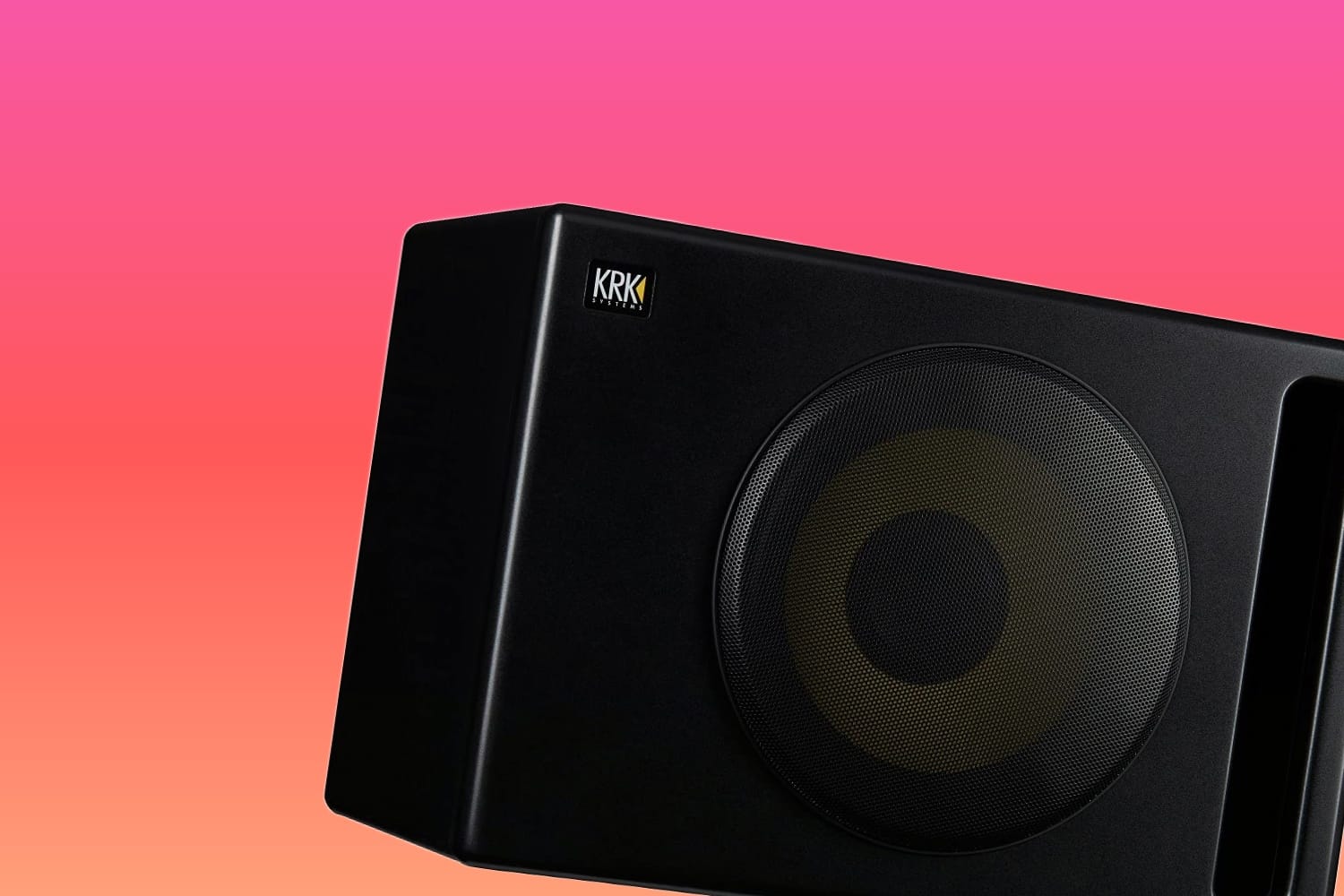
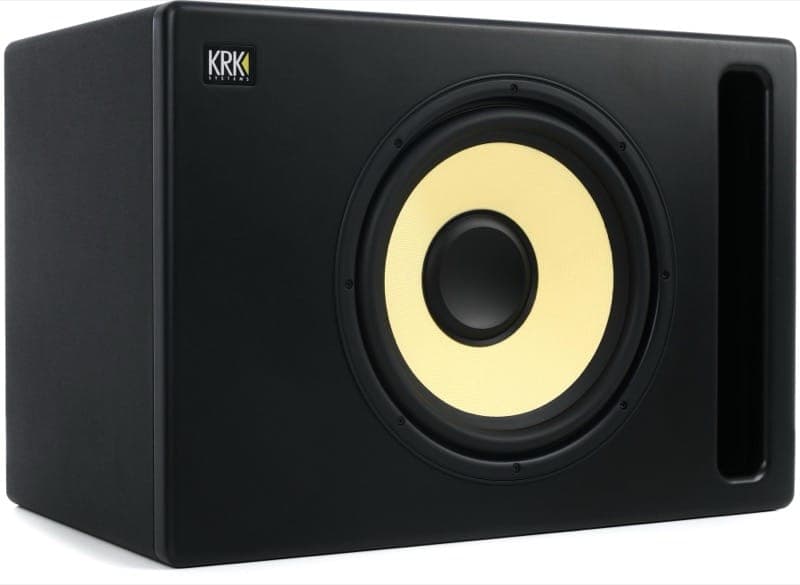
The KRK Systems S12.4 is the studio subwoofer that DJs and producers reach for when they need deep, defined bass without muddiness. The 12-inch Kevlar woofer extends down to 26Hz — low enough to hear the sub-bass content in drum and bass and dubstep tracks that most monitors miss entirely.
The dedicated crossover control and high-pass filter bypass let you precisely integrate the S12.4 with your existing studio monitors. Extensive I/O (XLR, TRS, RCA) connects to any audio interface or DJ mixer without adapters. The reinforced MDF enclosure provides a solid, resonance-free foundation.
At 62.5 lbs, this is not a portable sub — it's meant to sit in your studio permanently. And it requires proportionate monitors to pair well (underpowered monitors will sound thin next to it). But for DJs who produce music or want accurate bass monitoring in their home setup, the S12.4 is the benchmark.
KRK S12.4
If you’re looking to use the S12.4 KRK powered studio subwoofer for dance music purposes, this is one of the best KRK...
2. Bose F1 Subwoofer
Best Gigging Sub
| Spec | Detail |
|---|---|
| Power | 1,000W |
| Drivers | 2x 10-inch high-excursion |
| Distortion | 0.1% max |
| Pairing | Bose F1 Model 812 tops |
| Weight | 55 lbs (with wheels) |
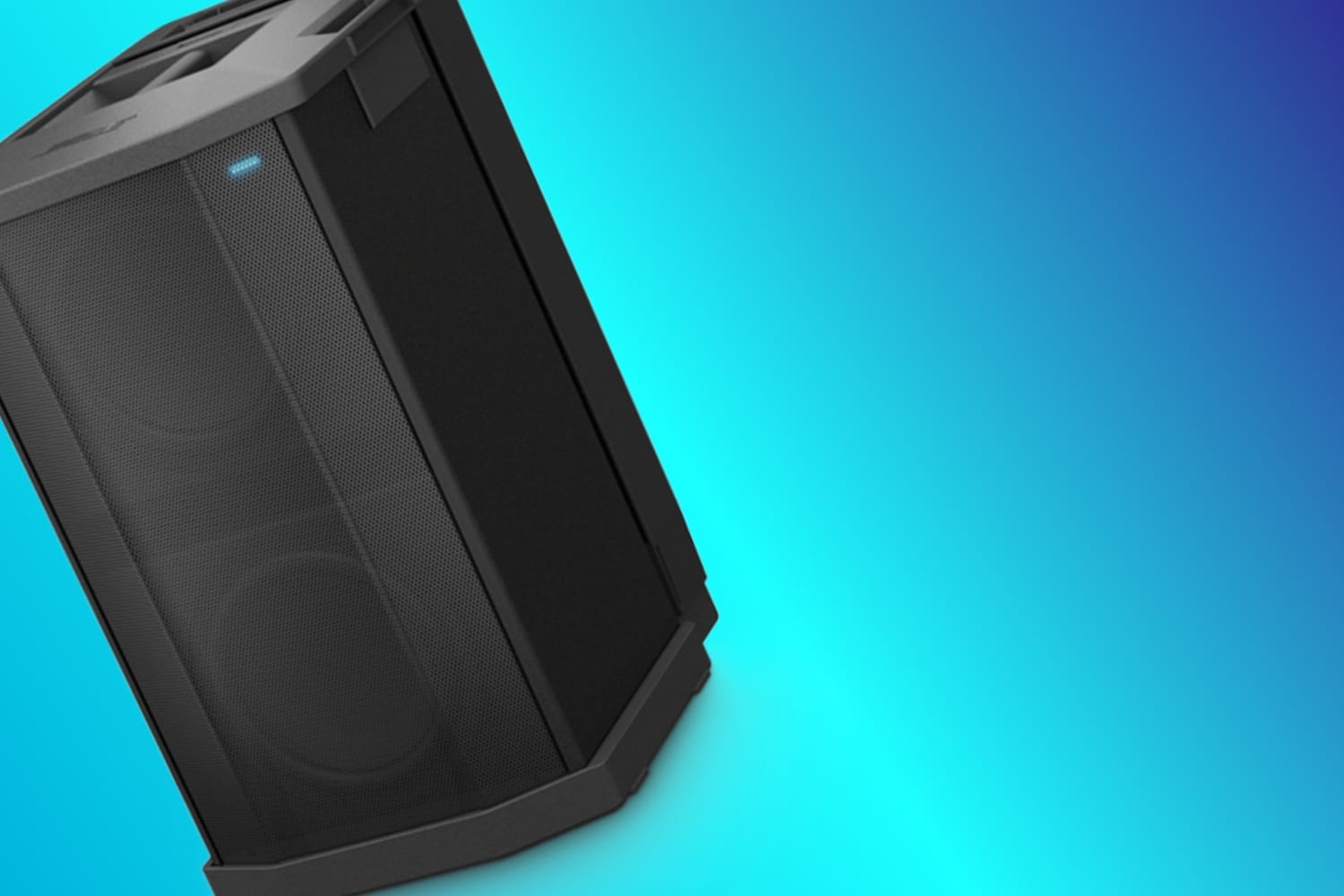
The Bose F1 Subwoofer delivers powerful, punchy bass that's virtually distortion-free — a rarity at this power level. Twin 10-inch high-excursion drivers push 1,000W of clean low-end, and the 0.1% max distortion figure means your bass stays tight and defined even at high volumes.
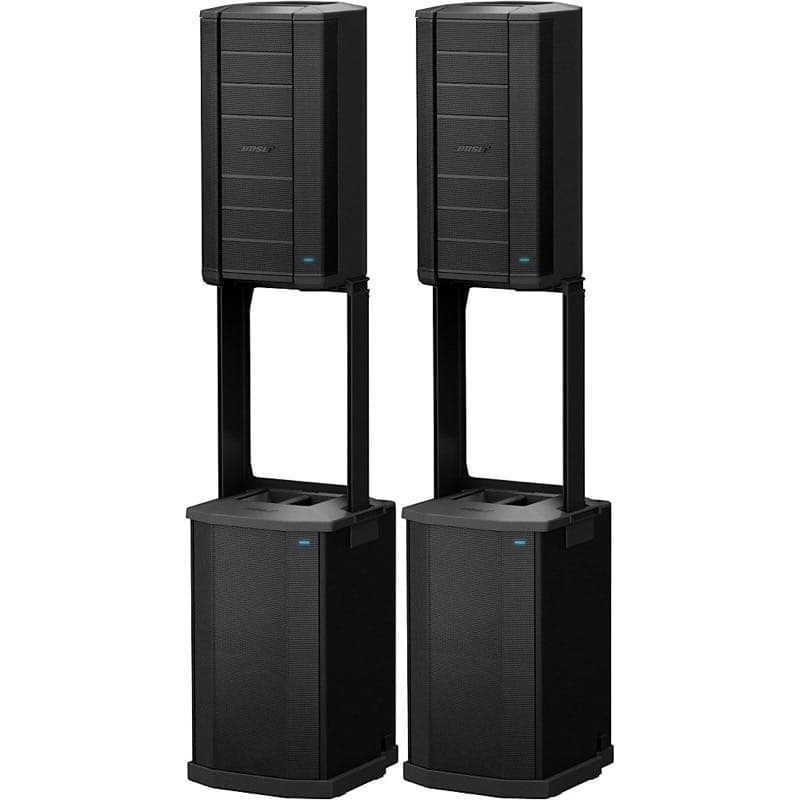
The F1 is designed to pair with the Bose F1 Model 812 loudspeaker, which mounts directly on top — creating a clean, compact PA stack with minimal cabling. At 55 lbs with built-in wheels, it's manageable for solo loading. The professional appearance fits naturally in corporate events and weddings where aesthetics matter.
EQ and tuning options are limited — Bose's philosophy is "designed to sound right out of the box." It's not weatherproof, so outdoor use requires cover. But for mobile DJs who need a reliable, clean-sounding sub they can load and unload every weekend, the F1 is built for exactly that workflow.
Bose F1
When it comes to Bose as a company and what it offers, it can’t be overstated enough that they focus on creating a...
Other Subwoofers Worth Considering
Alto Professional TS312S — a 12-inch powered sub with 2,000W peak and 1,000W continuous RMS. The Truesonic DSP delivers impressive punch for the price. MDF construction is less durable than plywood, but the sound quality justifies consideration for DJs on a tighter budget.
JBL EON 618S — an 18-inch sub weighing 78 lbs with JBL's waveguide technology. Max SPL of 134dB makes it one of the loudest options available. Super durable build with Bluetooth connectivity for remote EQ. Best for DJs who play medium to large venues regularly.
Rockville RGB18S — an 18-inch powered sub with a bass boost feature and adjustable low-pass filter. Built-in wheels and three handles make the 84-lb weight manageable. Plywood enclosure with steel corner reinforcement survives regular transport. Good value for the power output.
Yamaha NS-SW050BL — a budget 8-inch sub with the Yamaha brand behind it. The redesigned twisted flare port produces clean, focused bass at 50W. Limited controls and smaller size, but excellent for home studio setups where space and budget are constraints.
FAQs
What is the difference between powered and passive subwoofers?
Powered (active) subwoofers have a built-in amplifier — plug in power, connect your source, and play. Passive subwoofers require a separate external amplifier that you must purchase and match. Powered subs are simpler to set up and more convenient for most DJs.
What size subwoofer do I need?
For studio use and home practice, an 8–10 inch sub is sufficient. For gigging at small to medium venues, 12 inches handles most situations. For large events and warehouse parties, 15–18 inch subs deliver the deep, room-filling bass you need. Bigger subs are heavier — factor in portability if you're mobile.
Do I need a subwoofer for DJing?
For home practice, your main speakers may provide enough bass. For live gigs, a subwoofer is essential — it handles the low frequencies that main speakers struggle to reproduce at volume, resulting in cleaner overall sound and deeper bass impact. Bass-heavy genres like drum and bass, dubstep, and hip-hop especially benefit.
What is a crossover and why does it matter?
A crossover splits the audio signal, sending low frequencies to the subwoofer and mid/high frequencies to your main speakers. A good crossover prevents overlap, so each speaker handles only the frequencies it's designed for. Most powered subs have a built-in adjustable crossover — set it to match your main speakers' low-frequency cutoff for the cleanest sound.
How do I position a subwoofer?
In a studio, place the sub on the floor between and slightly in front of your monitors, away from walls and corners (which boost bass unnaturally). For live events, centre the sub under or near the front of the stage. Avoid placing subs on raised surfaces — they're designed to couple with the floor for maximum low-end extension.
Verdict
The KRK Systems S12.4 is the best studio subwoofer for DJs and producers. Its 26Hz frequency response and Kevlar driver deliver deep, defined bass that integrates seamlessly with nearfield monitors — essential for accurate mixing and production work.
For mobile DJs and live events, the Bose F1 Subwoofer offers 1,000W of virtually distortion-free bass in a portable, professional package with built-in wheels. It pairs perfectly with the F1 Model 812 loudspeaker for a complete PA stack.
Budget-conscious DJs should consider the Alto Professional TS312S for gigging or the Yamaha NS-SW050BL for studio use — both deliver solid performance at accessible price points.