Pendant cinq ans, le Pioneer DJ DDJ-1000 a été le contrôleur auquel tous les autres étaient comparés — la référence 4 canaux qui a apporté un véritable ADN de club à un setup portable. Puis Pioneer a sorti le DDJ-FLX10, avec l'objectif explicite de le détrôner.
Les deux obtiennent 9.5/10 dans nos tests, les deux sont des flagships 4 canaux pleine taille, et ils se ressemblent étonnamment au premier coup d'œil. La vraie question n'est donc pas « lequel est le meilleur » — c'est de savoir si les améliorations du FLX10 justifient de payer plus de 500 $ de plus. Voici comment ils se comparent vraiment.
DDJ-1000 vs DDJ-FLX10 en un coup d'œil
| DDJ-1000 | DDJ-FLX10 | |
|---|---|---|
| Notre note | 9.5/10 | 9.5/10 |
| Logiciel | rekordbox uniquement | rekordbox et Serato DJ Pro |
| Stems / séparation de pistes | Non | Oui, intégré |
| Canaux | 4 | 4 |
| Jog wheels | Mécaniques pleine taille, écrans LCD | Écrans de jog plus grands |
| Connectique | Double USB-A | USB-C + sortie d'éclairage DMX |
| Sorties cabine | XLR, RCA, TRS | XLR, RCA, préamplis phono améliorés |
| Prix approx. | ~1 099 $ | ~1 600 $ |
| Idéal pour | Les DJs rekordbox qui cherchent le meilleur rapport qualité-prix | Les DJs qui veulent le flagship le plus récent et pérenne |
Les arguments en faveur du DDJ-1000
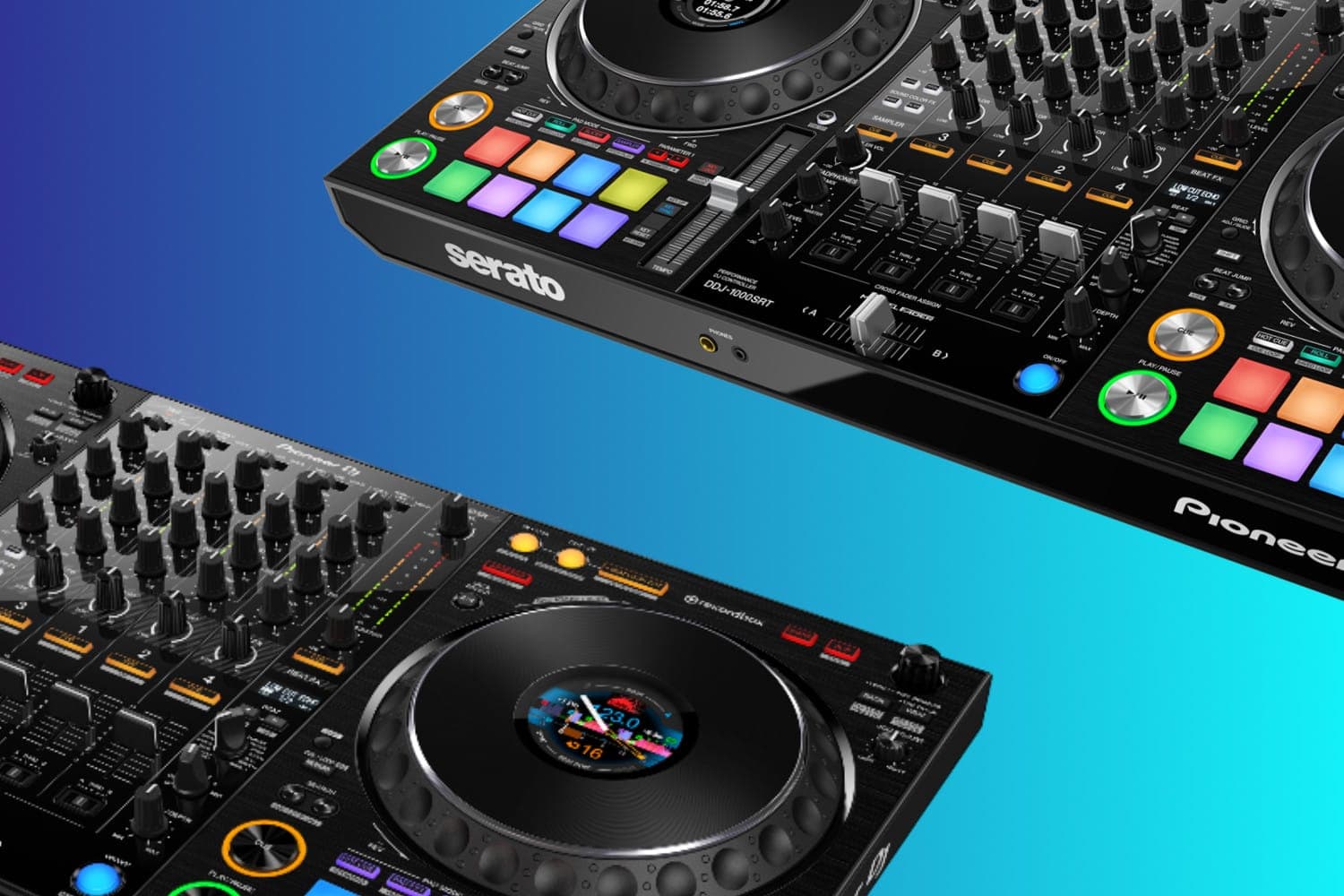
Le DDJ-1000 s'est bâti sa réputation en empruntant directement au matériel de club de Pioneer : des jog wheels mécaniques pleine taille avec écrans LCD reprises du CDJ-2000NXS2, et une table de mixage 4 canaux de type club modelée sur la DJM-900NXS2. Ajoute deux ports USB pour des passages de relais back-to-back sans coupure et des sorties cabine XLR/RCA/TRS complètes, et tu obtiens un contrôleur qui te prépare à une vraie cabine mieux que presque tout ce qui existe à son prix.
Sa seule vraie limite, c'est le logiciel : il est limité à rekordbox, sans support Serato. Mais si rekordbox est ta plateforme, le DDJ-1000 fait tout comme il faut — c'est exactement pour ça qu'il a obtenu un 10 parfait en Fonctionnalités et un 9 en Rapport qualité-prix dans notre test.
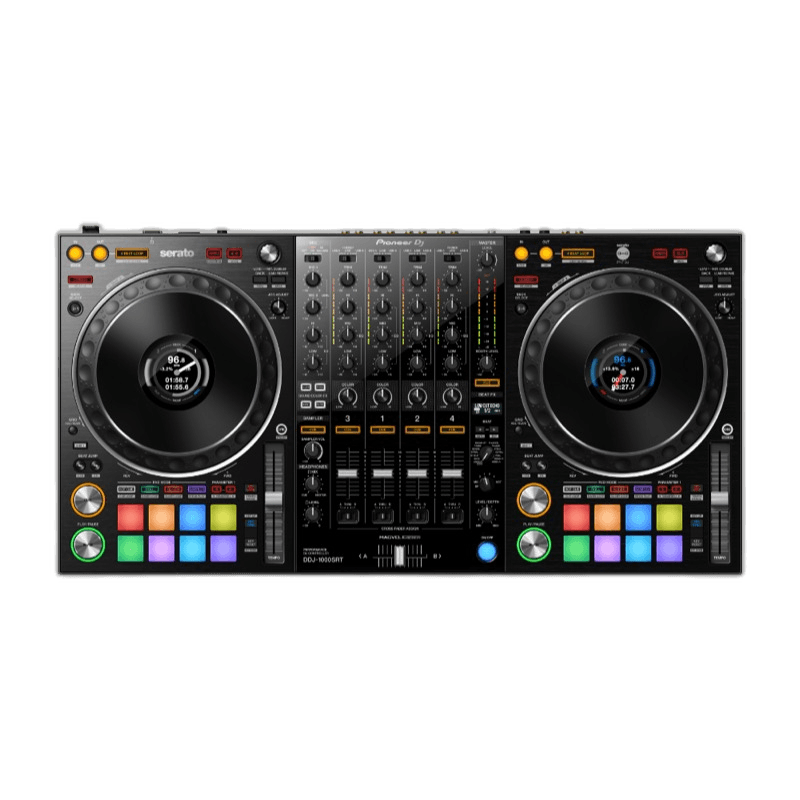
Pioneer DJ DDJ-1000
Le contrôleur rekordbox de référence — performance prête pour le club à un prix prosumer.
Les arguments en faveur du DDJ-FLX10
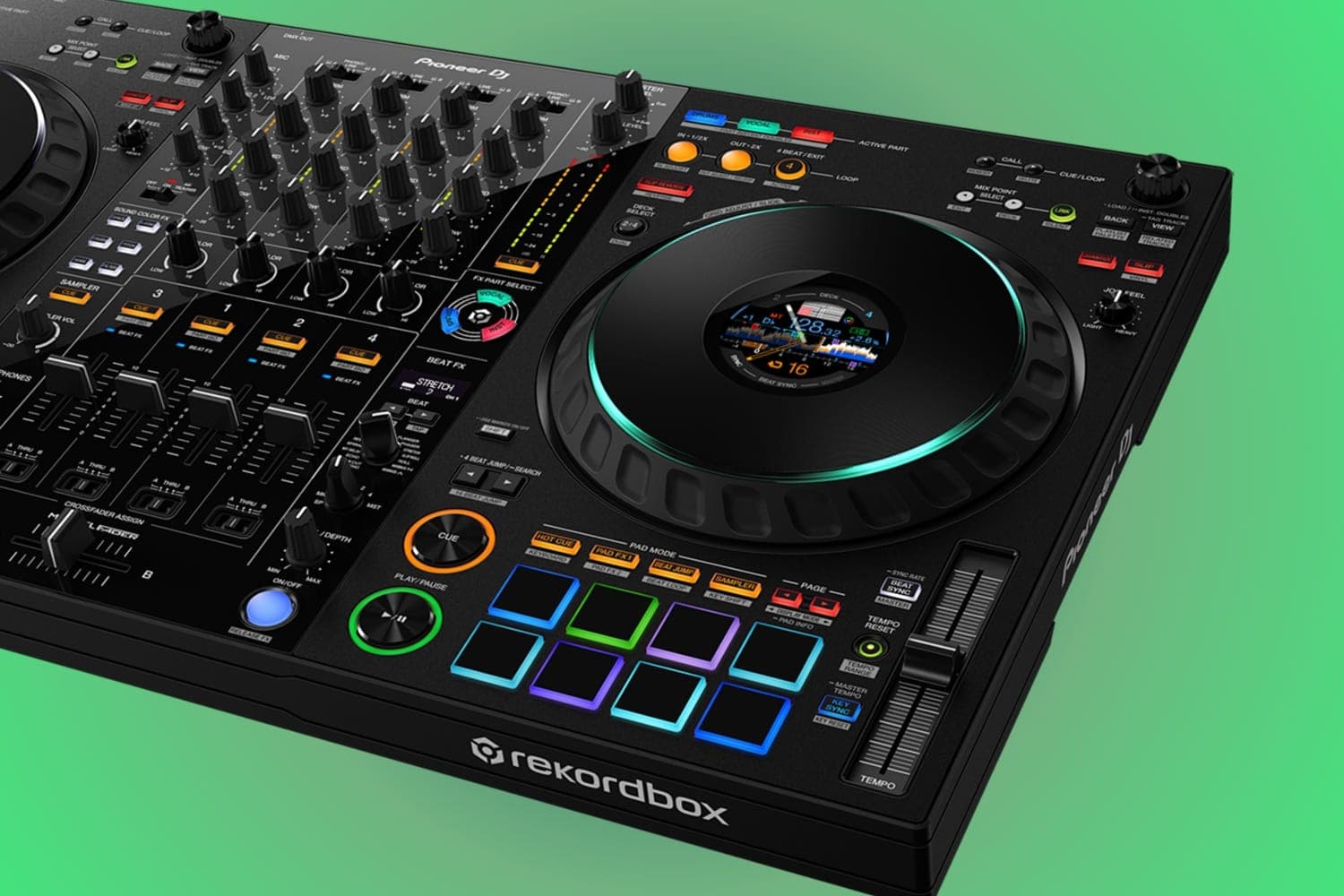
Le FLX10 est le successeur spirituel, et il fait avancer les choses de quatre manières significatives :
- Double logiciel — il fait tourner à la fois rekordbox et Serato DJ Pro, donc tu n'es pas enfermé dans un seul écosystème.
- Stems intégrés — la technologie de séparation de pistes de Pioneer te permet d'isoler les voix, les percussions et les instruments en live, ouvrant la porte à des mashups et des transitions que le DDJ-1000 ne peut tout simplement pas faire.
- Connectique moderne — de l'USB-C au lieu de l'USB-A, plus une prise DMX intégrée pour contrôler l'éclairage directement depuis le contrôleur.
- Des préamplis phono améliorés par rapport au DDJ-1000.
Les compromis : il est affiché autour de 1 600 $ — plus de 500 $ de plus que le DDJ-1000, la qualité audio des Stems continue de mûrir, et comme le DDJ-1000 il a besoin d'un ordinateur portable (aucun des deux n'est autonome). Ce coût supplémentaire explique pourquoi sa note en Rapport qualité-prix (8.5) se situe juste en dessous de celle du DDJ-1000.
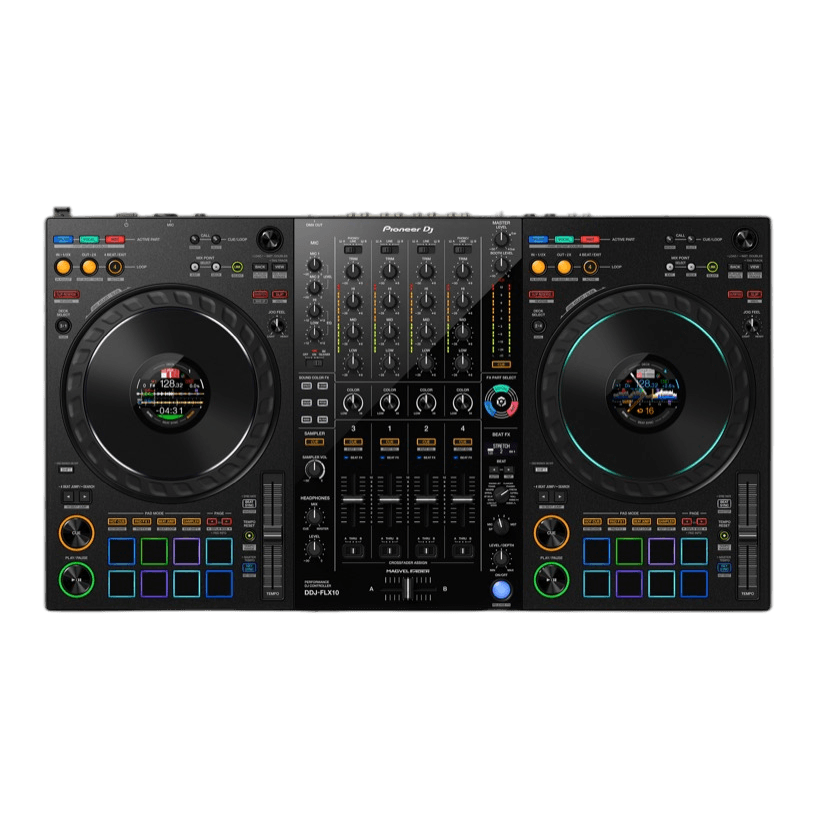
Pioneer DJ DDJ-FLX10
Le nouveau contrôleur phare de Pioneer surpasse avec succès le standard DDJ-1000.
Le verdict — lequel acheter ?
Les deux sont exceptionnels, donc tout se résume à ta plateforme et à ton budget.
Achète le DDJ-FLX10 si tu veux le flagship le plus récent et que tu comptes le garder pendant des années : la flexibilité du double logiciel, les Stems intégrés, l'USB-C et le contrôle DMX en font le contrôleur le plus pérenne que Pioneer fabrique. Si tu mixes sur Serato, ou si tu veux les Stems, c'est le choix évident — et il vaut son supplément.
Achète le DDJ-1000 si tu es fidèle à rekordbox et que tu n'as pas besoin des Stems. Tu obtiens les mêmes jog wheels, table de mixage et sorties au standard club qui en ont fait la référence, pour environ 500 $ de moins — ce qui en fait l'un des contrôleurs sérieux au meilleur rapport qualité-prix que tu puisses acheter. Cette économie te mène loin, vers un casque, des enceintes ou tes premières prestations.
Tu pèses encore d'autres options ? Consulte notre guide complet des meilleurs contrôleurs DJ pour avoir une vue d'ensemble sur tous les budgets.