

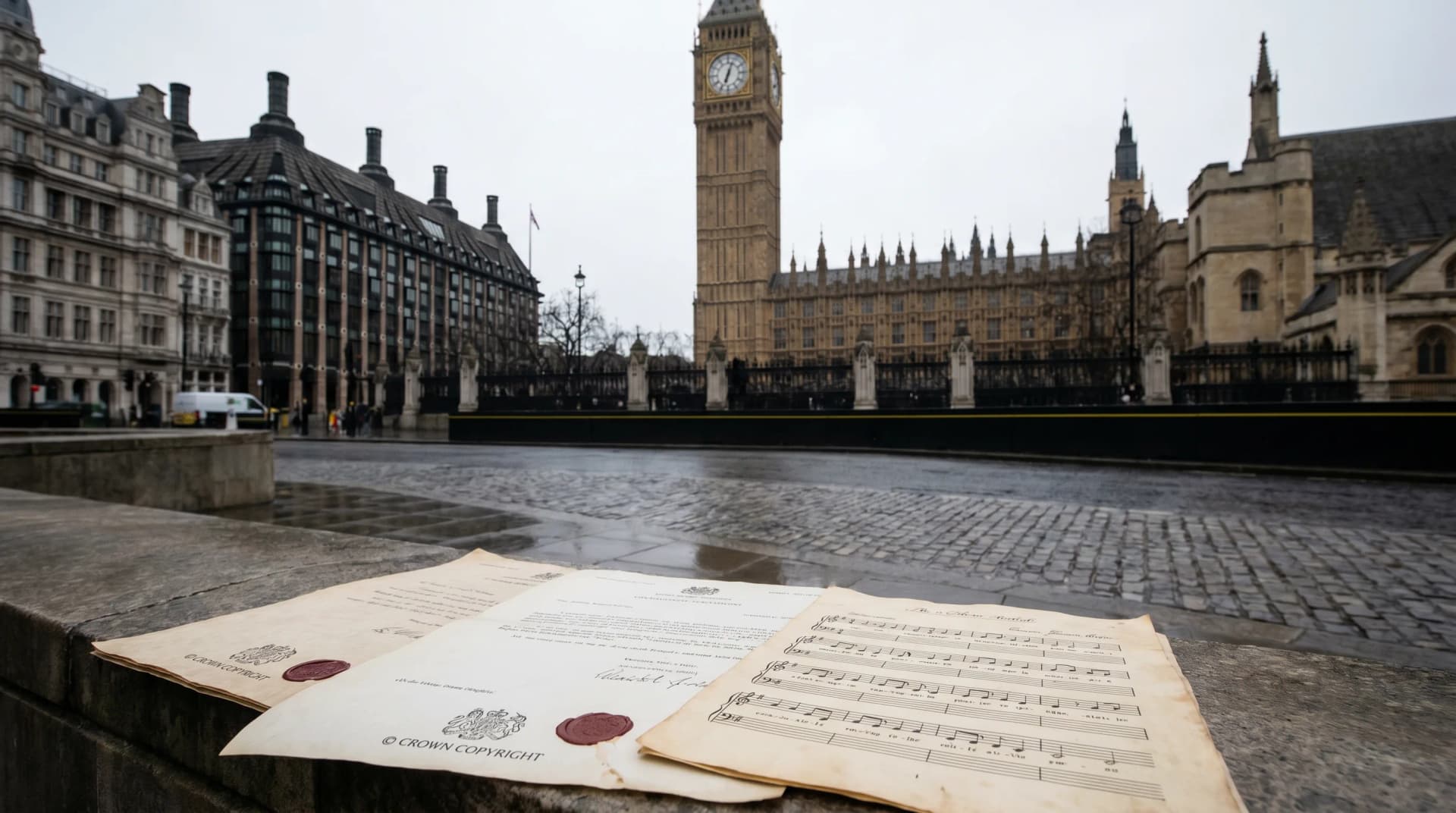
The UK government has scrapped proposed legislation that would have allowed AI companies to train models on copyrighted music without obtaining licenses from rights holders.
Technology Secretary Liz Kendall confirmed the reversal following sustained opposition from musicians, labels, and industry organizations. The decision marks the end of a contentious policy push that originated under the previous Conservative administration in 2022.
What the Proposals Would Have Done
The abandoned measures centered on expanding text and data mining (TDM) exceptions to UK copyright law. Under the proposed framework, AI developers could have harvested copyrighted musical works for training datasets without compensation or permission from creators.
Rights holders would have been required to implement technical protection measures to opt out—effectively reversing the burden of enforcement and placing it on creators rather than those seeking to use their work.
The policy faced immediate backlash when first floated. Organizations including the Musicians' Union, UK Music, and the Ivors Academy argued it would devalue creative work while enriching technology companies at artists' expense.
Industry Response
Kendall's announcement represents a significant policy shift. According to her statement, the government "listened" to concerns raised across the music sector about the financial and creative implications of unrestricted AI access to copyrighted material.
The reversal brings UK policy more in line with the EU's approach, where the 2019 Copyright Directive requires AI companies to obtain licenses for training data unless specific exceptions apply. That framework has shaped ongoing negotiations between rights holders and technology firms across European markets.
For producers and DJs whose income depends on mechanical royalties, sync licenses, and performance rights, the decision preserves existing licensing structures. Sample-based production and remixing already operate within established legal frameworks—the proposals would have created a parallel system specifically benefiting AI developers.
Outstanding Questions
The government has not yet detailed what alternative approach, if any, it will pursue on AI and copyright. Questions remain about how UK law will address AI-generated content that mimics existing artists' styles or incorporates learned patterns from copyrighted training data.
Several ongoing legal cases in UK courts involve AI companies and alleged copyright infringement, proceedings that will now move forward without the proposed TDM exceptions in place.