

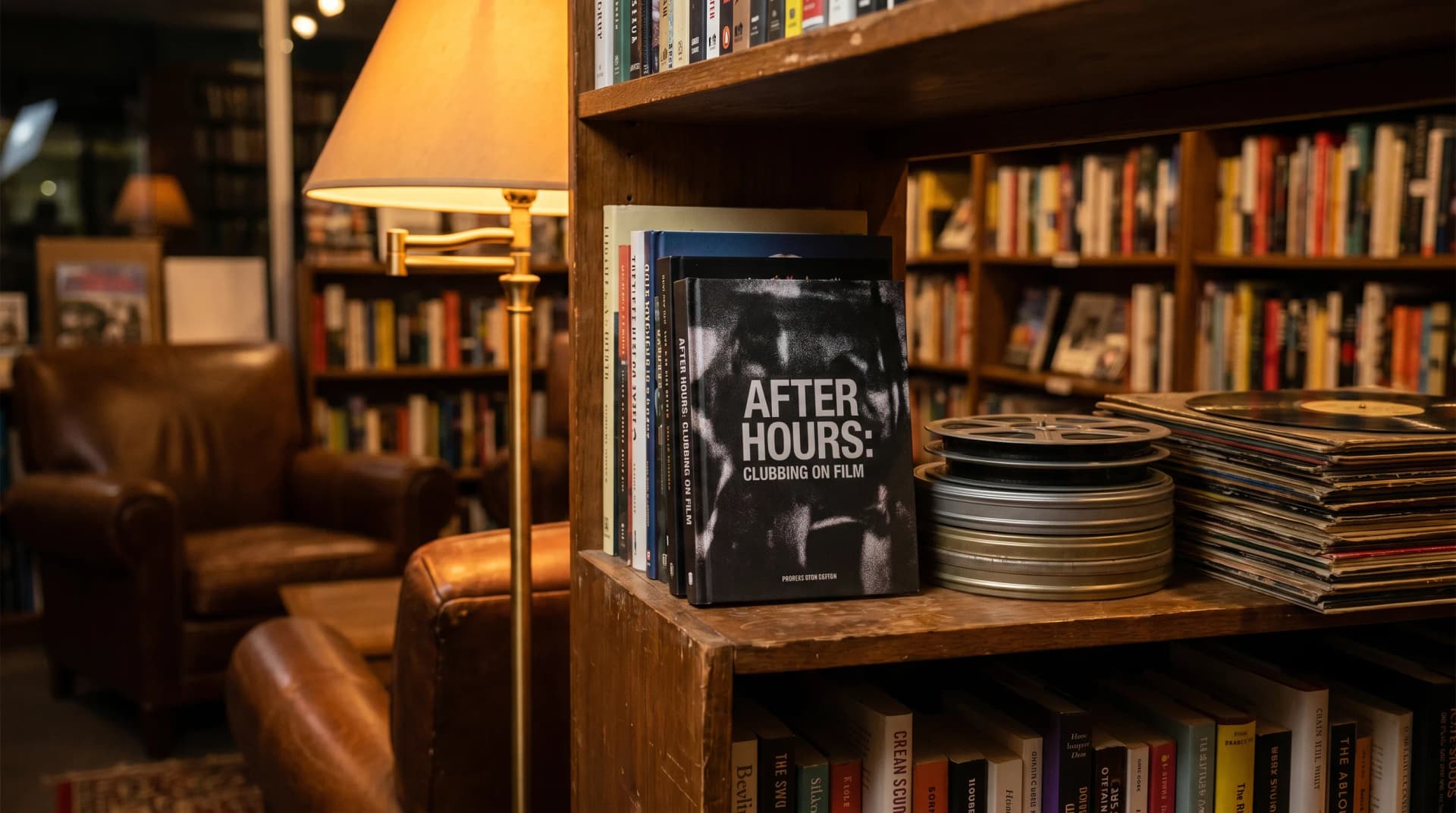
A new publication examining how cinema has portrayed club culture launches in London this month. After Hours: Clubbing on Film explores the intersection between nightlife and moving image, tracking representations of dance floors and DJ booths across film history.
Launch Details
Reference Point, the Soho bookshop and bar, hosts the launch event on Saturday, April 18th. The venue's combination of retail and hospitality space fits the book's subject matter—a hybrid environment that mirrors how club culture exists both as commercial enterprise and creative space.
According to DJ Mag, the book examines club culture's cinematic representations, though specific details about the author, publisher, and scope of films covered remain unannounced.
Cinema's Club Problem
Film has struggled to capture what happens in club spaces. The technical challenges alone—low light, movement, the disconnect between recorded audio and what actually fills a room—mean most club scenes in mainstream cinema either over-light the space or reduce it to montage.
The cultural challenge runs deeper. Directors unfamiliar with club environments often default to clichés: the sleazy underworld, the drug-fueled chaos, or worse, the awkward insert shot of a DJ pretending to turn knobs while clearly not beatmatching.
A few films have managed authentic portrayals. 24 Hour Party People captured the Factory Records era's chaotic energy. Human Traffic nailed the minutiae of a night out in ways that resonated with an entire generation of ravers. Berlin's techno scene got documentary treatment in B-Movie: Lust & Sound in West-Berlin, which showed how club culture develops in specific political and architectural contexts.
Documentation vs. Fiction
The book arrives as archival footage of club nights gains traction online. TikTok and YouTube channels regularly surface VHS recordings from 1990s raves and 2000s garage nights, material that often conveys atmosphere more effectively than scripted fiction.
Professional documentation has expanded too. Boiler Room transformed DJ sets into watchable content by acknowledging the crowd, while platforms like Cercle place DJs in visually striking locations specifically for camera.
The question After Hours presumably addresses: how does fictional cinema—with its narrative demands and commercial pressures—handle spaces designed around sound, movement, and ephemeral community? And what do those representations reveal about how mainstream culture views nightlife?