

The Common Thread
MusicRadar surveyed eight established techno producers about their studio processes, uncovering a shared philosophy that contradicts the minimize-and-optimize mentality often preached in production circles. The consistent advice: capture everything as it happens and maintain complete archives of every session.
The article features producers working across the techno spectrum, from minimal to industrial, each explaining their approach to tracking ideas and managing the inevitable chaos of hardware-heavy sessions. Rather than selective recording or careful pre-planning, the consensus leans toward hitting record at the start of every session and sorting through material later.
Hardware Sessions and Digital Memory
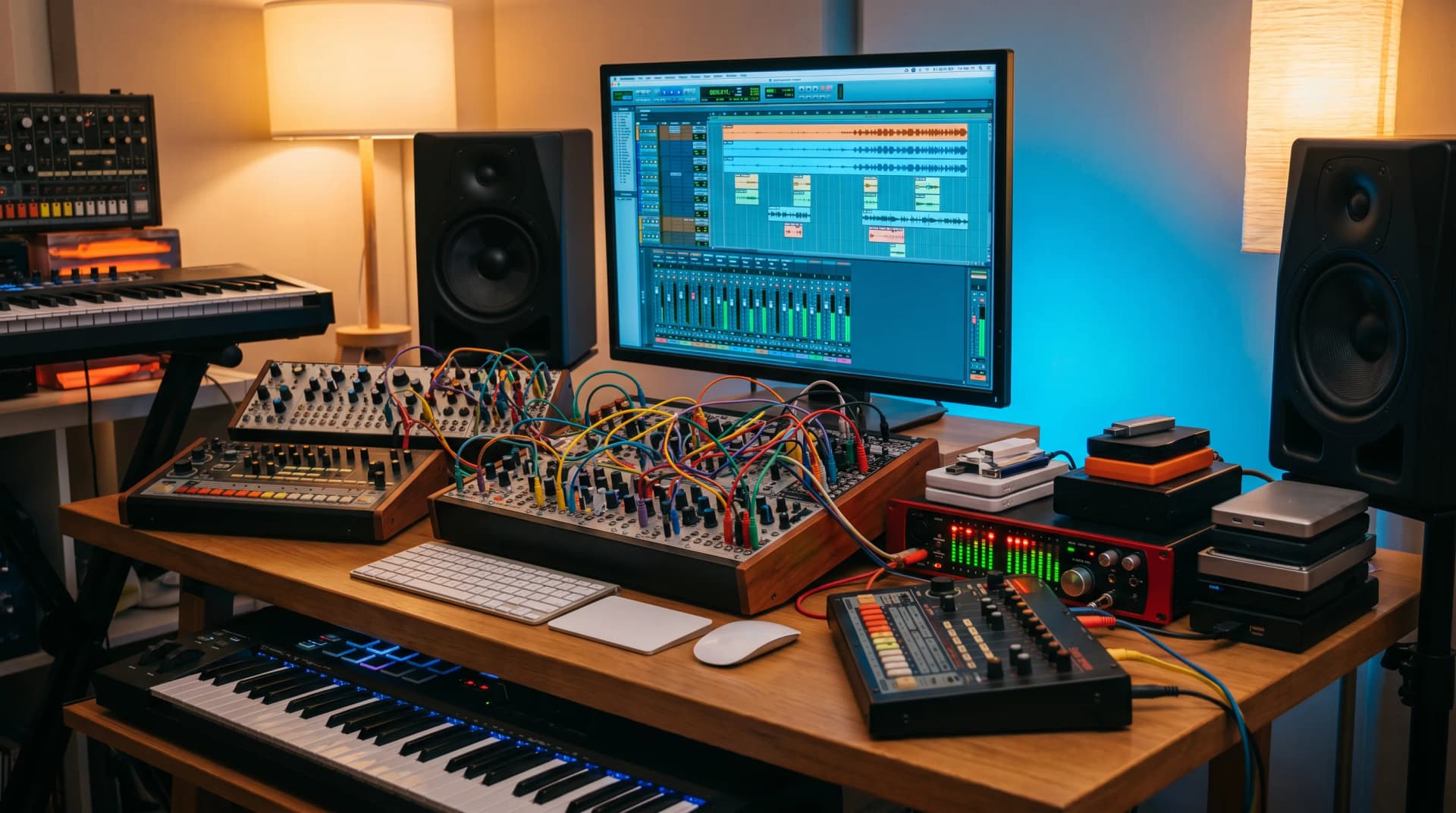
Several producers emphasized the importance of recording complete takes when working with modular systems or hardware sequencers, where recreating a specific patch state borders on impossible. The philosophy extends beyond capturing happy accidents—it's about documenting the entire exploratory process that leads to finished tracks.
One recurring theme involves the relationship between spontaneous performance and post-production editing. Multiple producers described recording extended jams of 20-30 minutes, then mining those sessions for usable segments during the arrangement phase. This approach treats the initial recording as raw material rather than attempting to nail perfect takes in real time.
Archive Management as Creative Practice
The conversation also addressed practical storage considerations. With multi-track hardware recordings generating substantial file sizes, several producers discussed their backup strategies, typically involving multiple redundant drives and cloud storage for critical projects.
The archiving philosophy serves a secondary function beyond protecting work in progress. Several producers noted that old session files become reference material, allowing them to understand how previous tracks came together. This creates a personal production database that informs future work without copying past ideas directly.
The Argument Against Minimalism
The approach stands in contrast to common production advice that emphasizes decisiveness and culling ideas aggressively. These producers argue that storage is cheap enough to make deletion unnecessary, and that material dismissed during initial sessions often reveals its value months or years later.
The methodology assumes access to hardware and sufficient disk space—barriers that remain real for producers working with limited resources. However, the core principle translates to any production environment: the cognitive load of deciding what to keep during creative sessions may cost more than the hard drive space to preserve everything.
For producers working primarily with software, the same principle applies through comprehensive project file management and regular automated backups, though the file sizes remain more manageable than multi-track hardware recordings.