
DJ Tech Reviews

Pioneer DJ VM-70

A 6.5-inch monitor whose rear EQ switches move between flat and club bass, but its rear port needs room.

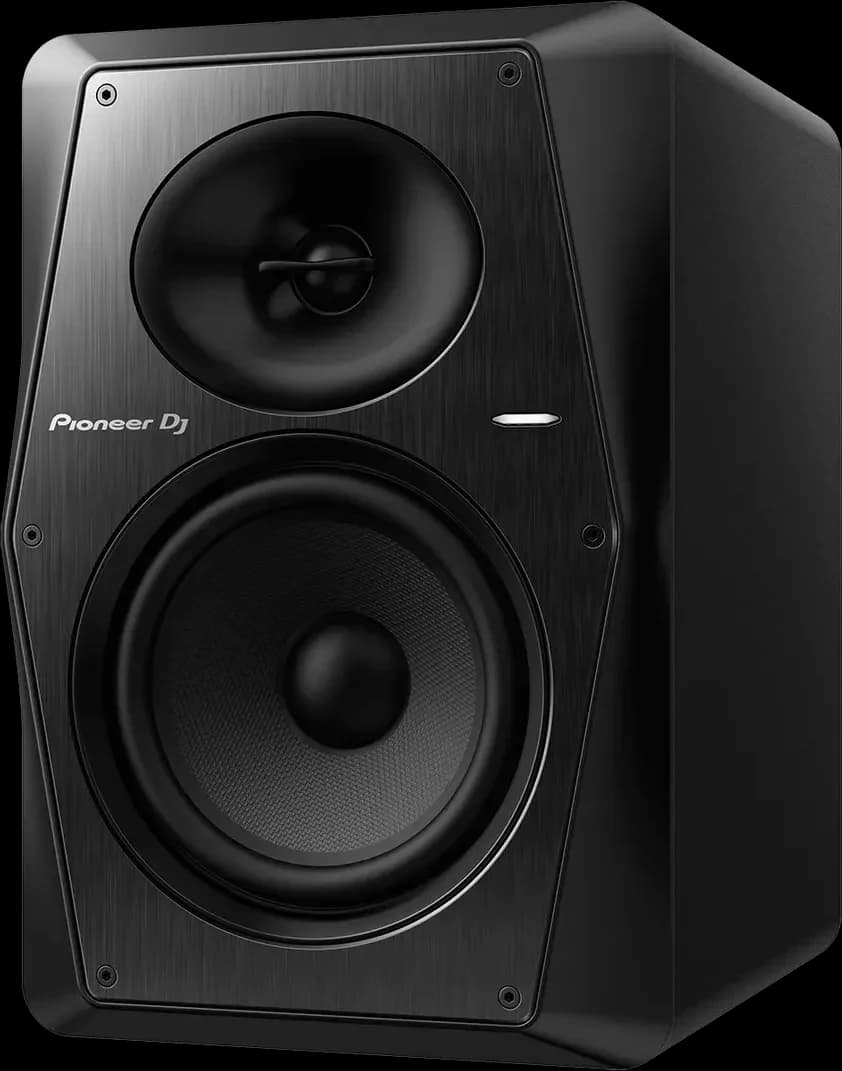
Pioneer DJ VM-70 at an angle

Photos: Pioneer DJ / AlphaTheta Corporation

All retailers and the price history

We may earn commission from links on this page. This does not affect our editorial independence.

86%

of 7 reviews recommend it

See reviews
Best for
DJs who also produce and want one pair for both, in mid-sized rooms.
Skip it if
Your speakers must sit against a wall, or you want finely adjustable room correction.

The Internet’s Opinion

From 7 professional reviews: a fair amount of evidence.

Six of seven professional reviews recommend it, all crediting the rear EQ switches that take it from a flat voicing for production to boosted bass for DJing, and most praise the build and the value. The reservations are placement, as the rear port needs room from the wall, and a slightly dull top end on the flat setting; no owner reviews were available to read.

6 recommend1 mixed0 avoid

What people praise

  • Rear EQ switches move it from a flat studio voicing to boosted club bass
  • Solidly built, with a thick aluminium front baffle
  • Good value against similarly priced monitors
Show 4 more
  • Balanced XLR/TRS and RCA inputs suit both studio and DJ gear
  • Wide sweet spot, so the sound holds up when you move around
  • Tight bass with real weight for a 6.5-inch woofer
  • Clear, well-separated mids

What to know first

  • Rear bass port needs space from the wall to avoid boom
  • Treble and upper mids a little dull or muffled on the flat setting
  • EQ is four fixed presets per band, with no finer room correction
See the 7 reviews behind this

7 professional reviews (6 recommend, 1 mixed, 0 avoid); 0 owner reviews read: Guitar Center lists none and Thomann does not stock itCompiled 2026-10-11How this is compiled

Prices

Before you buy

Released
March 2021
Status
Current

Works with

  • Mixers and audio interfacesXLR or 1/4" TRS

    A combo input takes a balanced XLR or 1/4" TRS plug from a DJ mixer or audio interface Manufacturer spec sheet (Pioneer DJ (VM series instruction manual)), checked 2026-10-11

  • Controllers and consumer sourcesRCA input

    An unbalanced RCA input sits beside the XLR/TRS jack; the two inputs are mixed together, so a mixer and an interface can stay connected but both play at once Manufacturer spec sheet (Pioneer DJ (VM series instruction manual)), checked 2026-10-11

  • Different rooms and uses16 EQ presets

    Low EQ (Room 1, Flat, Room 2, Club Bass) and High EQ (Room 1, Flat, Room 2, Bright Treble) knobs on the rear; Room 1 bass cut (6 dB high-pass at 63 Hz) is for placement near a wall Manufacturer spec sheet (Pioneer DJ), checked 2026-10-11

  • Any mains voltage110–240 V

    AC 110–240 V, 50/60 Hz; 45 W power consumption, 0.3 W in auto standby, which can be switched off Manufacturer spec sheet (Pioneer DJ (VM series instruction manual)), checked 2026-10-11

You’ll also need

  • A second VM-70Sold singly

    Each box holds one speaker with one power cord and one sheet of four bottom cushions; a stereo pair means buying two Manufacturer spec sheet (Pioneer DJ (VM series instruction manual)), checked 2026-10-11

  • Signal cablesNot in the box

    The box holds the power cord, bottom cushions, precautions sheet, manual and (in Europe) warranty; XLR, TRS or RCA cables are extra Manufacturer spec sheet (Pioneer DJ (VM series instruction manual)), checked 2026-10-11

  • Space around each speaker15 cm clearance

    For ventilation the manual asks for at least 15 cm of space at the top, rear and each side; the bass port is also on the back Manufacturer spec sheet (Pioneer DJ (VM series instruction manual)), checked 2026-10-11

Key specs

Configuration
Bi-amp 2-way active speaker, bass reflex, MDF vinyl laminate enclosure
Woofer size
6.5 in
LF driver
6.5" (165 mm) aramid cone
Amplifier power (total)
70 W
Amplifier power
LF: 70 W / 4 Ω, HF: 30 W / 4 Ω (Class D with 96 kHz DSP)
Max SPL
112 dB
All 16 specifications
Low-frequency extension
37 Hz
Frequency response
37 Hz – 36 kHz
Inputs
1 x XLR/TRS combo (balanced), 1 x RCA (unbalanced)
Weight
7.7 kg (16.98 lb)
HF driver
1" (25 mm) soft dome
Input impedance
10 kΩ
DSP EQ
LOW EQ and HIGH EQ, 4 positions each (16 combinations)
Power consumption
45 W (0.3 W standby)
Dimensions (W x H x D)
229 x 341 x 312 mm (9.02 x 13.43 x 12.28 in)
Tweeter size
1 in

16 of 16 figures sourced; hover one for its source

Our take

Tony AllenWritten from the sources on this page, not from a loan unit.

Six of seven professional reviews recommend it, and all seven credit the rear EQ switches that take it from a flat voicing for production to boosted bass for DJing; five also praise the build and the value. Three warn that the rear port needs space from the wall, and three hear a slightly dull top end on the flat setting. No owner reviews were found to read. Buy it as one pair for DJing and producing, with room behind it.

What it is

Status, October 2026: current. Pioneer DJ still lists it among its monitor speakers.

What it is

The VM-70 is a 6.5-inch active monitor speaker from Pioneer DJ, launched in March 2021 as the middle model of the VM Series, between the VM-50 and the VM-80 (Pioneer DJ product page). Pioneer DJ voices the series flat for production and lets the sound be tuned towards a club setup for DJing.

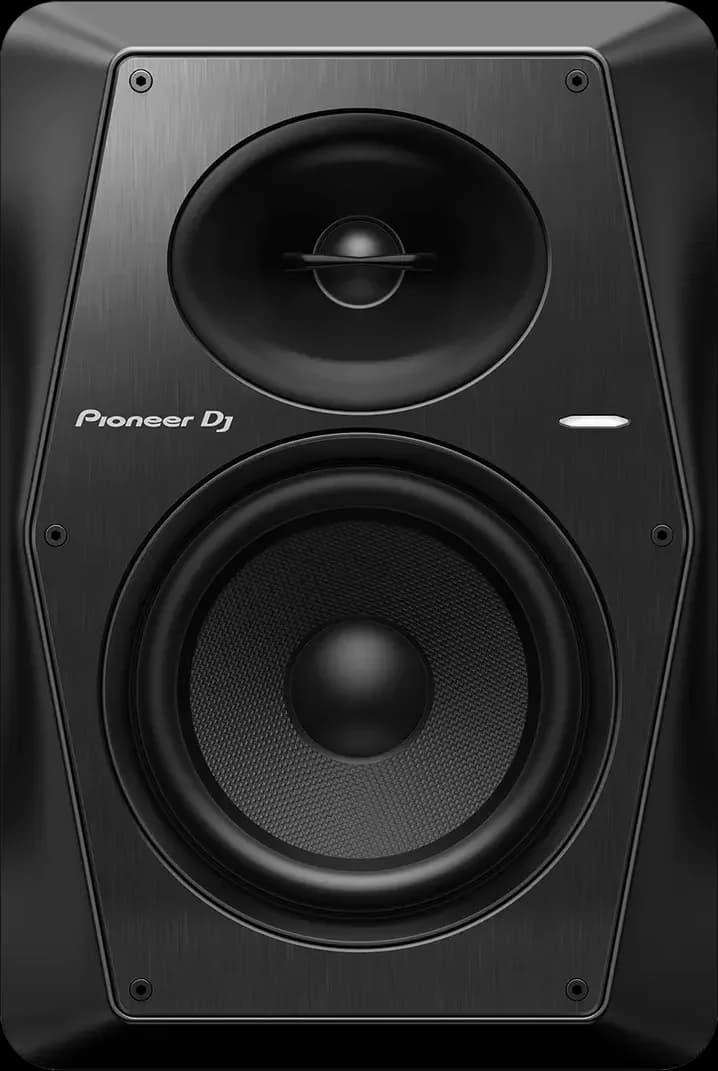
It is a bi-amped two-way speaker with a 6.5-inch aramid fibre woofer and a 1-inch soft dome tweeter in a constant directivity horn. Class D amplifiers with 96 kHz DSP give 70 W to the woofer and 30 W to the tweeter. Pioneer DJ quotes 37 Hz to 36 kHz and a maximum SPL of 112 dB. The MDF cabinet has a 4 mm aluminium front baffle, a guard over the tweeter and a rear bass reflex port with ribs that Pioneer DJ calls the Vortex Bass Accelerator.

Two rear DSP knobs click into four positions each. Low EQ offers Room 1, a 6 dB high-pass at 63 Hz for placement near a wall, then Flat, Room 2 and Club Bass. High EQ offers Room 1, Flat, Room 2 and Bright Treble. That gives 16 combinations.

The inputs are a balanced XLR/1/4" TRS combo and an unbalanced RCA, which are mixed together, so two sources can stay connected but play at once. It runs on 110 to 240 V, draws 45 W and has an auto standby that can be switched off. The manual asks for at least 15 cm of space at the top, rear and sides. Each speaker measures 229 x 341 x 312 mm and weighs 7.7 kg. The box holds one speaker, a power cord, four bottom cushions, the manual and the precautions sheet; signal cables are extra, and a stereo pair means buying two.